

Protests broke out Saturday at two universities in Tehran on the first day of the academic semester, according to videos circulated from Iran and reports by Iran International, a channel affiliated with opponents of the regime.
At Amirkabir University, demonstrators blocked a nearby street, the report said. At Sharif University of Technology, clashes were reported between students and members of the Basij, a militia subordinate to the Revolutionary Guard. Protesters there were heard chanting “Death to Khamenei,” referring to Supreme Leader Ayatollah Ali Khamenei.
'Death to Khamenei': protests erupt at Tehran universities


While the demonstrations did not appear to be large-scale, they come weeks after a sweeping crackdown on nationwide protests. U.S. President Donald Trump said Friday that 32,000 people were killed in last month’s unrest, though that figure has not been independently verified. Since the crackdown by security forces, there have been no reports of significant demonstrations, although chants against the regime have been heard at funerals for those killed.
The renewed campus protests unfold at a particularly sensitive time for Tehran, amid escalating tensions with Washington. Trump has threatened military action if Iran does not agree to a deal limiting its nuclear and missile programs and ending support for militant groups across the Middle East.
Trump has given Tehran what he described as a “10 to 15 day” ultimatum. Iranian officials have said they plan to present a draft proposal in the coming days. At the same time, the United States has continued preparations for a potential strike.
Protests erupt at Tehran universities
Iranian President Masoud Pezeshkian said Saturday that his country would not bow to pressure from world powers during nuclear talks with the United States.
“World powers are lining up to force us to bow our heads, but we will not bow our heads despite all the problems they are creating for us,” Pezeshkian said in a speech carried live on state television.
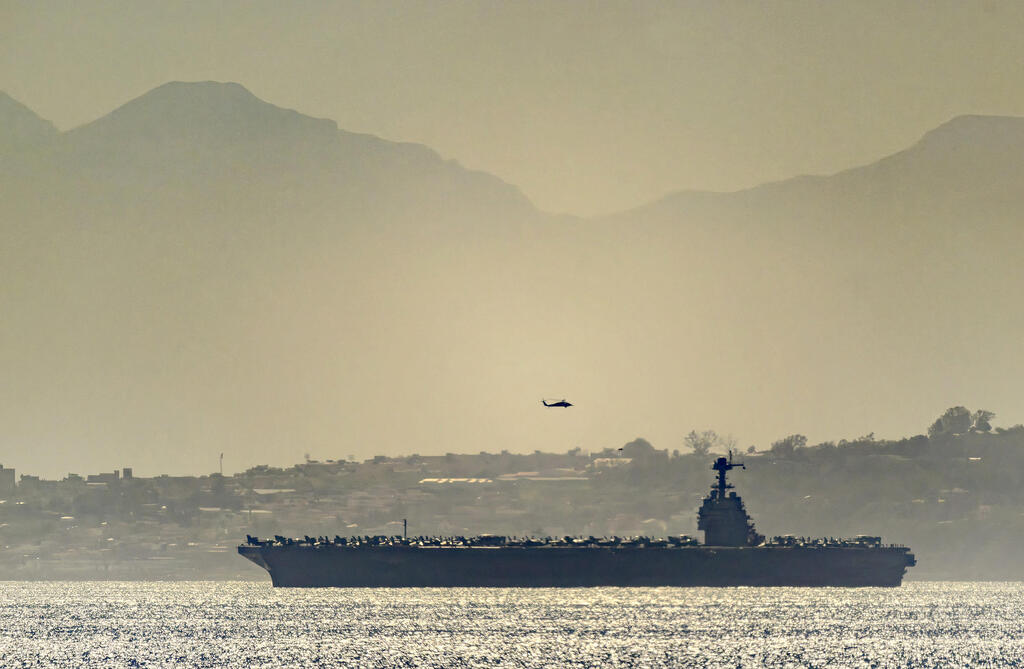
The aircraft carrier USS Gerald R. Ford was photographed crossing the Strait of Gibraltar and entering the Mediterranean Sea, about 3,700 kilometers from Israel. According to reports, the carrier — the largest and most advanced in the U.S. fleet — is expected to be deployed in the eastern Mediterranean, near Israel, as part of efforts to bolster defenses of Israel and U.S. bases in the region in the event of war with Iran.
The New York Times reported that the United States currently has between 30,000 and 40,000 troops stationed at 13 bases across the Middle East, which Iran has threatened to target if Trump orders an attack.
Satellite images published by the newspaper showed significant reinforcements at Muwaffaq al-Salti Air Base in Jordan, about 100 kilometers east of Amman. According to the report, images captured by an Airbus satellite indicate more than 60 strike aircraft at the base, including F-35 stealth jets, as well as 68 cargo aircraft that have arrived since Sunday. Additional fighter jets were seen under protective shelters, alongside drones and helicopters. U.S. forces were also observed installing new air defense systems in preparation for a potential Iranian missile attack. The Times described the base as becoming a “key hub” in preparations for possible military action.
Jordan has said it will not allow its territory to serve as a launch point for military action against Iran, but has warned it would respond to violations of its airspace. Jordanian officials told the newspaper that U.S. aircraft and equipment sent to the base are part of a defense agreement with Washington and expressed hope that negotiations would avert war.
Yedioth Ahronoth and ynet military and security analyst Ron Ben-Yishai wrote that if countries such as Qatar refuse to allow strikes to be launched from their territory, the United States would face difficulties conducting sorties from Al-Udeid Air Base, the largest U.S. air base in the region. He wrote that this helps explain the decision to move additional naval and air assets into the area, including shifting significant air and ground forces to Jordan and other friendly states.
According to Ben-Yishai, the buildup could soon include about 250 fighter-bombers of various types — roughly 150 aboard aircraft carriers — along with about 70 refueling planes and 30 early warning, intelligence and electronic warfare aircraft. The United States is also deploying Patriot and THAAD air defense batteries to the region.
In addition to air assets, the naval presence is expanding. AFP reported that the force will include two aircraft carriers, 12 guided missile destroyers and three warships designed for operations in shallow coastal waters. The strike groups are also believed to include submarines armed with long-range Tomahawk cruise missiles with a range of about 1,700 kilometers.
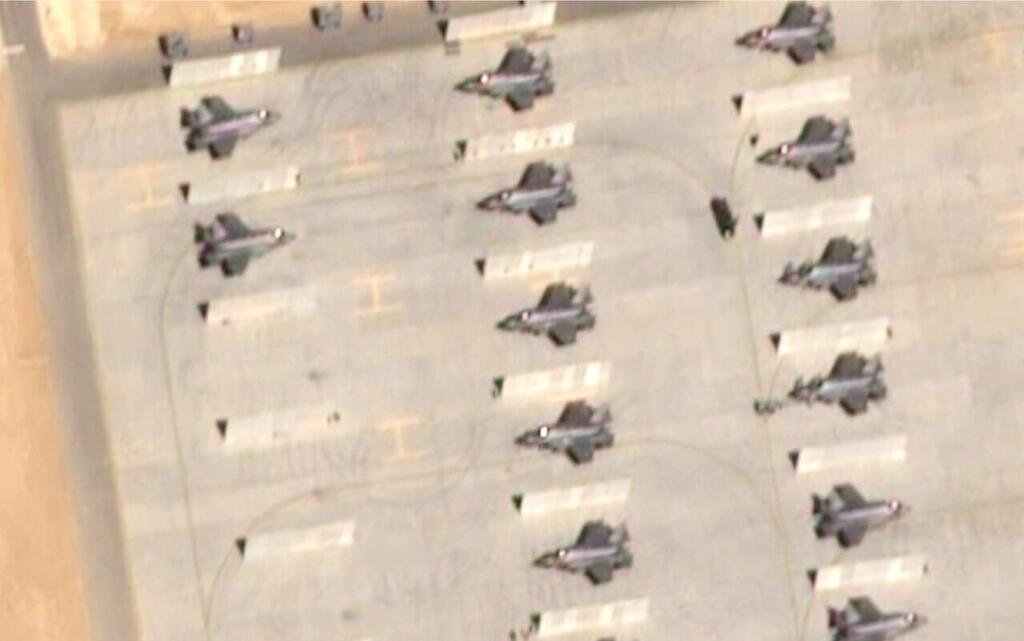
American fighter jets in Jordan
(Photo: Airbus)
The concentration of U.S. forces marks the largest buildup in the Middle East since the 2003 invasion of Iraq. According to reports, U.S. forces are already prepared, or will soon be prepared, for a broad campaign against Iran. Trump said Friday he is considering a “limited strike” that could pressure Tehran in negotiations. Iranian officials have warned that any attack, even a limited one, would ignite a regional war, including strikes on U.S. bases and missile barrages on cities in Israel.
Washington has said it still prefers diplomacy. Trump said within 10 to 15 days it will become clear whether an agreement can be reached to prevent war. Officials in Israel have expressed concern that any deal might focus solely on the nuclear program without addressing Iran’s extensive missile program, which Tehran has refused to include in talks.
Ben-Yishai wrote that Pentagon officials, along with Prime Minister Benjamin Netanyahu and senior defense officials who recently traveled to Washington, have argued that a short, intense operation would not achieve strategic objectives. Such a strike, he wrote, would at most delay nuclear development and would not fundamentally alter or topple the ruling system. He assessed that Trump may instead favor a prolonged campaign lasting weeks rather than a brief, powerful blow.