

Prime Minister Benjamin Netanyahu’s announcement that Israel would formally recognize Somaliland as an independent state was met with celebrations in the capital, Hargeisa, alongside condemnations from Arab countries. But US President Donald Trump appeared more skeptical of the move and voiced open disdain. “Does anyone know what Somaliland is, really?” he said.
In a phone interview with the New York Post, Trump said he was in no rush to follow Israel’s lead and recognize Somaliland, which has already said it intends to join the Abraham Accords. “We’ll study it,” he said. “Everything is under study. I study a lot of things and always make great decisions and they turn out to be correct.”
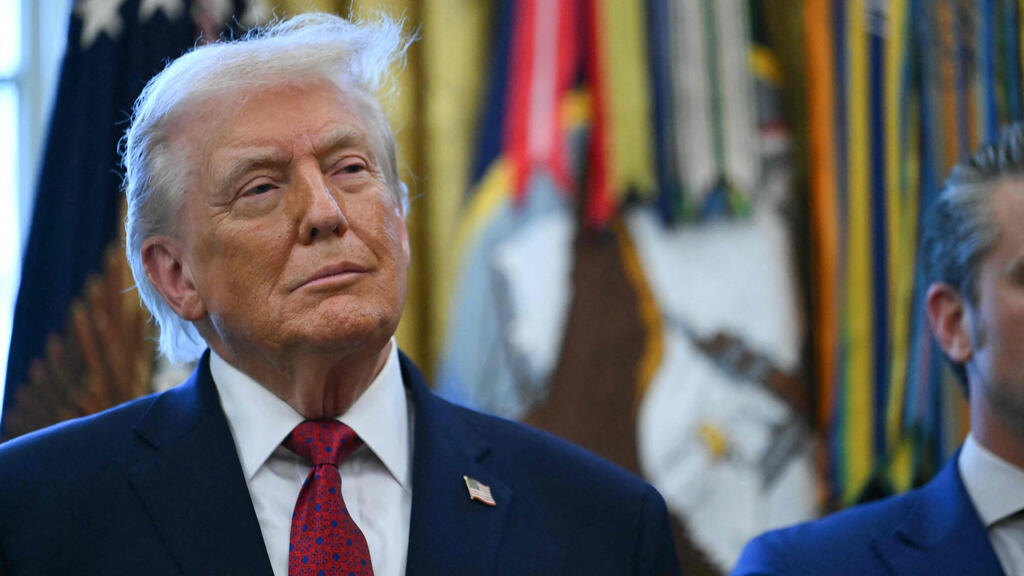
According to the newspaper, Trump was unimpressed by the Israeli announcement and was heard asking aloud at his golf course in Palm Beach, Florida: “Does anyone know what Somaliland is, really?” When asked about a Somaliland proposal to host a US naval base, Trump replied: “Big deal.”
Like Israel, the United States has strong interests in Somaliland because of its long coastline and strategic location in the Horn of Africa. These include the Port of Berbera, about 155 miles south of Yemen, which is vital to regional trade. Somaliland also lies near the Bab el-Mandeb Strait, a key global shipping route through which an estimated 12% of world trade passes.
Concerns over China’s influence — and general’s visit
In May, Somaliland President Abdirahman Mohamed Abdullahi told Britain’s Guardian newspaper that senior US officials, including military personnel and Brian Cashman, the top US official for the Horn of Africa, had visited the territory. Abdullahi said at the time that “it's a matter of time. Not if, but when and who will lead the recognition of Somaliland.”
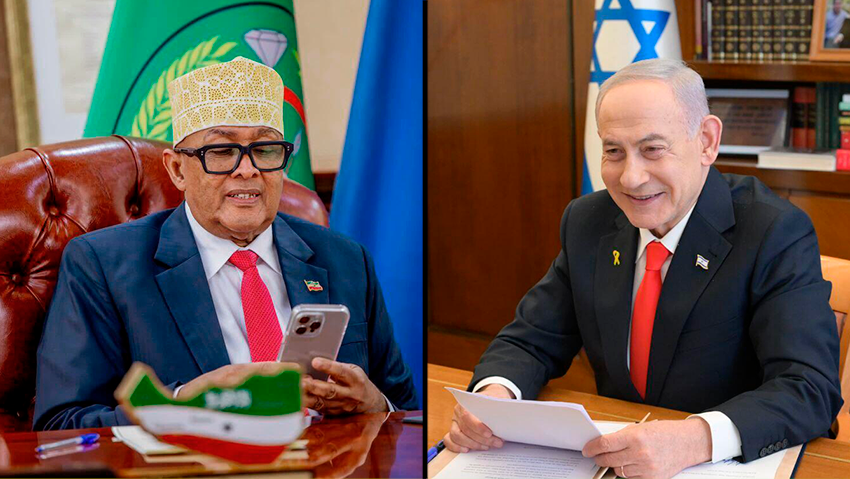
Prime Minister Benjamin Netanyahu and Somaliland President
(Photo: Amos Ben Gershom/GPO, Dr. Mohamed Hagi)
According to the British newspaper, the US base Camp Lemonnier in neighboring Djibouti is considered a “key base,” and Washington is concerned about China’s growing influence in the region amid Beijing’s expanding ties with Africa.
Project 2025, a policy blueprint drafted by leaders of the US conservative movement as a working document for a second Trump term — which he has previously disavowed — noted that recognizing Somaliland could help address the “US’s deteriorating position in Djibouti.”
Last August, Republican Sen. Ted Cruz urged Trump to recognize Somaliland, citing its support for the Abraham Accords and its ties with Israel. Still, the US administration remains divided. Some officials warn that such a move could jeopardize cooperation with Somalia, which views Somaliland as part of its territory.
Somaliland broke away from Somalia in 1991 amid a civil war that turned Somalia into a failed state. Since then, Somaliland has functioned de facto as a sovereign entity but has not been recognized by the international community. Until now, only Taiwan, which is not a member of the United Nations, has maintained diplomatic relations with it. Ethiopia maintains commercial and diplomatic ties with Somaliland but has not formally recognized it.
Somaliland has a population of about six million, most of them Muslim. Somalia considers the territory part of the state, while Somaliland’s president has described international recognition of independence as a “top priority.”
Israel’s announcement was seen in Somaliland as historic. Fireworks celebrations were documented in Hargeisa, where a giant Israeli flag was projected onto a building. Netanyahu said the recognition was made “in the spirit of the Abraham Accords,” the U.S.-brokered normalization agreements initiated under President Donald Trump. No UN member state had previously recognized Somaliland as an independent country. Israel is the first to do so.