

Southern District prosecutors filed 12 indictments Wednesday in a high‑profile smuggling investigation tied to the Gaza Strip that includes allegations against Bezalel Zini, the brother of Shin Bet director David Zini.
The indictment against Zini is expected to be filed Thursday, a day after one suspect was released following 36 days in custody, senior police and security officials said.
The 12 indictments were filed against a group of Israeli citizens from across the country, including Eliran Algarabli, 38, of Kiryat Gat; his brother Avi Algarabli, 41, of Kiryat Ata; Emad Eddin Abu Much, 55, of Baqa al‑Gharbiyye; Ofer Sankar, 41; Yosef Yochananov, 39; Yuri Yakubov, 42; Menachem Abutbul, 39 and Nadav Halfon, 30, of Kiryat Gat; Meir Levi, 26, of Beitar Illit; Oshri Dahan, 39, of Talmei Eliyahu; Yaron (Benny) Peretz, 52, of Noam; Atar Even, 37, of Shaked; and Anuna Ltd., a company owned by Avi Algarabli and Yaron Peretz.
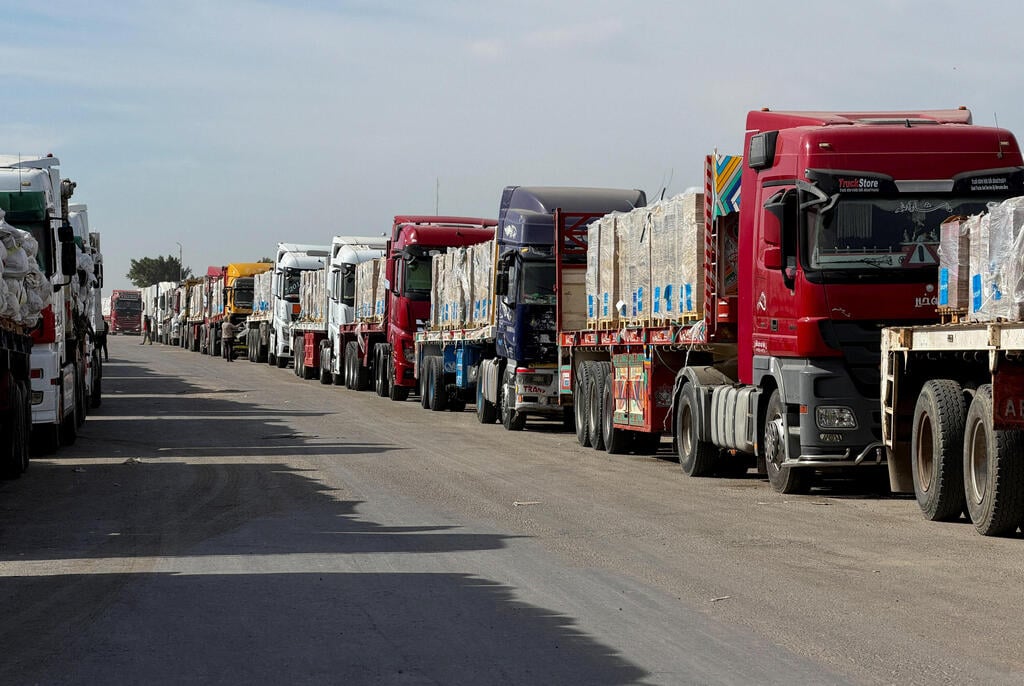
Police and the Shin Bet said the suspects are Israeli citizens and Gaza residents believed to have smuggled goods banned from entry into the Hamas‑run territory “by exploiting the ceasefire and the delivery of large volumes of humanitarian aid.” Among those charged were reserve soldiers who were identified in operations by Shin Bet and the Southern District’s central unit.
All 12 indictments charge a range of offenses, including aiding the enemy during wartime, prohibited activity involving terror‑related property, fraud in aggravated circumstances and bribery. Tax and anti‑terror law violations were also included.
Prosecutors allege that Menachem Abutbul offered bribes to Zini and co‑suspect Aviel Ben David, both of whom served in reserve duty with “Team Uriah” and had authority to move convoys of equipment into Gaza. In one instance, Abutbul is accused of placing a carton of cigarettes into Zini’s vehicle, which Zini and Ben David then transported into the Gaza Strip.

Bezalel Zini
(Photo: from social media)
According to police and security officials, the arrests were based on intelligence indicating that a range of individuals — including Israeli citizens, West Bank residents and Gaza locals — were exploiting the post‑ceasefire environment and increased aid deliveries to smuggle prohibited goods into the enclave by various means.
Investigators say evidence gathered in Shin Bet and central unit inquiries pointed to dozens of Israelis and West Bank residents participating in smuggling activity that directly boosted Hamas and other terror organizations. “These activities were carried out with deliberate disregard for their direct contribution to the strengthening of terror groups in Gaza, especially Hamas,” authorities said.
Police and the Shin Bet described the alleged smuggling operations as a “significant threat to the security of the State of Israel,” saying that the proceeds from banned goods help sustain Hamas’ civilian and military infrastructure.
“During the fighting, and especially after the ceasefire, Hamas and terror groups have worked to rebuild and strengthen their military and civilian systems, including restoring damaged military infrastructure, recruiting and training operatives and resuming logistical and command functions,” officials said.

Shin Bet Director David Zini
(Photo: Olivier Fitoussi)
Authorities further warned that smuggled goods could aid “production systems, technological capabilities and even the potential smuggling of weapons,” and that smuggling routes could be used as platforms for future offensive military activity aimed at Israeli forces and civilians.
Shin Bet and police vowed to continue efforts to thwart smuggling operations they characterize as a direct threat to national security.
One of the suspects was released on Tuesday, with police citing insufficient evidence to bring charges. The man had been held for 36 days by the Shin Bet internal security service without conditions, his attorney said. “We were able to clarify and convince authorities that there was no substance to the accusations against him,” the lawyer said.
Authorities initially revealed that 16 suspects had been detained in the case, which began as an inquiry into alleged smuggling of cigarettes and other goods that can have both civilian and dual‑use applications, items that can be used for legitimate purposes but also for terror.
Prosecutors had been expected to file indictments Wednesday against 13 of the suspects. However, police decided to release one of them, and the indictment against Zini and two others — accused of aiding the enemy during wartime — is now expected on Thursday.
The suspect released Tuesday faced a range of serious allegations, including dealing in weapons for terror purposes, supplying dangerous drugs, contact with a foreign agent and prohibited activity involving terror‑related property. His lawyer, Wassim Abu Amar, said his client was held for 36 days, including 18 days without access to an attorney.
 Wassim Abu Amar
“He was arrested on suspicion of serious security offenses, including smuggling goods to the Gaza Strip,” Abu Amar said. “After a long and exhaustive review of the investigation materials, we were able to demonstrate that the accusations had no basis, and accordingly he was released without conditions. This decision underscores that even in sensitive and serious cases, authorities must examine the evidence carefully, fairly and responsibly.”
Police filed a formal prosecutorial declaration against Zini on Tuesday, indicating that criminal charges are expected to be brought against him in the coming days. Zini, who was arrested last month, will remain in custody at least until Thursday.
In addition to Zini, similar declarations were filed against Amir Dov Halperin and Aviel Ben David, signaling expected indictments in their cases as well.
Zini’s father, Rabbi Yosef Zini, defended his son and rejected the allegations leveled against him. “This is all fabricated, without any real concern," he told ynet. "They’re not targeting him — they’re going after his brother. Thank God the public understands this clearly.” Another relative, Shmuel, added: “The truth will come out.”
Judge Yaniv Ben Haroush of the Ashkelon Magistrates’ Court sought to temper public speculation, saying: “It’s important the public knows no tanks or drones were smuggled — otherwise, people believe what they read on social media. I’ve allowed publication of the nature of the suspicions in order to dispel the cloud surrounding the case.”
Addressing the decision to lift the gag order on the suspects’ names, Judge Ben Haroush said the timing was appropriate given the stage of the proceedings. “Considering the positions of the parties, the filing of a prosecutorial declaration,and legal precedent that favors transparency as indictment nears, the time has come to publish the respondents’ names,” he ruled.
Responding to concerns raised about potential harm to the individuals, the judge noted that the objections were vague and not beyond what is typically expected when a suspect’s identity is made public. “These three are suspected of multiple serious offenses, all tied to the smuggling of cigarettes from Israel into Gaza,” he said.
First published: 12:48, 02.04.26