

Flydubai captain Smit Machchhar, who was seriously wounded when his Omani co-pilot attacked him during a flight to Israel, has spoken publicly about the terrifying moments inside the cockpit and his desperate efforts to prevent the aircraft from crashing.
In interviews published Saturday by the Emirati newspaper The National and Sky News Arabia, Machchhar described how he managed to reach the cockpit door despite severe injuries, allowing Israeli passengers and crew members to enter and help stop the attacker.
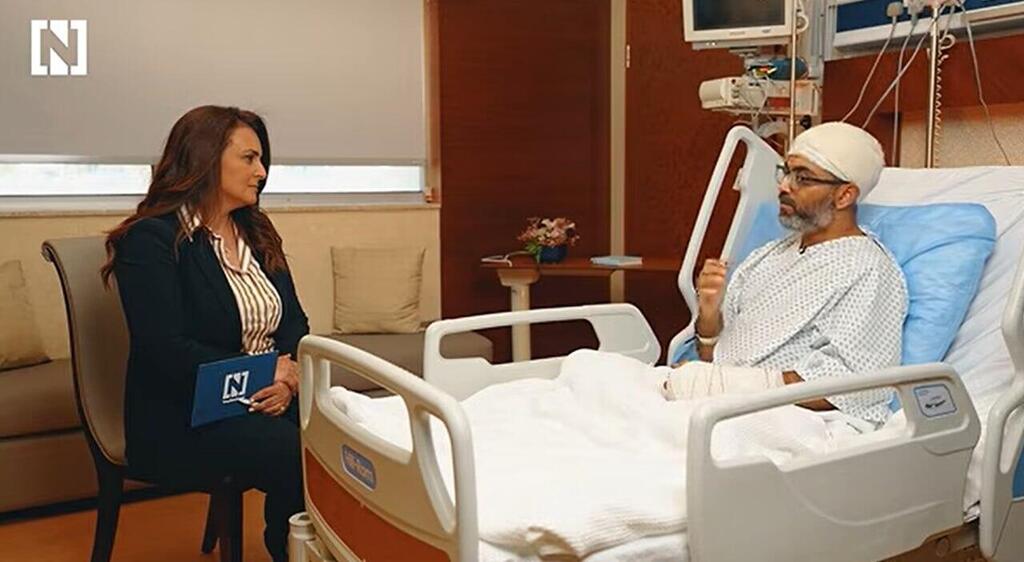
Flydubai captain Smit Machchhar describes the struggle inside the cockpit in an interview with The National
(Video: The National)


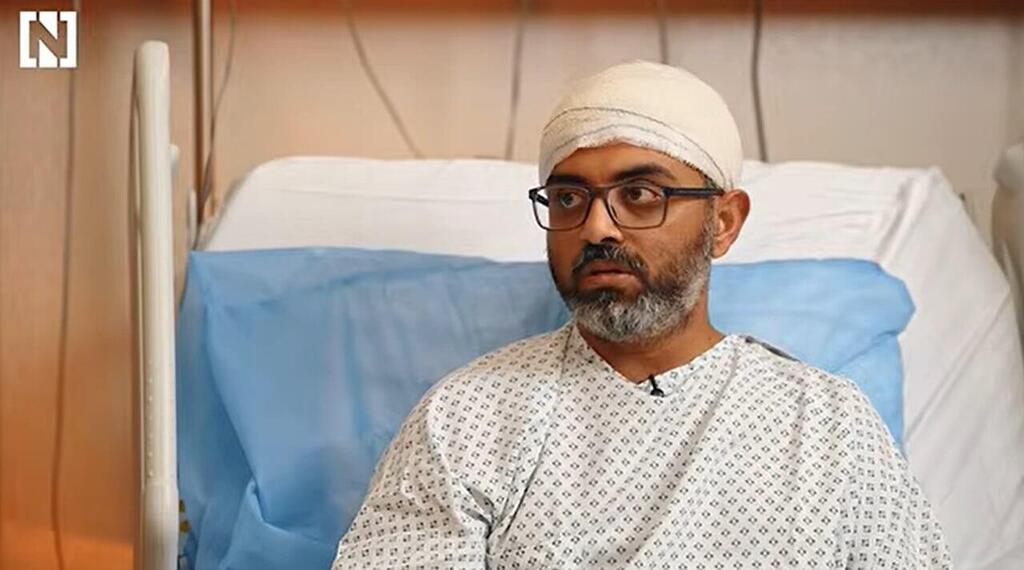
Both interviews were conducted at his hospital bedside in Abu Dhabi, where he remains under medical care. His head was still bandaged, although he appeared stronger than during an earlier televised conversation with Indian Prime Minister Narendra Modi several days after the September 30 attack. Neither interview devoted much attention to the significant role played by the Israeli passengers in preventing the disaster.
Machchhar described his brief interactions with the attacker, Omani co-pilot Hamam al-Hammami, before the assault, saying there had been nothing unusual about his behavior. The two had never flown together before.
Asked about Israeli passenger Yaniv Hayun, who made international headlines as the "plumber who saved the plane," Machchhar said he had little recollection of his involvement.
"To be honest, I don't know the plumber's story," he said. "But I do remember someone senior on the flight saying that the captain was in control. I didn't see him."
He then laughed when asked whether a plumber could land an aircraft. "Can a plumber land a plane? I don't want to speculate. All my memories and energy at that moment were focused on staying alive," he said.
Machchhar explained that he was drifting in and out of consciousness and that his vision had been severely impaired by the repeated blows he suffered.
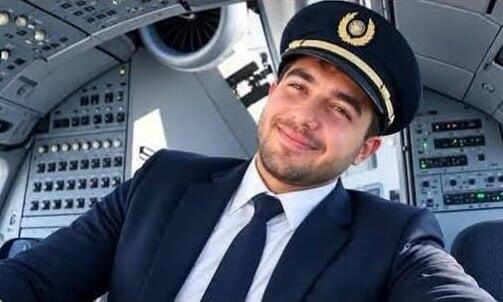
In his interview with The National, Machchhar recalled initially believing that the violent blow to his head had been caused by a technical malfunction or an object falling from the aircraft's ceiling. "It was such a hard blow that I nearly fell onto the controls," he said.
The captain said he had met al-Hammami for the first time that morning. "We exchanged some small talk, but nothing particularly deep, just like on other flights. There was never anything that made me think something was wrong."
When the attack began, his first instinct was to release his seat belt and try to defend himself. "The first thing I did was free myself from the seat belts and try to block the blows as much as possible," he recalled. "The blows were directed at my head. After the first few, my vision narrowed dramatically, and I could only make out outlines."
Despite his injuries, Machchhar managed to reach toward the mechanism that opens the cockpit door. "My hand went to the handle that opens the door, and I shouted for my colleagues. That's when I believe I lost consciousness for the first time. I heard the door opening," he said.
(Photo: The National)
(Photo: The National)
The most frightening moment came when he realized the aircraft was losing altitude. "The scariest thing was hearing the engines slow down and feeling the nose of the aircraft dive," he recalled.
He said he repeatedly tried to reach the door, desperate to let others into the cockpit. "I kept looking for the door. People ask me whether I opened it. I tried to get to it. I pushed, tried to reach out. But the next thing I remember is lying face down. And thank God, the cockpit door was open."
Machchhar said he did not know whether he would survive the ordeal but refused to give up. "I wasn't sure I would come out of it alive, but I didn't give up. I thought about my son and daughter. It was as though a survival instinct had taken over, and fortunately it saved me and all the other passengers and my colleagues. I would say a higher power was involved."
Speaking separately to Sky News Arabia, Machchhar provided further details about the moments immediately preceding the attack. He said al-Hammami had indicated that he wanted to pray inside the cockpit.
"He wanted to pray, so he stood up and started praying," Machchhar recalled. "On our 737, the aircraft I fly, the cockpit isn't particularly large. Out of respect for someone who is praying, I try not to look at them."
The captain continued working, checking flight information on his computer. "I was doing my job, sitting there and checking the timings and everything else on my computer, when suddenly I received a very hard blow to the back of my head," he said.
"It was an extremely strong blow. I felt that whatever struck me was very hard and solid. At that moment, I had no idea what had hit me. As the incident continued, I kept losing and regaining consciousness."
Machchhar said the attacker appeared to say something while striking him, but he could not understand the words.
Asked by the Sky News Arabia interviewer whether there had been a moment when he thought he might not survive, Machchhar acknowledged that he was still struggling to process what happened. "I'm trying to get over it now, but yes, there was a moment when I realized I had to tell myself: Do something. You can't die like this," he said.
He stressed that he had not resigned himself to dying. Instead, he felt an overwhelming need to act before it was too late. "It wasn't that I had accepted my death. It was more a feeling that I had to do something. There was a moment when I realized that if nothing was done immediately..."
Then the cockpit door opened, and the situation changed dramatically. "When the door opened, the scene was completely different. I remember lying face down. There was panic, of course, and screaming," he said.
Machchhar reserved particular praise for the colleague who eventually took control of the aircraft.
"What happened afterward, the fact that another colleague of mine took over the controls and saved the situation, deserves enormous praise," he said. "It's something I will carry with me until the day I die."