

Four immediate conclusions emerge from the results of the two elections held in Germany on Sunday, in the state of Mecklenburg-Western Pomerania and in the capital, Berlin.
The first is that this was another serious setback for Chancellor Friedrich Merz's conservative party. In Mecklenburg-Western Pomerania, the CDU (Christian Democratic Union) received just 4.9% of the vote and, for the first time in its history, failed to cross the electoral threshold in a German state election. It will therefore have no representation in the state parliament.
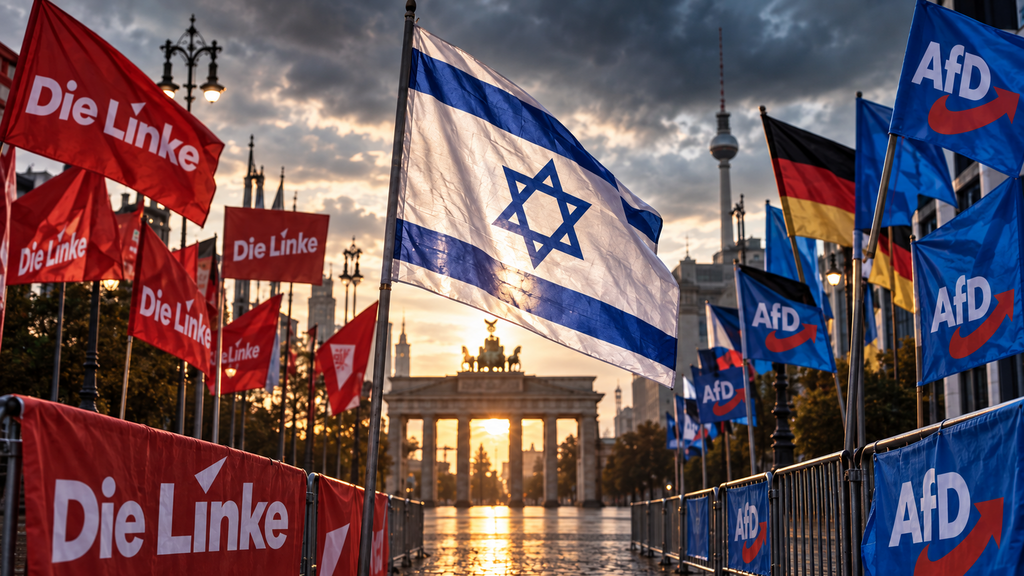
The second conclusion is much broader: Germany's political center continues to erode. In Mecklenburg-Western Pomerania, the far-right AfD (Alternative for Germany) won with 38.2% of the vote, more than twice its showing in the previous election. In Berlin, by contrast, the radical-left Die Linke won with 25.7%, more than doubling its support. The CDU finished with 18.8%, the AfD surged to 16.3%, the Greens received 14.3% and the SPD (Social Democratic Party) plunged to a historic low of 12.1%.
The results continue a trend seen just two weeks ago in Saxony-Anhalt, where the AfD won with 43.8% of the vote — its best-ever result in a German state election. In all three of the latest elections, then, parties outside Germany's traditional political center posted dramatic gains, while the conservatives and Social Democrats lost a significant share of their support.
Berlin shifts left as pro-Palestinian activists celebrate
The third conclusion concerns Berlin itself. The city, which for decades has branded itself as a liberal, youthful and tolerant capital, gave one in four votes to Die Linke. Nearly 47% of voters backed Die Linke, the AfD or BSW (Sahra Wagenknecht Alliance) — three parties outside the traditional mainstream axis of the CDU, SPD and Greens.
The figures among young voters are even more striking. According to an analysis of the election results, 49% of voters ages 25 to 34 backed Die Linke, as did 43% of those ages 16 to 24. The party also managed to mobilize tens of thousands of voters who did not participate in the previous election.
For Berlin's Jewish community, however, part of the story is not merely the rise of a left-wing party, but the bitter dispute that has developed within Die Linke in recent months over Israel, the war in Gaza and antisemitism.
The most prominent incident occurred in late August at a Die Linke election rally in Berlin's Neukölln district. Rapper Dahabflex performed a song that included the chants "Yalla Yalla Intifada" and "Death to the IDF." Berlin police later opened an investigation to determine whether the lyrics constituted a criminal offense. At the same time, parts of the party's Neukölln branch came under sharp criticism over cooperation with radical pro-Palestinian activists and a series of anti-Israel statements.
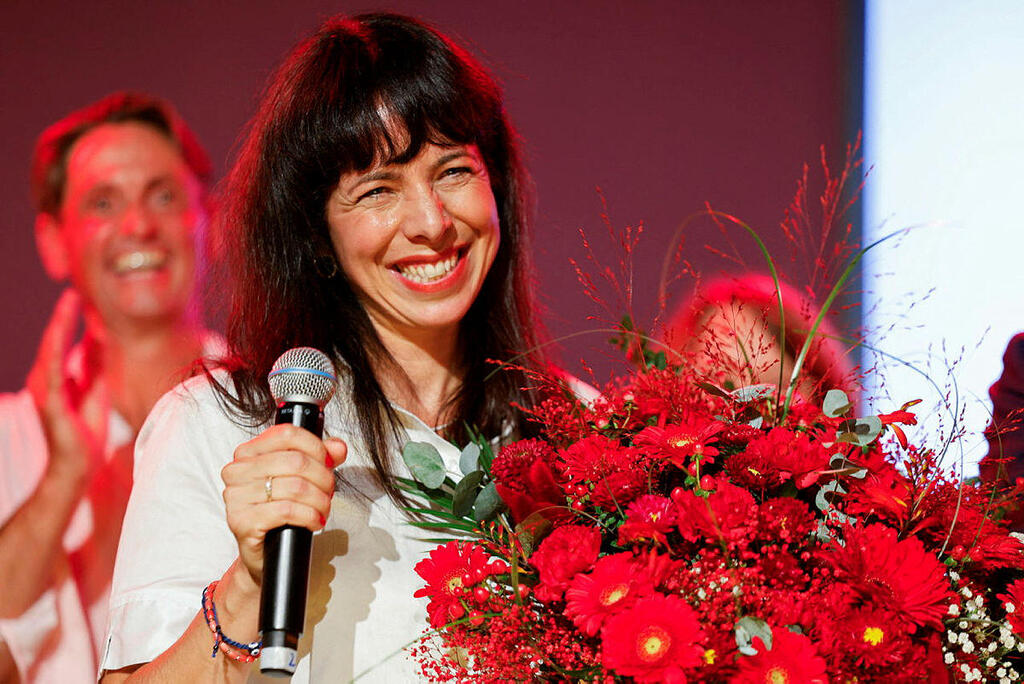
'Berlin's Mamdani.' Elif Eralp, Die Linke's leading candidate for Berlin mayor
(Photo: Reuters)
Senior party officials, led by mayoral candidate Elif Eralp — who has already been dubbed "Berlin's Mamdani" — have said they support Israel's right to exist and condemned calls for violence. After one of the incidents, Eralp said calls for violence were "unacceptable" and also condemned the rapper's performance.
But two incidents on Election Day itself further intensified the controversy. That morning, Bassem Saadi, a Die Linke candidate for the Neukölln district council, shared a post by Palestinian activist Majed Abusalama calling on people to vote for the party's candidates as part of what he called an "electoral intifada." Abusalama is one of the founders of Palästina Spricht ("Palestine Speaks"), which German domestic intelligence authorities have classified as an extremist organization.
Hours later, as the scale of Die Linke's victory became clear, Issa Remmo, head of a crime family whose members have for years been linked by authorities to clan crime in Berlin, also appeared at the party's celebrations in Neukölln. Remmo told German media that he was pleased with the party's victory and that, for the first time, he felt there was a party in Germany that represented him. Die Linke quickly said it had no political or personal ties to him.
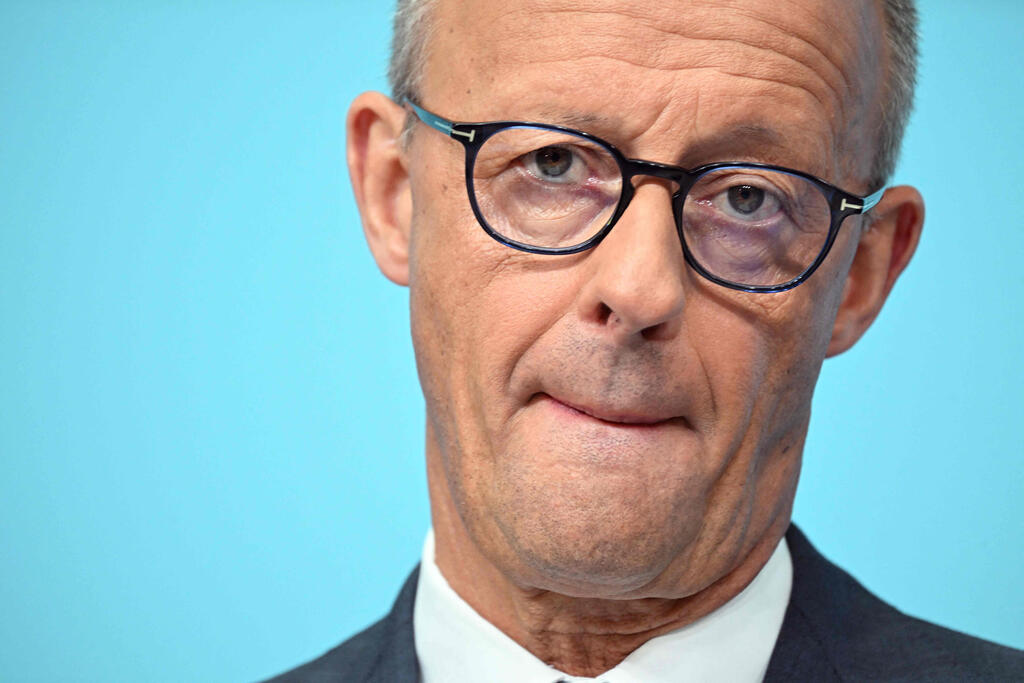
Chancellor Merz after the results: "A disgrace for Germany"
(Photo: RALF HIRSCHBERGER / AFP)
Remmo was not the only figure whose presence caused controversy. Ibrahim Ibrahim, a well-known anti-Israel activist, also attended the celebrations and was photographed alongside Die Linke Bundestag member Ferat Koçak. According to the German newspaper Tagesspiegel, Ibrahim is identified as a leading supporter of the Popular Front for the Liberation of Palestine (PFLP) in Germany and is active in the United Palestinian National Committee (VPNK).
Berlin's domestic intelligence service has described the VPNK as a framework in which supporters of Hamas and the PFLP operate together and classifies it as part of the city's anti-Israel extremist scene. After the election, Ibrahim wrote that the VPNK had "a part in this success," referring to the campaign conducted by pro-Palestinian activists in Neukölln. He has previously described Yahya Sinwar as a "steadfast leader" and a "heroic martyr." Die Linke distanced itself from Ibrahim's presence at the event.
Politically, Die Linke's victory does not guarantee it the mayoralty. Based on the projected distribution of seats, a coalition of Die Linke, the Greens and the SPD would have a comfortable majority of about 97 of the 162 seats. However, a coalition of the CDU, Greens and SPD would also be mathematically possible, with about 84 seats.
Die Linke has already made clear that it wants to form a government with the Greens and Social Democrats, but significant obstacles are expected. One is its demand to push ahead with the nationalization of large housing companies, a move the SPD opposes. The second, and far more sensitive, is the issue of antisemitism.
SPD candidate Steffen Krach made clear that there could be no partnership with Die Linke without a "clear and consistent repudiation" of antisemitism — not only by the party leadership, but by every member of its new parliamentary group. "I expect not only words, but actions," he said. National SPD co-leader Bärbel Bas also said it was very difficult to consider cooperating with a party in which "parts" hold antisemitic views.
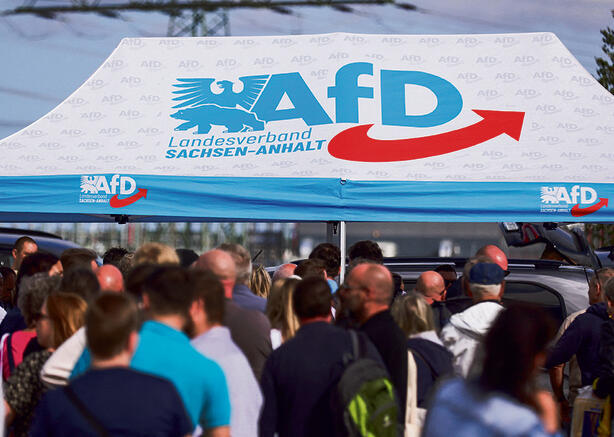
An Alternative for Germany booth. The party continues to gain strength in the country's east
(Photo: Thilo Schmuelgen, REUTERS)
In Mecklenburg-Western Pomerania, the situation is simpler. Despite the AfD's first-place finish, it currently has no coalition partner after the other parties rejected cooperation with it. The SPD of state Premier Manuela Schwesig finished second with 35.5%, and a coalition with Die Linke and the Greens is mathematically possible, meaning Schwesig could remain in office.
'In Germany, one in three people supports a far-right party'
The fourth conclusion from the elections directly concerns Jewish life in Germany. In the span of just two weeks, the AfD — described by international media outlets and German institutions as a far-right party — won elections in two eastern German states. In Berlin, meanwhile, Die Linke scored a historic victory just as the debate over antisemitism and anti-Israel sentiment in parts of the party reached its peak.
Josef Schuster, president of the Central Council of Jews in Germany, focused his response to the Berlin results on Die Linke, calling on the SPD and Greens not to help it secure the mayoralty. He said the party had repeatedly crossed "antisemitic lines" during the campaign and that calls for the deaths of Israeli soldiers had even been heard at one of its events. The fact that such a party finished first, Schuster said, "deeply troubles me."
Chancellor Friedrich Merz also addressed the issue directly. "We are witnessing, in some cases, radical and overt antisemitism in Berlin," he said, adding that the fact that "Jewish life in Germany is no longer safe" was, in his view, "the heaviest burden of recent years." Merz called the situation "a disgrace for Germany" and urged the SPD and Greens to provide a clear answer on the issue before forming a new government in the capital.
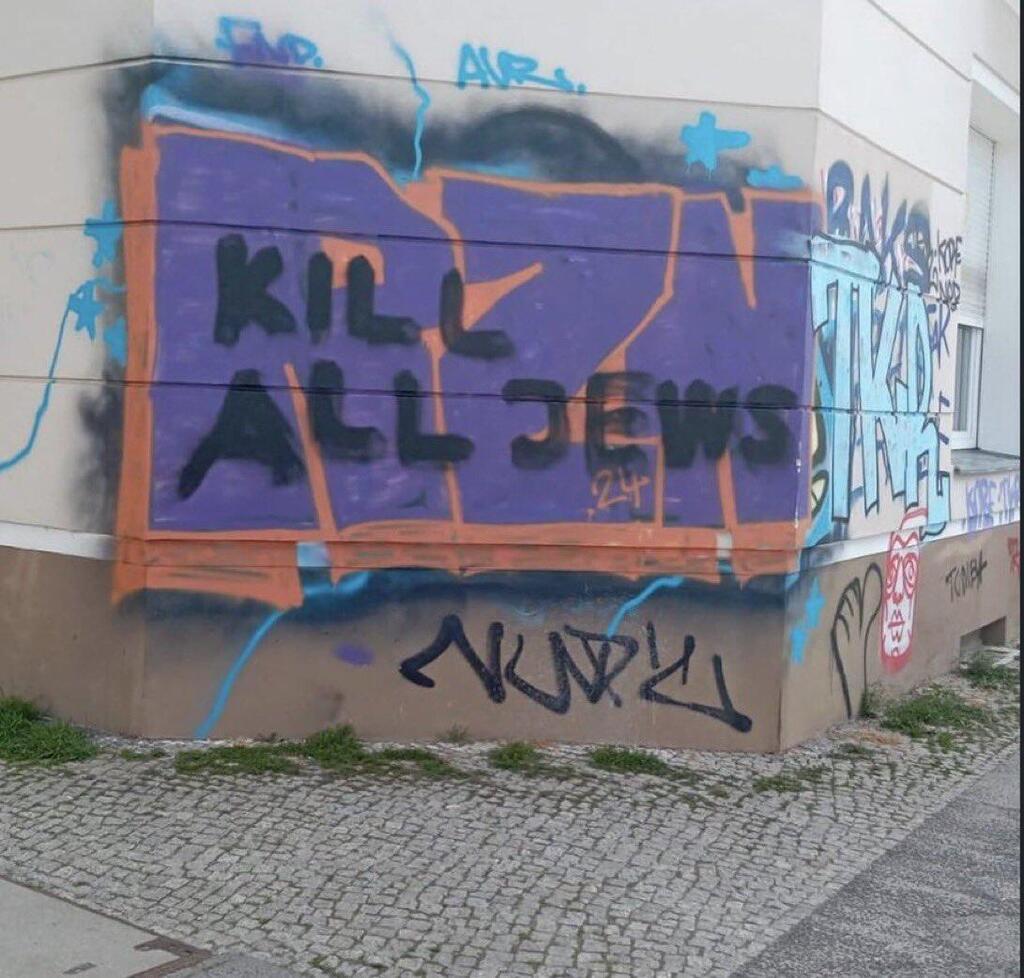
'Kill all Jews' graffiti sprayed in Berlin in April. 'It could be anyone — an accountant, a barber, a manager'
(Photo: Social media)
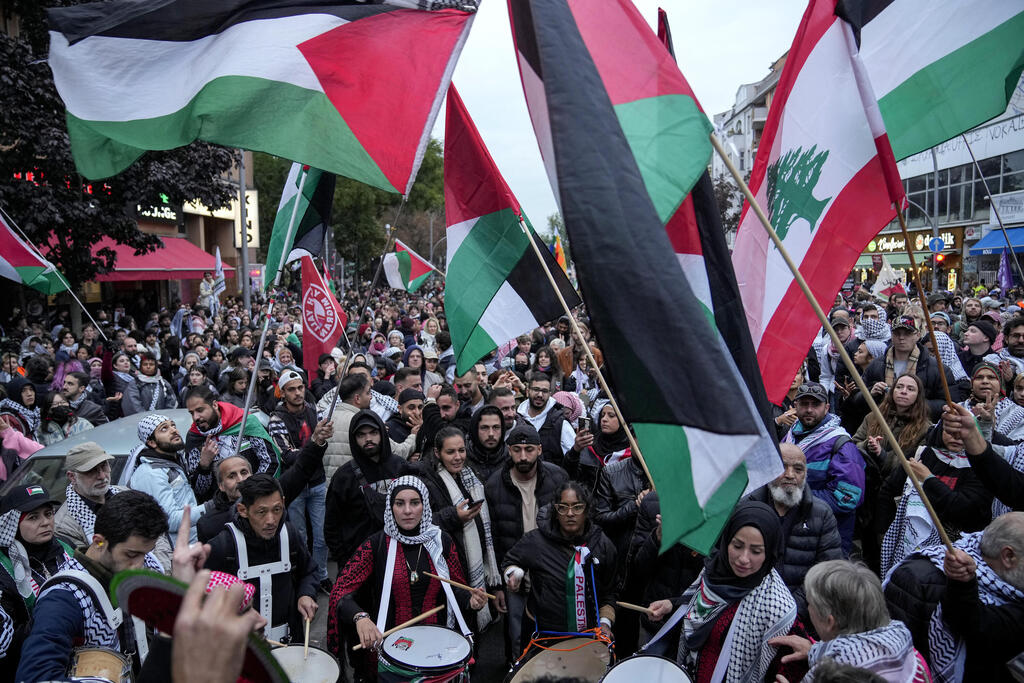
A pro-Palestinian demonstration in Berlin
(Photo: AP Photo/ Ebrahim Noroozi)
A senior German intelligence official described the atmosphere even more starkly in a conversation with ynet and Yedioth Ahronoth.
"You used to walk around eastern Germany and know that one in 10 people was far right or a Nazi, and you could see and identify them. Today in Germany, one in three people supports a far-right party, and it could be anyone — an accountant, a barber, a manager," he said. "But you always told yourself: There's Berlin. After the election, you walk down the street in Berlin, go to the supermarket or have coffee on the corner, and you realize that one in four people on the street openly supports a party that promotes antisemitism."
The elections do not in themselves prove a change in Germany's attitude toward Israel or in its official commitment to protecting Jews, but they do illustrate how dramatically the political landscape has changed. The AfD, which for years was a protest force on the fringes of the political system, is now repeatedly winning elections in the east. In Berlin, Die Linke has become the largest party for the first time — precisely as parts of the party face unprecedented criticism from Jewish community leaders and from parties that may be required to join it in a governing coalition.