

Hezbollah has already made clear that it will oppose the framework agreement signed between Israel and Lebanon. Supporters of the Iran-backed terror group took to the streets of Beirut in protest, while Hezbollah Secretary-General Naim Qassem attacked the Lebanese authorities and urged them to “retreat from the sins that are destroying Lebanon.”
Qassem also made clear that Hezbollah does not intend to leave the battlefield. “We will continue as a resistance on the ground in order to defeat the occupation,” he said.
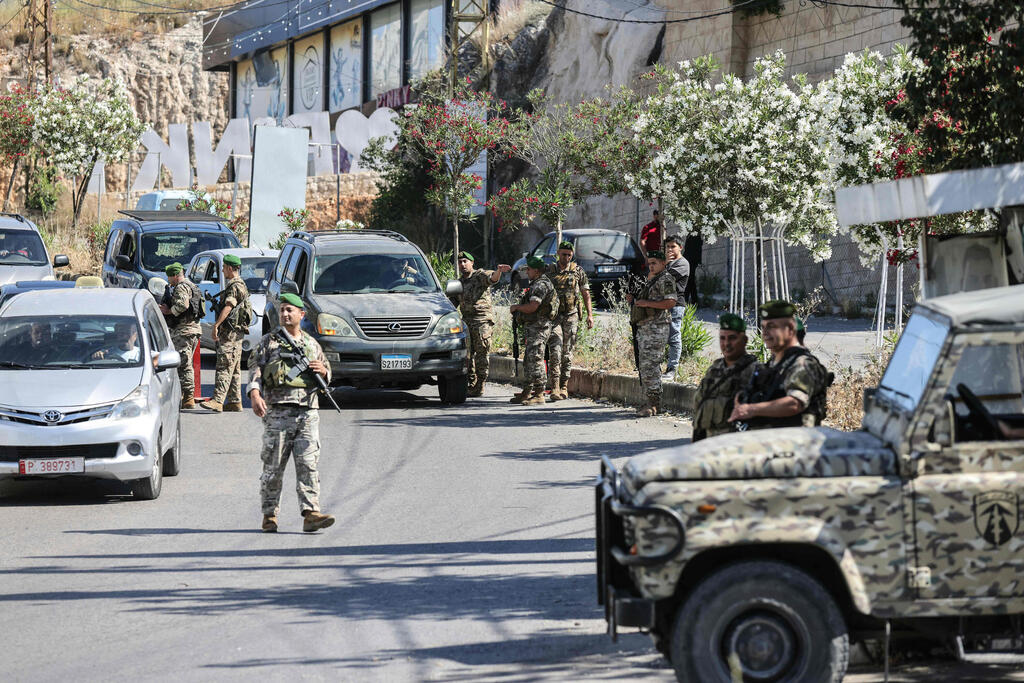
Facing that challenge is the Lebanese army, a force that is weak, under severe economic strain and deeply shaped by the same sectarian reality as the country it serves. At least a third of its soldiers are believed to come from areas that support Hezbollah.
In recent months, much has been demanded of the Lebanese army, and more will be demanded of it in the period ahead. It has been asked to establish control at points in south Lebanon, dismantle Hezbollah facilities and infrastructure south of the Litani River and advance the collection of weapons from Palestinian refugee camps in Lebanon.
All of this has taken place between rounds of fighting and ceasefires between Israel and Hezbollah. Now, according to recent reports, the army is also expected, under the arrangements being built with the official Lebanese state, to take control of “pilot areas” in south Lebanon from which the IDF would withdraw.
But while the demands on the Lebanese army keep growing, its capabilities and the support it receives have not been significantly upgraded in recent years. That raises questions about whether it can actually carry out the substantial missions being placed on it.
According to estimates, the Lebanese army has at least 60,000 active-duty soldiers, in addition to reservists and semi-military elements. Its ground forces are the most significant part of the military, though it also has air and naval branches.
The army, like the state
Like Lebanon itself, the army is in severe economic distress and needs significant international support.
In recent years, Lebanese channels have reported plans to recruit thousands of soldiers into the army. In December 2024, the Lebanese army itself announced that it was recruiting soldiers for combat units. It said applicants who met the criteria were invited to apply and that recruits had to be between 18 and 25 years old, have no criminal record and show “good behavior, without drug or gambling addictions.”
The army’s announcement also said candidates must not be part of any party, organization or association, and must not take part in gatherings held by such bodies.
In practice, the mass recruitment effort did not succeed. No significant change was recorded, and the military force remained weak. According to the website GlobalFirePower, Lebanon’s military power this year ranks 118th out of 145 countries.
Lebanon currently has no mandatory draft, and military service is voluntary. From the army’s own perspective, its composition is one of the challenges. According to estimates, Shiites make up between 30% and 40% of the army. Even if they are not Hezbollah operatives or direct supporters, it can be assumed that many come from such an environment.
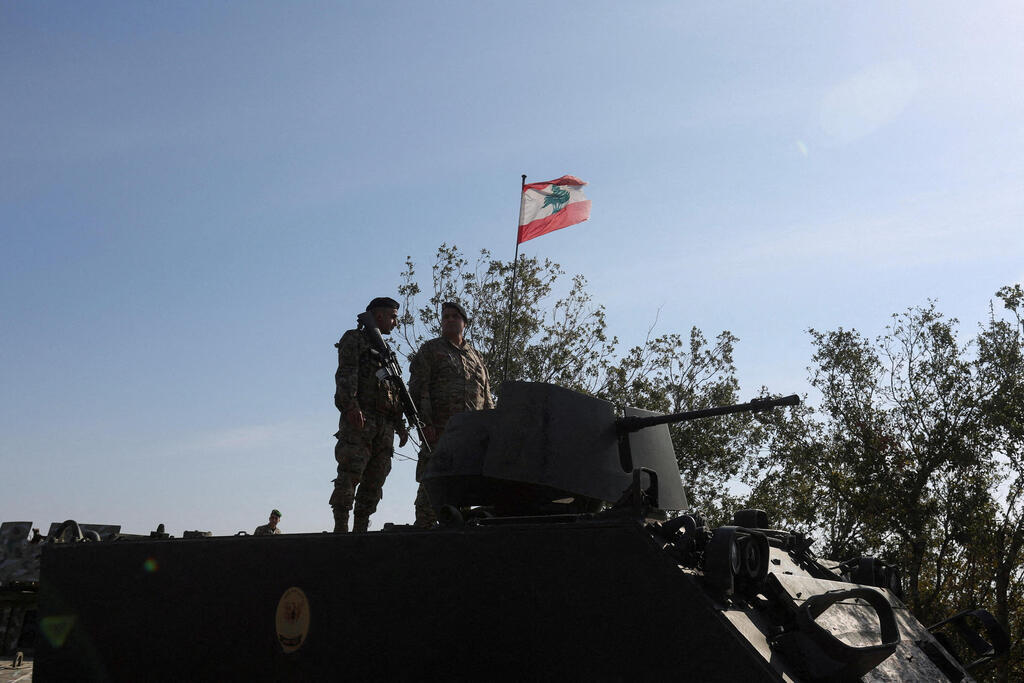
(Photo: REUTERS/Aziz Taher/File Photo)
Still, the Lebanese army insists that all elements within the military “adhere to a clear military doctrine and are loyal to the military institution and the nation.”
The challenge becomes sharper when such soldiers are asked to disarm Hezbollah. Another problem is the low salary paid to soldiers, which not only fails to attract new recruits but also pushes existing soldiers to take on additional work.
In November 2025, the IDF published the photo of Ali Abdullah, a Hezbollah operative who was also serving in the Lebanese army.
At the end of 2025, the Arabic-language edition of the British newspaper The Independent published an article in which it spoke to a Lebanese army soldier who had served for more than 10 years. He said the army uniform had once been a source of honor for him, but now symbolized hunger.
According to the report, his salary was equivalent to $270 and barely covered basic living needs. “I am a soldier with a salary that is not enough to feed my children. My wife works as a seamstress, and sometimes I borrow from my brothers to buy fuel so I can do my job,” he said.
The article noted that since Lebanon’s economic crisis began in 2019, the salary of a Lebanese soldier had shrunk to a tenth of what it once was. It also said that although the army receives limited support, food aid and financial assistance from friendly countries, “daily suffering has not changed much.”
Asked why he remained in the military despite the hardship, the soldier replied: “The army is not a job for me. It is the last thing left from the idea of the state. If we leave it, who will remain? And also, what profession can I learn today?”
On Tuesday, it was reported that the European Union had offered to train the Lebanese army for three years. According to the report, EU diplomats are discussing a possible mission that would help support the Lebanese army and the country’s internal security forces. Such a mission would require approval from all 27 EU member states.
‘A terrorist earns four times more than a soldier’
Orna Mizrahi, a former deputy head of Israel’s National Security Council and now a senior researcher at the Institute for National Security Studies, said the Lebanese army had received equipment and support over the past two years worth an estimated $500 million to $600 million, most of it from the United States.
“There still has not been the deep change required in the Lebanese army, in parallel and in accordance with the advancement of the pilot areas,” she said. “You cannot let the Lebanese army take the territory and prevent Hezbollah from entering if it does not have the tools and capabilities to do so.”
Mizrahi emphasized the operational difficulty Israel sees on the ground. “It is true that once the IDF evacuates, residents immediately return, and it is very hard to identify who the people living there are. Perhaps some of them are Hezbollah operatives.”
On the Shiite presence in the army, she said: “For someone who is Shiite, it is better to be in Hezbollah, because there they receive four times the salary, although the risks in Hezbollah are higher. The scale is roughly in proportion to their share of the population, and not beyond that.”
Mizrahi said one of the necessary steps is reform in the Lebanese army, including changes to recruitment, training and salaries.
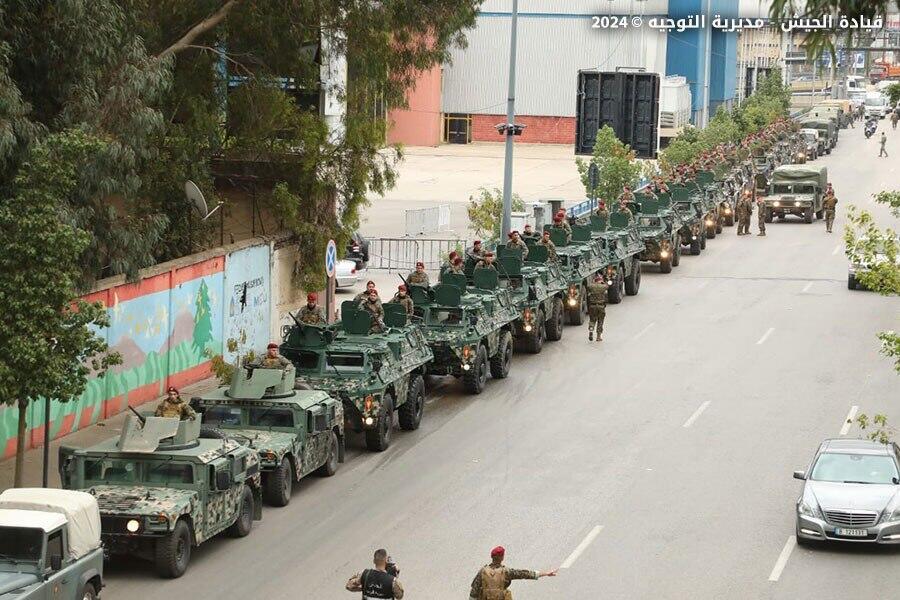
“One of the things that needs to be done is reform of the Lebanese army, including changing manpower recruitment, training personnel, raising salaries, making sure people in the army are not working elsewhere or for Hezbollah, cleaning Hezbollah supporters out of the army and raising wages,” she said.
“The talks we are holding with the Lebanese government can help lead to changes,” Mizrahi added. “A great deal of international support is needed, American, Western and perhaps also from wealthy Gulf states, Saudi Arabia and the Emirates, so that they join this effort and help the Lebanese army become capable of dealing with Hezbollah. The main problem is that they do not want to confront Hezbollah, but when there is no choice, they need to get there.”
Prof. Eyal Zisser, a Middle East scholar and expert on Lebanon, said there had been no meaningful change in the Lebanese army despite the missions now being placed before it.
“Nothing has happened there,” he said. “The talk about needing to strengthen them, give them money and weapons and train them, they talk about it all the time, but it does not happen. It remains the same army in terms of composition, low skill level and low salaries.”
Zisser said the army’s internal makeup cannot be separated from Lebanon’s broader sectarian and political structure.
“It is not disconnected from what is happening in Lebanese society, where the Shiites need to be disconnected from Hezbollah, because if they are not disconnected socially, economically and politically, it will not happen in the army either,” he said. “Only a political, economic and social move inside Lebanon will affect the army. The army is a reflection of what is happening in the country.”