

Widespread protests that erupted across Iran late last month over soaring inflation appeared to subside in recent days after a deadly government crackdown, as international pressure mounted and Russia stepped in diplomatically, including talks between President Vladimir Putin and Prime Minister Benjamin Netanyahu.
Rights groups and residents said heavy security deployments and an internet blackout have largely silenced demonstrations for now, though reports of arrests and sporadic unrest continued. The unrest has posed one of the most serious challenges to Iran’s clerical leadership in years and raised fears of wider regional escalation, including a possible confrontation involving Israel and the United States.
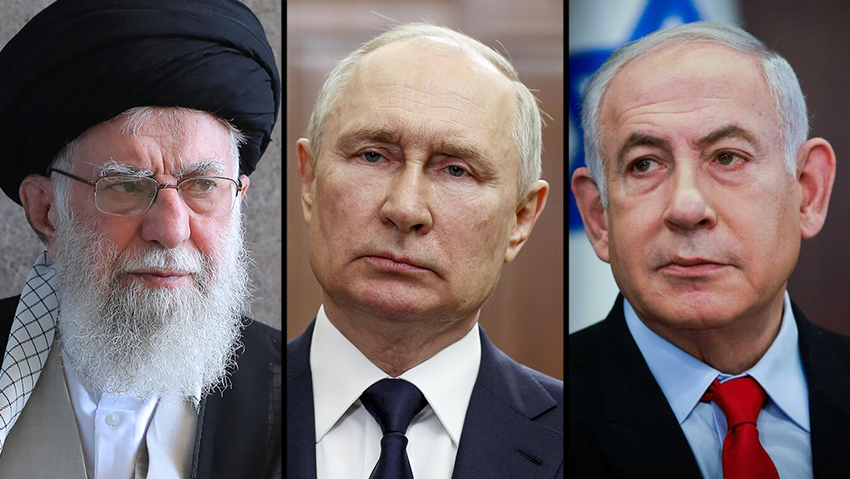
(Photo: Chaim Goldberg / Flash90; Iranian Leader’s Press Office / Handout via Getty Images; AP)
Against this backdrop, the Kremlin said Putin held separate phone calls on Friday with Netanyahu and Iranian President Masoud Pezeshkian, offering Russia’s assistance in mediating tensions in the Middle East. In his conversation with Netanyahu, Putin outlined ideas for strengthening regional stability and said Moscow was ready to continue its mediation efforts with the participation of all relevant states.
The talks followed days of heightened speculation about a potential U.S. military response after President Donald Trump repeatedly warned that Washington could intervene if the Iranian government continued killing protesters. Those fears appeared to ease after Trump said he had been told the crackdown was slowing.
According to the White House, Trump is closely monitoring the situation and has warned Tehran of “grave consequences” if violence resumes. White House spokesperson Karoline Leavitt said Trump had been informed that Iran halted hundreds of planned executions, adding that “all options remain on the table.”
The protests began on Dec. 28 over rising prices and economic hardship in Iran, whose economy has been crippled by international sanctions, and quickly escalated into mass demonstrations against the Islamic Republic. Iranian authorities responded with force, cutting off internet access and deploying security forces nationwide.
Norway-based Iranian-Kurdish rights group Hengaw said there had been no major protest gatherings since Sunday but described a “highly restrictive security environment” in cities and towns that previously saw large demonstrations. Residents in Tehran and other cities said streets were largely quiet, though drones were visible overhead.
Despite the apparent lull, Hengaw reported that a female nurse was killed by direct gunfire from government forces during protests in Karaj, west of Tehran, a claim Reuters could not independently verify. State-affiliated Iranian media reported further arrests and incidents of vandalism linked to the unrest.
U.S.-based rights group HRANA put the death toll at 2,677, including more than 2,400 protesters, figures that Reuters has not been able to confirm. An Iranian official earlier told Reuters that around 2,000 people had been killed.
Tehran after protest crackdown
(Video: Reuters)


The unrest comes amid heightened regional tensions following last year’s brief war between Israel and Iran and earlier Israeli and U.S. strikes on Iranian nuclear facilities. Israel has repeatedly warned that Iran’s actions, including its nuclear program, pose an existential threat, while Tehran denies seeking nuclear weapons and says its nuclear activity is for peaceful purposes.
Russia, which has deepened ties with Iran since the start of its war in Ukraine, signed a 20-year strategic partnership agreement with Pezeshkian last year. Kremlin officials have said any threat to the survival of Iran’s leadership would be a serious concern for Moscow, particularly after Russia lost another key regional ally with the fall of Syrian President Bashar al-Assad.
Kremlin spokesman Dmitry Peskov said Russia was already contributing to regional stability. “This is partly thanks to the president’s efforts to help de-escalate tensions,” he said.
U.S. allies in the Gulf, including Saudi Arabia and Qatar, engaged in intensive diplomacy with Washington this week to prevent a U.S. strike, warning that such a move could destabilize the region and affect Israel and broader U.S. interests.
Iranian authorities have described the unrest as the most violent in the country’s history, accusing foreign enemies of fomenting chaos and armed groups of attacking security forces. State television on Friday broadcast funerals for members of Iran’s security forces killed during the unrest, as regional powers continued efforts to prevent the crisis from spiraling further.