

Even as a high school student, Stephen Miller knew how to make people listen, even if that meant irritating almost everyone in the room. During a speech to fellow students at his Santa Monica, California, high school, where he was running for student government, he argued that students should not have to pick up trash because janitors were paid to do that job.
He also declared that he would "say and do things that no sane person would say or do." More than two decades later, Miller, now 41, has become one of the most powerful figures in Washington following his appointment as President Donald Trump's new White House chief of staff, replacing Susie Wiles after Republicans' sweeping defeat in the midterm elections.
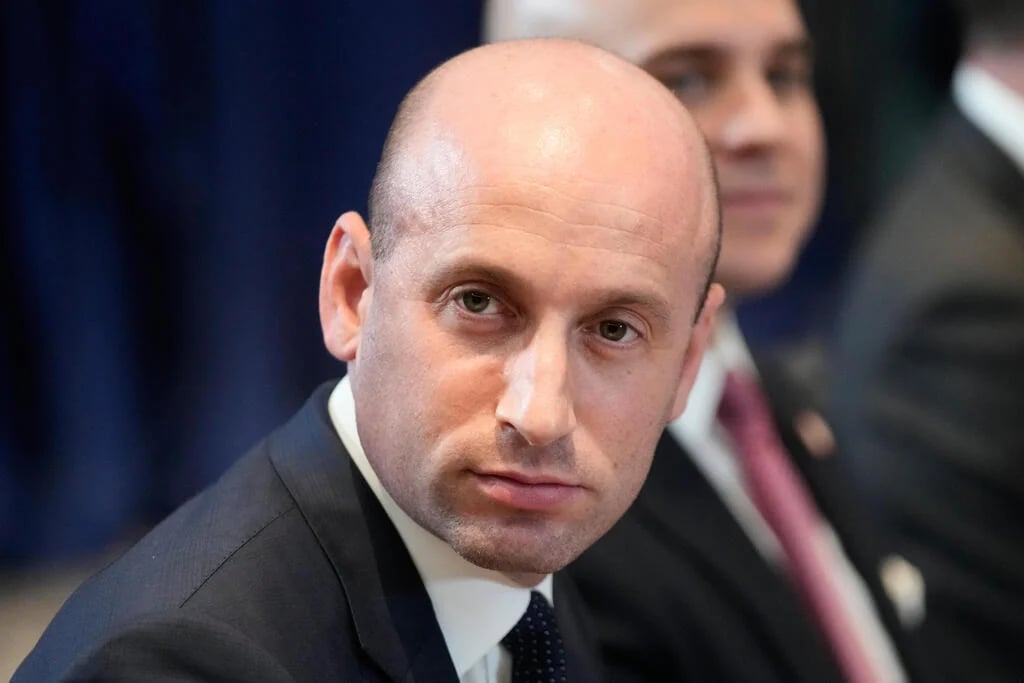
Miller is among the few figures in Trump's orbit to have survived almost continuously since the president's first election campaign in 2016. He wrote speeches, shaped immigration policy and, perhaps most importantly, learned how to translate Trump's political promises and provocative statements into government action. While senior officials in Trump's first administration resigned, were fired or fell out with the president, Miller steadily consolidated his influence.
During Trump's second term, he became deputy chief of staff and homeland security adviser, establishing himself as one of the few White House figures whose opinions Trump regularly seeks on a broad range of issues. His promotion to chief of staff places him in charge of managing the very administration whose policies he has spent a decade helping to shape.
The Jewish descendant of refugees who became an immigration hardliner
More than any other issue, Miller's name has become synonymous with Trump's restrictive immigration agenda. He was a driving force behind the administration's travel restrictions on several Muslim-majority countries, its controversial policy of separating migrant families at the Mexican border and efforts to limit legal immigration. During Trump's second term, he spearheaded efforts to expand mass deportations and accelerate immigration enforcement.
Critics accuse him of undermining human rights and the rule of law, while Miller presents his policies as necessary to defend America's borders and national security. His uncompromising approach has also created a deeply personal controversy within his own family, whose history stands in striking contrast to his political views.
Miller was born into a Jewish family with liberal political roots. His ancestors fled anti-Jewish pogroms in Eastern Europe, and one of his forebears arrived in the United States in 1903 with just eight dollars in his pocket. Yet Miller himself grew up far removed from the poverty his ancestors had escaped.
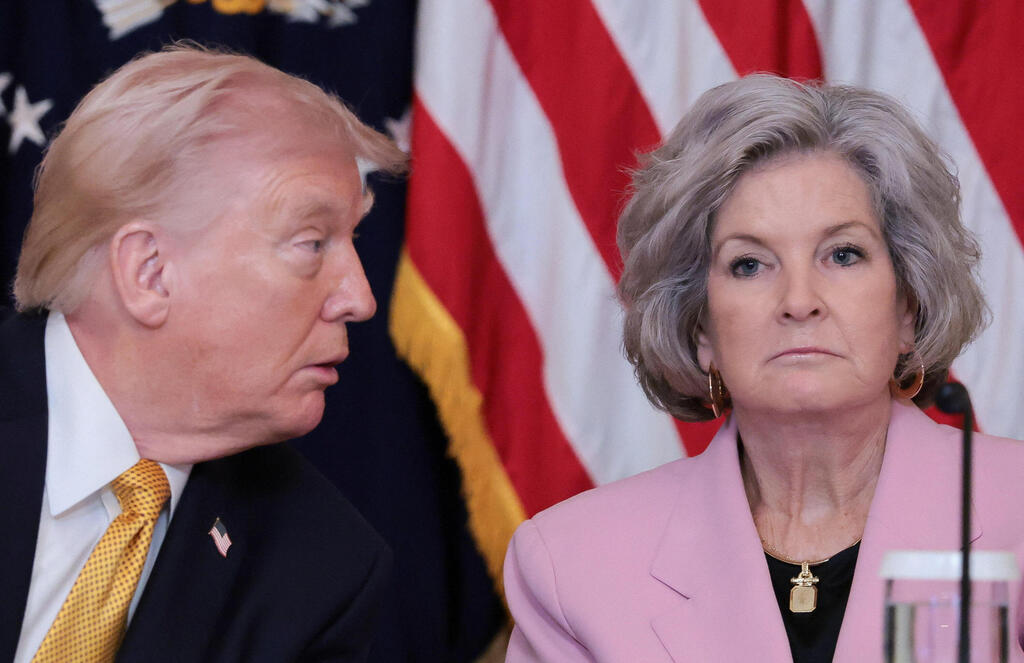
President Donald Trump with outgoing White House chief of staff Susie Wiles, who will move to his political operation
(Photo: REUTERS / Jonathan Ernst)
His father, Michael, a trained lawyer, expanded the family's wealth through real estate. Together with Miller's mother, Miriam, he managed a business that owned approximately 2,500 residential units in California. The family lived in one of Santa Monica's wealthiest neighborhoods and employed housekeepers born in Latin America, who cooked for the children and cleaned the home.
According to Miller's biographer, Jean Guerrero, he was once embarrassed when a housekeeper drove him to school in her old car because he feared classmates would think he was poor.
The family's financial circumstances changed in the 1990s amid legal disputes involving Miller's father and the damage caused by California's devastating 1994 earthquake. In 1998, when Miller was 13, his parents sold their home and moved to a more modest property. Their financial situation later improved, and the family donated tens of thousands of dollars to Israeli causes, including the American Friends of the Weizmann Institute of Science. His father also held senior positions in Jewish organizations in Los Angeles.
Miller's family background became a source of particularly sharp criticism from his uncle, David Glosser, who publicly condemned his nephew's immigration policies. Glosser argued that if the restrictions Miller championed had existed in the early 20th century, their Jewish ancestors might never have found refuge in America, and many family members could have perished in the Holocaust. The dispute was especially personal because Glosser himself had worked to assist refugees.
The emails that triggered outrage among Jewish organizations
Miller became the center of another controversy in 2019, when more than 900 emails he had sent to the right-wing website Breitbart were made public. Among other things, the correspondence showed him recommending coverage of a book depicting an immigrant takeover of Europe, a work popular among white supremacist groups. He also shared material from websites promoting racist narratives about immigrants and minority communities, particularly in relation to crime.
The revelations triggered condemnation from civil rights organizations and several prominent Jewish groups. The Anti-Defamation League and organizations representing Reform, Conservative and Reconstructionist Judaism called on Trump to dismiss Miller. The White House rejected the accusations and defended him.
The controversy illustrated the unusual position Miller occupies in American Jewish public life: a Jewish conservative whose family's history is rooted in persecution and migration, but whose policies have been condemned by Jewish organizations concerned about racism, immigration restrictions and the treatment of refugees.
From immigration enforcement to Israel, Iran and Greenland
Miller's influence has increasingly extended beyond immigration policy. He has been closely associated with the administration's hawkish approach toward Israel's regional adversaries and enthusiastically supported American-Israeli strikes against Iran.
He was also involved in the administration's crackdown on pro-Palestinian activists at American universities. Court testimony indicated that Miller participated in discussions concerning the cancellation of visas and deportation of foreign students over their political activities. Those measures drew criticism from civil liberties advocates and some Jewish organizations, which warned against restricting freedom of expression in the name of combating antisemitism.
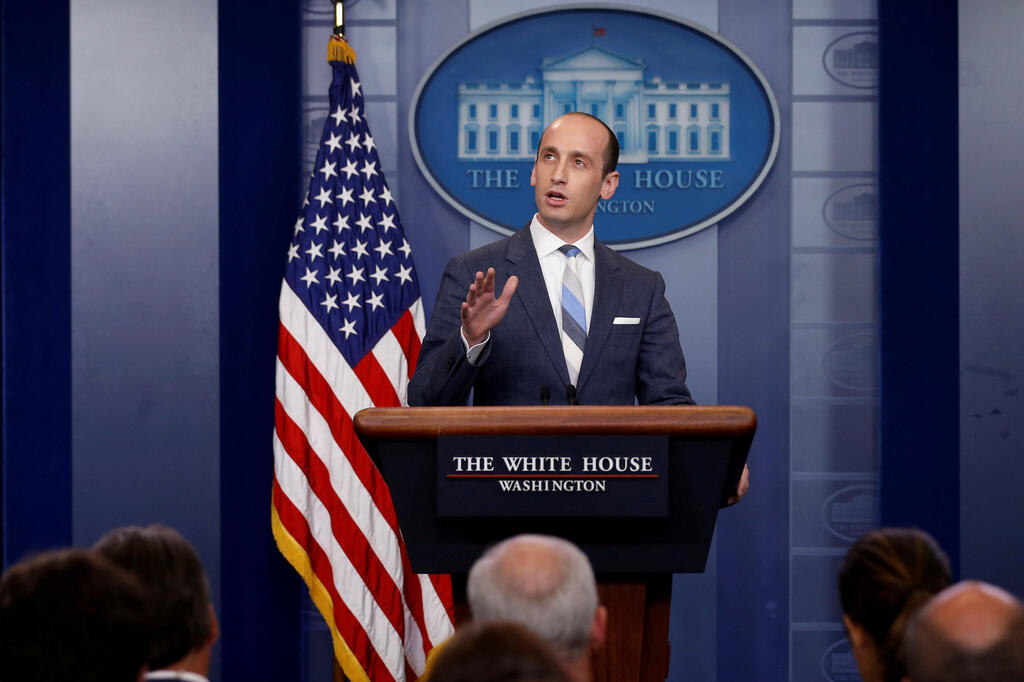
Stephen Miller during Trump's first presidential term, when he emerged as a leading architect of the administration's immigration policies
(Photo: Reuters)
In recent years, Miller has also emerged as one of the administration's most vocal advocates of projecting American power abroad. Following the U.S. military operation in Venezuela, he argued for the use of American force in other regions and even presented military action as a possible means of taking control of Greenland.
"We live in the real world, which is governed by force," he declared, encapsulating an approach to foreign policy that emphasizes power over diplomatic restraint.
Trump himself has occasionally appeared amused by Miller's intensity, joking in the past that he would prefer his adviser not to reveal every one of his true feelings, some of which might be excessive even by the president's standards.
‘Weird Stephen’ and the Voldemort comparison
Miller's appearance, demeanor and confrontational public style have also made him a frequent target of ridicule from political opponents. California's Democratic governor, Gavin Newsom, compared him to Lord Voldemort, the villain of the Harry Potter series. When reports emerged that an actor had been selected to portray Voldemort in the upcoming television adaptation but his identity was being kept secret, Newsom's office quickly offered Miller a sarcastic "Congratulations!"
According to Trump biographer Michael Wolff, even the president has privately referred to his longtime aide as "Weird Stephen." Yet such mockery has done little to weaken Miller's position. Unlike numerous other advisers who entered Trump's orbit only to depart amid public disputes or internal power struggles, Miller has remained consistently close to the president.
His appointment to replace Wiles, however, presents a different challenge. Wiles, a veteran political strategist who helped engineer Trump's 2024 election victory, was widely regarded as a disciplined operator who tried to impose structure on the sometimes chaotic White House. As chief of staff, she controlled access to the president, coordinated his schedule and sought to manage competing factions within the administration.
Miller, by contrast, is identified with its most ideological and confrontational wing. His promotion following the Republicans' midterm defeat suggests Trump is choosing to place one of his most committed political allies at the center of White House decision-making rather than turn toward a more conciliatory approach.
The question now is not simply how much power Miller will accumulate, but how he will use it. For nearly a decade, he managed to remain close to Trump without being consumed by the White House's internal power struggles. Beginning Monday, November 9, he will be the man responsible for managing them.