


A fragile ceasefire in the Gaza Strip has been in effect for about six weeks, during which Hamas has worked to reestablish its rule in the enclave. Israeli officials believe that effort is one reason the terrorist organization has delayed returning the bodies of the last three remaining hostages in its custody, a move that would trigger negotiations on the next stage of the deal, including its disarmament.
Sources in the group told ynet they do not oppose what they called a “weapons organization process,” but insisted the goal is to “preserve” their weapons, not surrender them.
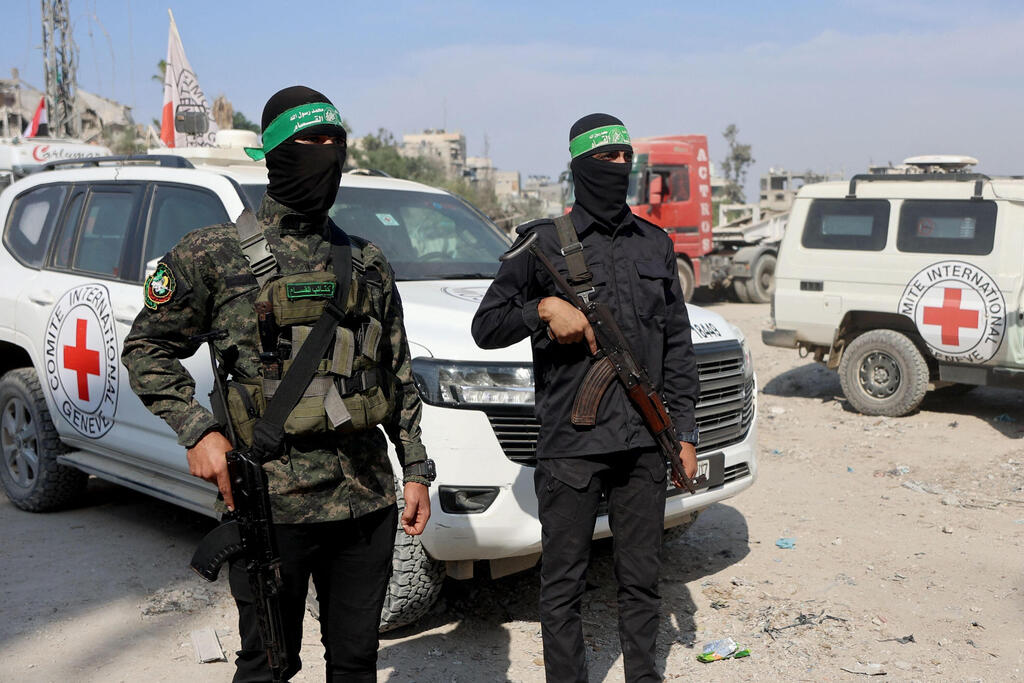
(Photo: REUTERS/Dawoud Abu Alkas)
A senior Hamas delegation led by Khalil al-Hayya arrived in Cairo on Sunday for meetings with Egyptian intelligence officials. According to sources who spoke with ynet, the discussions will focus on progress in ceasefire talks, the issue of “captives and fighters” held in tunnels and preparations for the second phase of the ceasefire agreement.
The talks are expected to address governance, security, Hamas’ weapons and the mandate of an international committee slated to manage the next stage. Hamas says it accepts “preserving the weapons” under full supervision and within a gradual process.
Sources said the proposal under consideration includes deploying international forces to monitor, separate the warring factions and train local personnel, not to engage in combat. Under the plan, weapons would later be transferred to the Palestinian Authority while remaining under international oversight by the United Nations or Arab states.
The proposed committee would serve as a technocratic body backed by security mechanisms, with existing local police forces in Gaza operating under its authority.
IDF strikes Hamas terrorists in yellow zone
(Video: IDF)


Hamas has reportedly been seeking ways to avoid handing over or destroying its arsenal. Sources in Gaza said senior Hamas officials approached the Palestinian Authority in an effort to secure an arrangement for storing the arms. Under the current deal, the group cannot store, import or manufacture weapons, but Hamas officials have sought a solution for the weapons already in their possession, which they do not intend to destroy or transfer. “They asked the Palestinian Authority to come talk with them and take the weapons for storage only,” one source said.
Meanwhile, the ceasefire, though fragile, remains in effect despite violations and fears of renewed fighting. Hamas has not yet returned the bodies of three hostages — Sgt. First Class Ran Gvili, Dror Or and Thai national Sudthisak Rinthalak — and Israeli officials say the terrorist group is not making full efforts to locate them.
On Saturday, a terrorist crossed the so-called "yellow line" demarcating Israeli and Palestinian-controlled areas of Gaza, opened fire on IDF troops and was killed in the ensuing shootout. Shortly after, the IDF said four additional terrorists crossed the line in northern Gaza. Two were eliminated and no Israeli soldiers were injured. The IDF struck Hamas targets across the territory in response.
Hamas on Sunday rejected the IDF’s claims, saying the shooter was not a member of the group but “an unaffiliated individual” described by sources as a mobile phone trader who had lost merchandise and had previously been arrested for criminal activity.