

More than a week has passed since Hamas last transferred to the Red Cross — and then to Israel — the remains of a hostage killed in captivity. While the terror group claims it is struggling to locate the three remaining captive bodies — Ran Gvili, Dror Or and Sonthisak Rintalak — their families are still waiting for closure.
In conversations with ynet over the past week, the families described the pain of being the last ones still waiting, alongside the hope of eventually closing the circle, like everyone else. Israeli officials believe there is indeed an objective difficulty in locating the three bodies, despite ongoing intelligence efforts and searches on the ground in recent days.

Former hostages who visited the White House this week and met with President Donald Trump also sent a clear message that the mission is not over. They said they are following developments with concern and continue to urge that the issue remain at the top of the public agenda.
“The fight is not over. We are here in Washington to close our own circle, but there are still families suffering the same pain ours did. It’s not over until everyone comes home. There’s a rally Saturday night — we’re asking everyone to come. Everyone. Now,” the survivors said in a video recorded in Washington.
‘Tough month’
“It’s not as if the past two years were calm, but it’s gotten more intense,” Omri Gvili, brother of Ran, told ynet this week. “Your pulse jumps in seconds. Every moment you get an update. I can’t sleep all night. When a hostage’s body is returned and sent for identification, until they update who it is, I don’t sleep. It’s been a tough month.”
“Rani is a hero in every sense of the word. Not only in battle, also in his love for people and his willingness to help others. He’s my role model. When I talk about him, my chest fills with pride. I miss him every split second. Rani is my younger brother, but we were like twins,” he said.
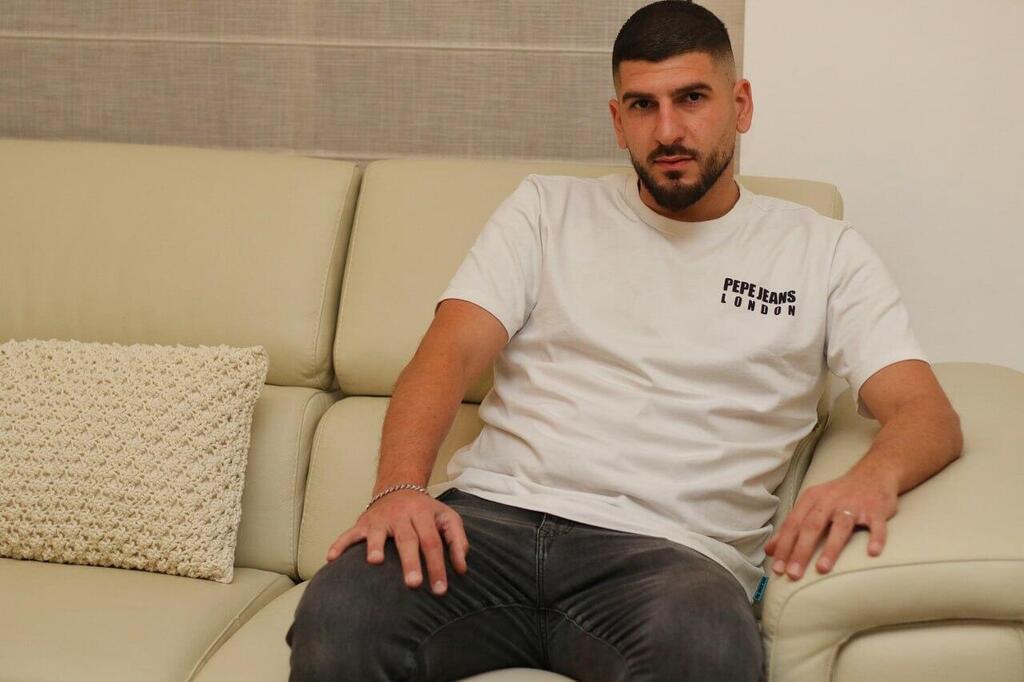
Omri Gvili
(Photo: Meir Even Haim)
“Our love was so strong I can’t even explain it. I always felt him, and he felt me. Once, when he was in the army, I felt all day that something wasn’t right. That evening, I called my mother and she told me Rani had injured his head.” Despite the grief, Omri is trying to move forward — he married last month.
“I hold myself together from the strength he gives me. From my wife, from my family. It’s very Rani to be the last one, to make sure everyone else returns first. That’s his nature. I dreamed he came home and said he came from Gaza to rest. I watched him sleep, and then he woke up and said, ‘Okay, I’m going back to Gaza.’ He told me he couldn’t be here while they were still there. ‘When they come back, I’ll come back.’ That’s Rani.”
Ran, 24, from Meitar, was killed fighting in Kibbutz Alumim on October 7. He fought while injured, after breaking his shoulder in a motorcycle accident and awaiting surgery, yet still volunteered to head south. He managed to save dozens of people at the Nova music festival before he was killed and his body taken to Gaza. He served nearly two years in the Negev Yasam unit of the Southern District Police, and despite his young age was placed in the motorcycle platoon. Gvili is survived by his parents, Itzik and Talik, and two siblings, Omri and Shira.
‘It’s not personal, but the frustration is huge’
Elad Or, brother of hostage Dror Or, told ynet earlier this week: “It’s still day to day, that’s what it is. We work, do what we can, talk to everyone — that’s it. There’s that stupid saying: ‘Why are the last ones always last?’ There’s a line — and we’re last.”
He added: “All our indications were that among the Israelis, Dror and Ran really were the last. There’s a queue in terms of the complexity of recovering them. It’s not personal, and they haven’t forgotten us — that’s the consistent message I get from the army and the state. The complexity here is engineering. It won’t be easy for the IDF to dig and search the place where Dror is believed to be. It requires international involvement. Hamas is searching on its own, and if it can’t find Dror, there may be some agreed-upon operation under the terms of the deal. We may need that. It requires a lot of patience.”
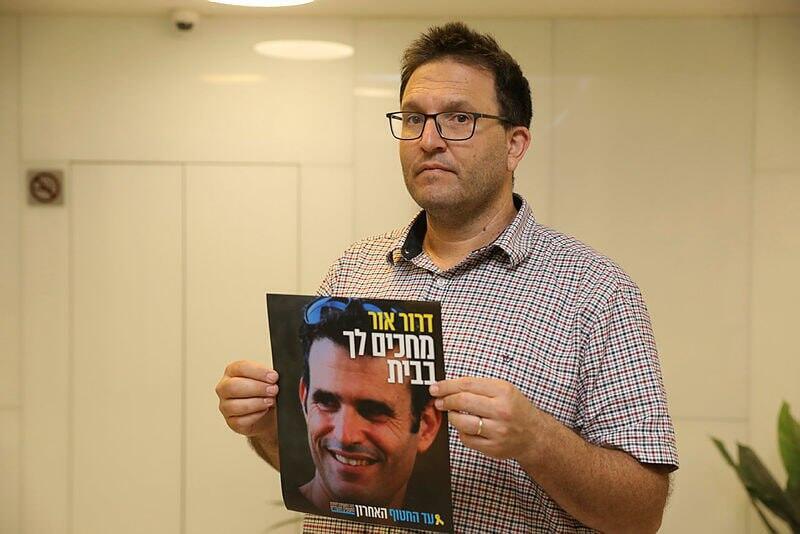
Elad Or, brother of the hostage Dror Or
(Photo: Gil Yohanan)
“It’s exhausting, the frustration is huge, and you can’t help wondering how this happened to us,” he said. “I trust the IDF is doing everything it can and working hard, but that doesn’t change the enormous anger and frustration about what happened on October 7 and since. If the war had been shorter, more people might have been returned alive, suffering would have been reduced, and maybe Dror would have been found earlier. It’s hard to accept. The cliché that October 7 hasn’t ended is true.”
Dror was murdered on October 7 and taken into Gaza. At first, he was declared a hostage, but after 208 days, the family was informed he was no longer alive. Dror was a father of three — Yahli, Noam and Alma — and the partner of Yonat Or, who was murdered that morning. Two of his children, Alma and Noam, were kidnapped and freed in the hostage deal in November 2023. For 15 years, he ran the dairy at Kibbutz Be’eri, producing its boutique cheeses with his partner Dagan Peleg, who said: “Dror was a man of passion, a man of people.”
Among the three hostages whose bodies remain in Gaza is one foreign national — Sudthisak Rinthalak, from Thailand, who worked in Israeli agriculture. Little is known about him. He was 43 when he was abducted. He came to Israel seeking agricultural work to support his elderly parents. That Saturday, he was murdered in an orchard near Kibbutz Be’eri and taken to Gaza.
In May 2024, his parents were informed that he had been killed on October 7. His father then called on Hamas to release the remaining Thai hostages. “They sought work outside Thailand to escape poverty and hope for better lives,” he said.