

Prime Minister Benjamin Netanyahu said Saturday evening that the framework agreement reached with Lebanon was a “historic achievement” and a “major blow” to Iran and Hezbollah, as Israel prepares for the possibility that the terror group could respond with attacks on IDF forces in the coming days.
Speaking at a press conference following the agreement reached Friday with the Lebanese government, Netanyahu said the framework sets a partial Israeli withdrawal from “pilot areas” in south Lebanon that would be handed over to the Lebanese army, while allowing the IDF to remain in most areas it controls in the security zone until the threat posed by Hezbollah is removed.
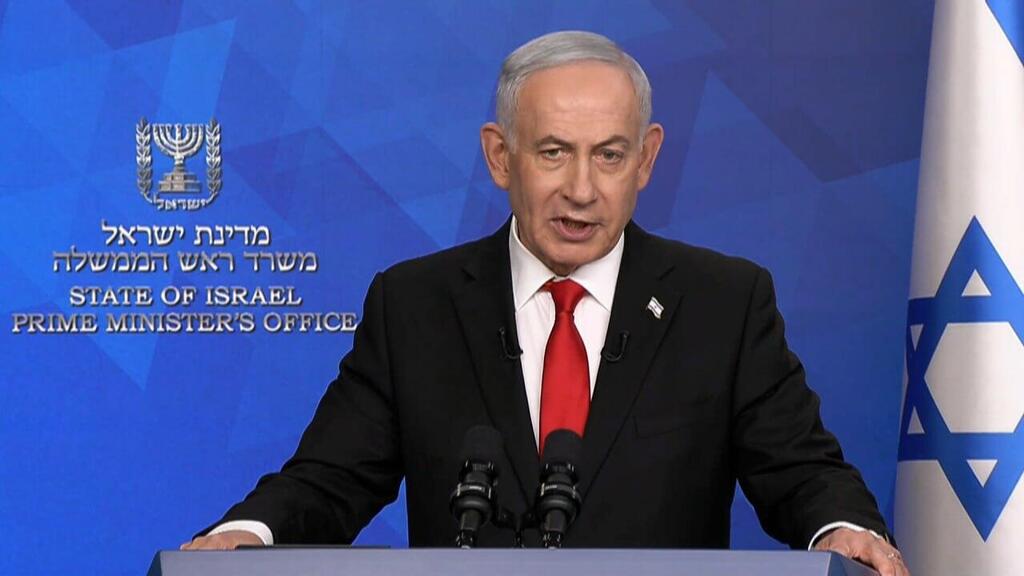
“Citizens of Israel, yesterday, before Shabbat began, we achieved a historic achievement for the State of Israel,” Netanyahu said. “After direct negotiations between Israel and Lebanon, mediated by the United States, we reached a framework of understandings that allows us to move toward ending the conflict and, with God’s help, later reach a peace agreement between the two countries.”
Netanyahu said that under the understandings, “the United States and Lebanon recognized Israel’s right to maintain a security zone until no threat is posed to Israel from Lebanon.”
He described the agreement as a major setback for Tehran and Hezbollah.
“This is a major blow to Iran and Hezbollah, and to Iran, which tried to force us to withdraw from south Lebanon,” Netanyahu said. “You heard those demands all the time, and also their disappointment and Hezbollah’s disappointment. I firmly opposed the idea that a withdrawal would be imposed on us. You have no standing here, no involvement and no role, not you, not Hezbollah and not any terror organization.”
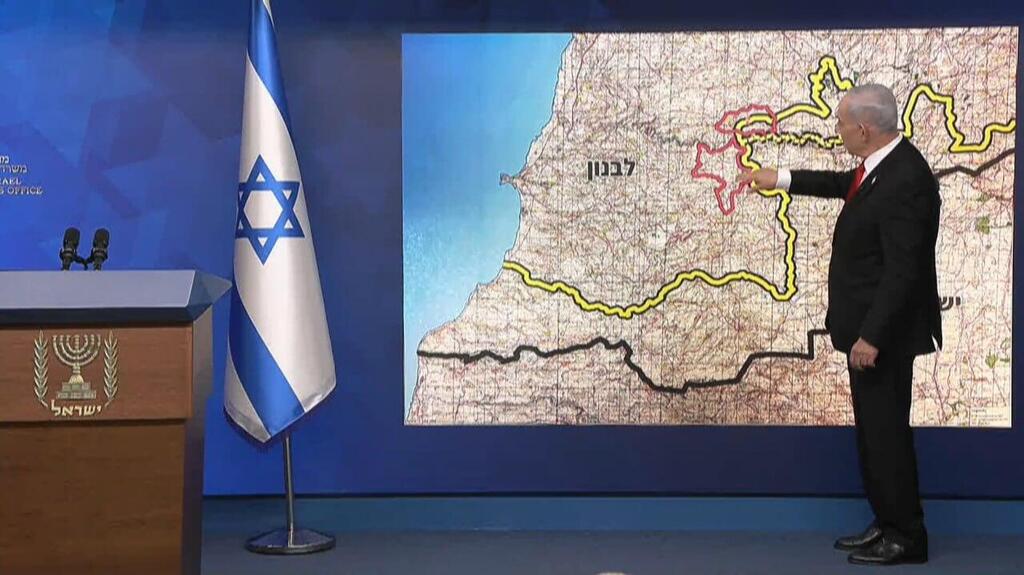
Netanyahu presented a map of the “yellow line,” referring to the security zone in south Lebanon, including areas beyond it that the IDF has taken control of. He also showed two pilot areas from which the IDF would withdraw, saying most of them are outside that yellow line, while only one includes a certain section inside it.
“Israel remains in the yellow area that protects us, and this is a huge achievement because they tried to push us out of there through all kinds of measures and pressure. That, of course, did not happen,” he said.
Netanyahu thanked the United States and Secretary of State Marco Rubio, and also thanked Lebanon. “The government of Lebanon and the people of Lebanon showed great courage,” he said. “We are breaking the Iranian terror axis here.”
(Photo: GPO)
The framework agreement was signed Friday night by Israeli and Lebanese delegations at the end of a fifth round of talks in Washington. Under the agreement, the two countries recognize each other’s sovereignty and commit to working toward resolving the conflict and achieving full peace. Israel explicitly states that it has no territorial aspirations and that once the Hezbollah threat is removed “throughout Lebanon,” there will no longer be a need for an IDF presence in the country.
Israel commits to a gradual withdrawal process from Lebanese territory, beginning with two pilot areas that will be transferred to Lebanese army control, subject to the removal of Hezbollah and its terror infrastructure from those areas.
The government insists that those two areas will be outside the “yellow line” where the IDF is positioned in south Lebanon, and that Israel’s presence inside the yellow line will continue for a long time.
The agreement is expected to be implemented under U.S. supervision, with Washington and Arab states expected to help strengthen the Lebanese army so that it can meet the terms of the agreement.
The agreement is also intended to help separate the Lebanese front from the Iranian front, against the backdrop of Iran’s insistence on a full IDF withdrawal from south Lebanon as part of its memorandum of understandings with the United States.
As expected, the agreement angered Hezbollah. Supporters of the terror group rioted in Beirut on Friday night, and Hezbollah Secretary-General Naim Qassem attacked the framework Saturday afternoon, calling it a “humiliation” and “void.” He claimed it “gives the Zionist entity legitimacy to annex the lands it occupied.”
Qassem said the link made in the agreement between Hezbollah’s disarmament and an Israeli withdrawal was “a very dangerous proposal that crosses every red line.”
Shortly after Qassem’s speech, reports in Lebanon said Israeli strikes hit the Nabatieh al-Fawqa area. The IDF said the strikes were carried out to remove threats. Under the understandings with the United States and Lebanon, Israel does not strike in Lebanon except to remove immediate threats to its forces.
A security official said Saturday evening that Israel assesses Hezbollah could respond to the agreement with attacks on IDF forces within days, and that the defense establishment is preparing for possible escalation on the northern front.
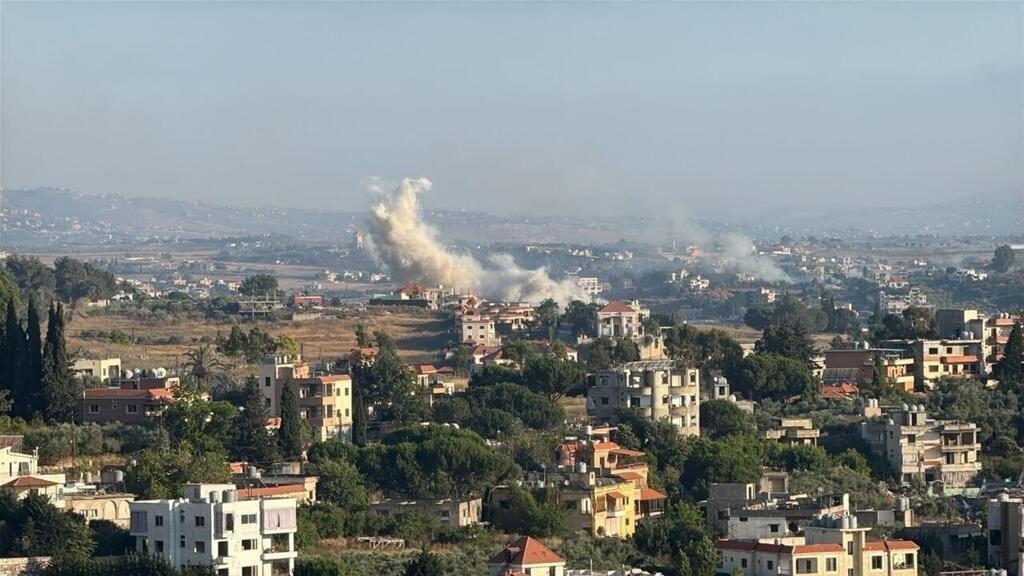
Reported IDF strike in southern Lebanon
According to the official, Israel believes Hezbollah “will not sit idly by,” but he stressed that Israel has no restriction on its freedom of action.
“If it attacks, we will remove threats and respond. We are also prepared for escalation,” the official said.
Netanyahu was also asked at the press conference about his political plans for the coming election. He said his goal was to form a “broad national government.”
“I think there are forces among us that want to bring division within the people,” Netanyahu said. “They want to worsen and deepen misunderstandings and disagreements, and I think that is a terrible mistake. We must make every effort to solve the problems among us by agreement, because we have enemies outside.”
“A civil war will not happen here,” he added. “And in order to do that, I intend to form a broad national government, not a narrow government, not a left-wing government that depends on the Arab parties, but a broad national government.”
Netanyahu said such a government would be based on “basic principles,” including Israel’s ability to defend itself, reduce its dependence on foreign weapons industries and reach broader agreements on military service and the judiciary.
“A broad national government can make peace within us, deal with the remains of the Iranian axis and reap the fruits of success in diplomatic agreements,” he said. “This allows us to do what I promised to do on the second day of the war: change the face of the Middle East. That is exactly what we are doing.”