

Israel is preparing for the possibility of escalation on the northern front following the framework agreement signed with Lebanon, with security officials assessing that Hezbollah could attack IDF forces within days in response to the deal.
“Hezbollah and Iran are losing it,” a security official said in a briefing. “If Hezbollah attacks, we will respond accordingly and act to remove the threats.”
According to the official, Israel’s assessment is that Hezbollah “will not sit idly by,” but he stressed that Israel faces no restrictions on its freedom of action. “If it attacks, we will remove threats and respond. We are also prepared for escalation,” he said.
Unlike in the past, Israel is no longer operating according to an automatic equation in which every attack on Israel is met with a strike in Beirut’s Dahieh district, Hezbollah’s stronghold in the Lebanese capital.
“Each case will be examined on its own merits,” the official said. “If Israeli communities are attacked, a decision will be made on how to respond. Dahieh may also be a target, but it is not an automatic response.”
On the U.S. position, the official said Israel believes Washington will not rush to restrict Israeli action against Hezbollah if the terror group tries to sabotage the agreement.
“Hitting Hezbollah also serves the Lebanese government and the agreement mediated by the Americans,” the official said. “The United States will not want to allow Iran and Hezbollah to undermine the diplomatic process.”
The official added that, from Israel’s perspective, “Lebanon’s sovereignty is not harmed when Israel strikes Hezbollah,” and described the framework as “a major diplomatic and security achievement” that realizes the IDF’s gains on the battlefield.
“This is a framework agreement, but a good start for what comes next,” he said. “The greatest achievement is that Israel is not withdrawing from the yellow line until Hezbollah is disarmed throughout Lebanon.”
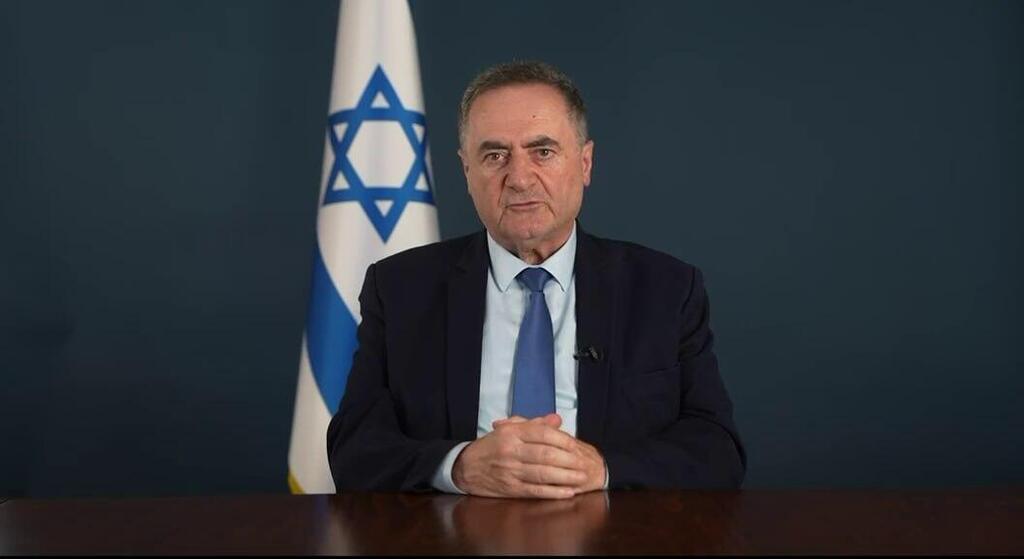
Defense Minister Israel Katz
(Photo: Defense Ministry)
The official also revealed details about contacts surrounding the agreement’s security annex. According to him, Defense Minister Israel Katz was personally involved in the final wording and insisted that the first pilot areas not be inside the “yellow area,” the anti-tank line held by the IDF in south Lebanon.
The Lebanese side, he said, insisted on that demand, and the dispute extended the talks by another day. In the end, the sides agreed on a pilot that “bites into the expanded line,” in areas seized by the IDF over the past two weeks, allowing Lebanon’s president to present the public with the beginning of an Israeli withdrawal trend.
According to the official, the pilot is expected to begin in the coming days, subject to the Lebanese army’s readiness, and is set to start simultaneously in two areas.
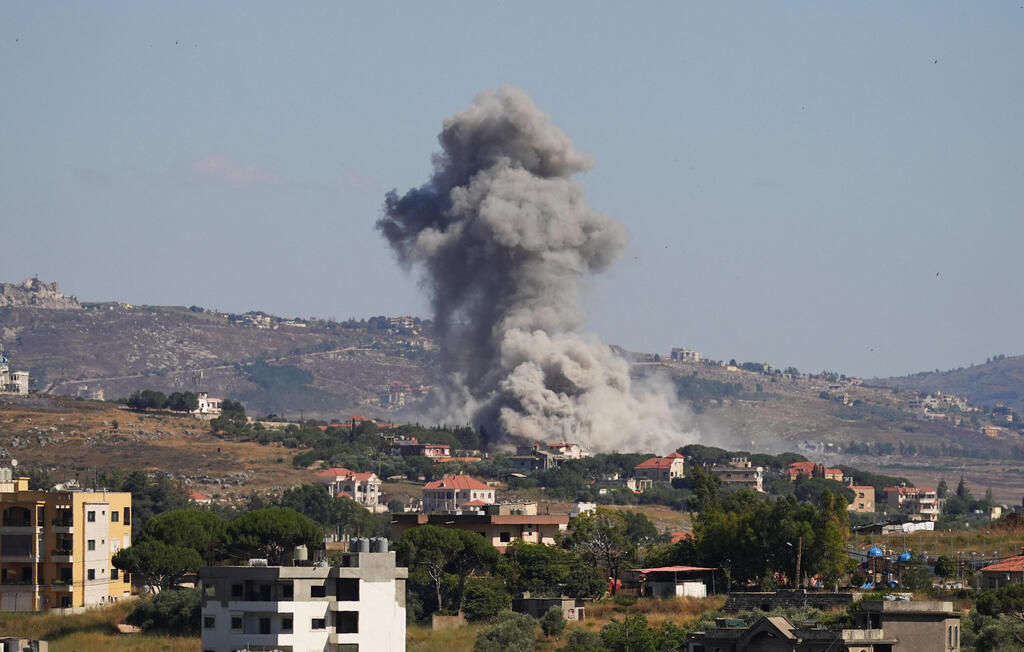
The remarks came after Defense Minister Israel Katz said Saturday that Israel was preparing for a prolonged military presence in south Lebanon, as reports in Lebanon said Israeli strikes hit the Nabatieh al-Fawqa area shortly after Hezbollah chief Naim Qassem rejected the framework agreement signed between Israel and Lebanon.
The IDF said the strikes were carried out to remove threats. Under the understandings with the United States and Lebanon, Israel does not strike inside Lebanon except to remove immediate threats to its forces.
Katz called the agreement “a historic event and an important diplomatic and security achievement for the State of Israel,” saying it could shape “a new and safer reality” on the northern border and in Lebanon for the first time in decades.
“Israel is not withdrawing from Lebanon and is maintaining the security zone in south Lebanon, including Beaufort Ridge, while the area is clear of residents and terror infrastructure above and below ground,” Katz said. He added that Israel was preserving the IDF’s freedom of action to thwart threats against soldiers and northern communities.
According to Katz, the key principle in the agreement is that “there will be no redeployment of Israel in south Lebanon, no withdrawal, as long as the Hezbollah terror organization is not disarmed throughout Lebanon and the security of northern residents is ensured.”
“The test will be in implementing the agreement, and many challenges are still expected,” Katz said. “The prime minister and I instructed the IDF to prepare for a prolonged stay in the security zone and to prepare accordingly to defend IDF soldiers and remove threats from northern communities.”
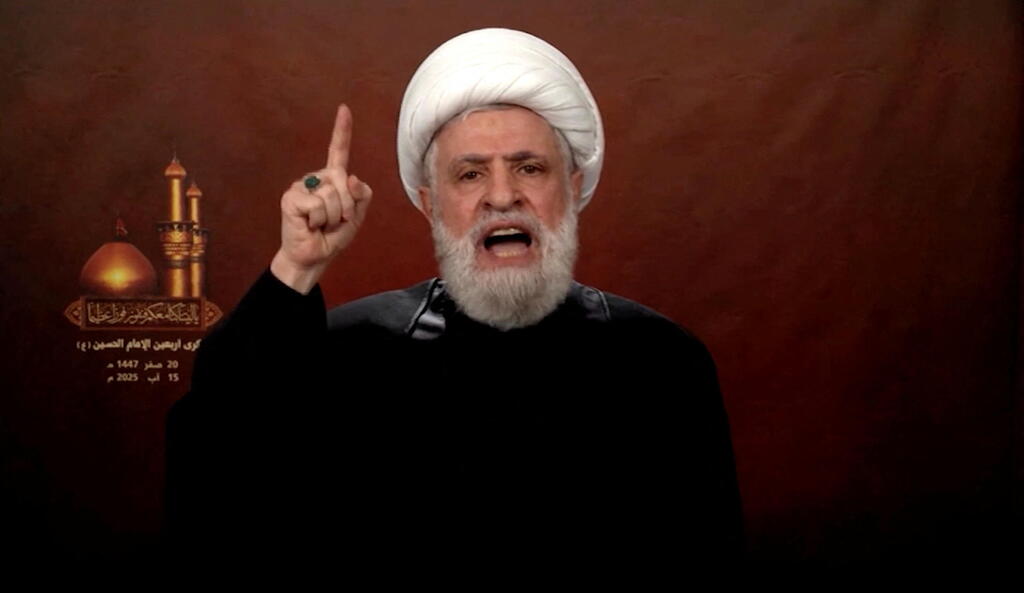
Hezbollah Secretary-General Naim Qassem
(Photo: Al Manar TV/Reuters)
Earlier Saturday, Hezbollah Secretary-General Naim Qassem sent a message to the Lebanese government, attacking the framework agreement it signed with Israel. He warned that the document “gives the Zionist entity legitimacy to annex the lands it occupied.”
Qassem said the connection made in the framework between Hezbollah’s disarmament and an Israeli withdrawal was “a very dangerous proposal that crosses every red line.”
He called the agreement “humiliating,” a “surrender of sovereignty” and “void,” and said Hezbollah’s disarmament was an internal Lebanese issue in which “the Israeli enemy has no right to interfere.”
“We will continue as a resistance on the ground in order to defeat the occupation,” Qassem said. “We did not leave the field in difficult circumstances, and we will not leave it.”
Hezbollah is not a party to the agreement, and its supporters took to the streets of Beirut overnight, waving the terror group’s flags, damaging property and clashing with Lebanese security forces. According to reports in Lebanon, the Lebanese army used tear gas against rioters near the road to Beirut airport.
First published: 19:07, 06.27.26