

Calls to the national support hotline for male survivors of sexual assault come in the early morning hours and late into the night, on weekdays and before Jewish holidays. Some callers are very young, but more often they are older men. Sometimes the assault happened recently, but in most cases it is a secret they have kept for decades.
Since the Hamas-led attack on Israel on Oct. 7, 2023, the number of callers has steadily increased, with men finding the courage to speak for the first time in their lives about sexual abuse they experienced as children or young adults.
The change did not happen overnight. In fact, during the first days after October 7, the national hotline for male survivors of sexual assault was quieter than ever.
"There was a feeling that you couldn't deal with your own personal trauma when there were hostages," recalled Eran Hahn, the hotline's director.
Two or three weeks later, things began to change. More and more calls came in, and what began as a trickle turned into a flood.
"A dramatic increase," Hahn said.
According to the hotline's figures, it received approximately 3,500 inquiries in 2025, a rise of tens of percent compared with the preceding two years.
"The constant discussion of sexual violence during the attack on the Nova music festival and sexual violence in captivity permeated all of Israeli society and enabled many men to come forward and share the abuse they had experienced, on a scale we had never seen before," said Orit Sulitzeanu, executive director of the Association of Rape Crisis Centers in Israel.
"Making that call to the hotline is often the beginning of the psychological healing process," she said.
The silence is breaking, but prejudices persist
The increase in calls is exposing how much more widespread sexual violence against men is than commonly believed.
Shame, prejudice and the mistaken perception that sexual assault happens only to those who are physically weak have long kept the issue largely out of public discussion.

(Photo: Shutterstock)
It is already known that boys and girls experience sexual abuse at similar rates, but testimonies reaching support hotlines in recent years suggest that the picture may be similar among older age groups as well.
Hahn pointed to public discussions surrounding the release of hostages from Gaza as a striking example of the gaps in awareness and understanding.
"Everyone talked about how the women might be raped and therefore had to be released," he said. "But that doesn't mean the men weren't also at risk of sexual assault, and nobody talked about that at all."
"We kept saying that in times of crisis and in conflict zones, rape is also perpetrated against men."
The #MeToo movement, which gained momentum nearly a decade ago, brought sexual violence against women to the forefront of public awareness and made it easier for many women to speak about their experiences.
Hahn attributes the gradual breaking of the silence among men to changes in Israeli society since October 7.
The trauma that emerged from every direction following the attack awakened long-dormant memories of earlier experiences among women and men alike.
At the same time, Hahn said, growing willingness to discuss post-traumatic stress disorder among soldiers has, for the first time, helped legitimize broader conversations about men's psychological struggles.
"The discussion of post-traumatic stress raised awareness of men's vulnerability," he said.
"We're getting calls from men in their 50s and 60s who are only now able to talk about what happened to them. Only now are they making the connection between their pain and the abuse."
"Their experience is that they're invisible, that there's no chance anyone will sympathize with them if they tell someone."
Yet despite the changing public conversation, recognition of men's vulnerability, particularly to sexual violence, remains far from adequate.
Deeply rooted prejudices persist, as does the enormous difficulty many survivors face in disclosing their experiences.
"Sexual assault against men is perceived as something that supposedly contradicts being a man, someone who isn't supposed to be on the receiving end of abuse," said Neta Patrick, director of the Tel Aviv Sexual Assault Crisis Center.
Hostage survivors' testimonies trigger unprecedented surge in calls
The return of male hostages from Gaza about a year ago, and the willingness of some to speak openly about the sexual violence they endured in captivity, provided further evidence that men, too, had been subjected to such abuse.
One particularly memorable account came from former hostage Guy Gilboa-Dalal, who described being sexually assaulted by a terrorist during an interview with Channel 12 News.
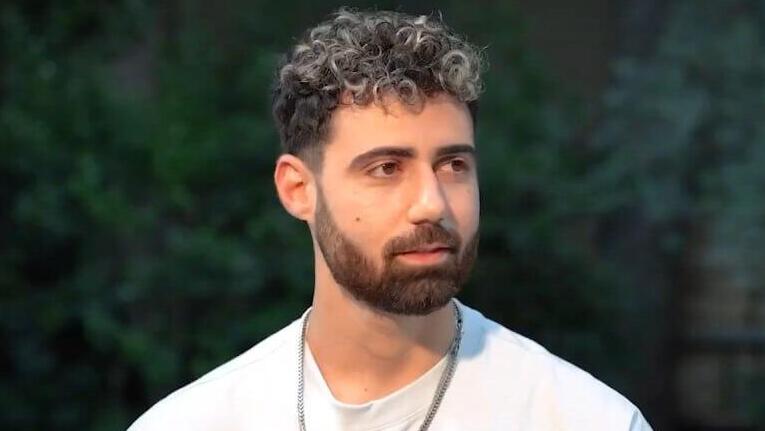
Guy Gilboa-Dalal
(Photo: Barak Meir/Xmedia)
"He came up behind me, started touching me all over my body, and I froze at that moment," Gilboa-Dalal recalled.
"He really started touching me and kissing the back of my neck, kissing my back."
After former hostages began sharing accounts of the sexual violence they experienced, support hotlines were inundated with calls on an unprecedented scale.
On one hand, the testimonies provided another catalyst for survivors who had been abused many years earlier but had never dared to speak about it.
On the other, Hahn said, the willingness of male and female former hostages to discuss their experiences sometimes stirred painful and complicated emotions among other survivors.
"Some people felt that, supposedly, it was 'easier' to experience sexual assault in captivity because the evil there is absolute," he explained.
"When sexual abuse happens within the family, the question often arises: Did it happen or didn't it? Maybe I'm to blame? Did I play a part in it?"
"There was also jealousy that the hostages were supposedly 'surrounded by support' and received assistance."
For people who had remained silent for years without receiving treatment, the contrast could be particularly painful.
Growing demand, but too few treatment options
Access to treatment remains a major concern.
The Welfare Ministry provides some therapeutic services for survivors of sexual assault, but demand far exceeds available resources, resulting in extremely long waiting periods.
Hahn said the situation is even more difficult for male survivors than for women.
"There is a great deal of fear about treating men who have experienced sexual assault, and there is also difficulty identifying the source of their distress, whereas among women, the issue is more widely recognized," he said.
The shortage of appropriate services means that even as more men find the courage to seek help, the professional support they need is not always readily available.
Next week, the Tel Aviv Sexual Assault Crisis Center, together with the Tel Aviv municipality and the Association of Rape Crisis Centers in Israel, will hold a professional conference dedicated to the issue.
Patrick, the center's director, said the growing willingness to discuss sexual violence against men must be accompanied by meaningful improvements in the services available to survivors.
"Our responsibility is to ensure that alongside the change in public discourse, there are also professional, accessible services tailored to men who have experienced sexual assault," she said.