

At first glance, the communities along the seam line in the Hefer Valley of central Israel look pastoral: private homes, green spaces, large playgrounds. Residents exercise and ride bicycles. But appearances are deceiving. The calm masks fear that has accompanied residents since the October 7 massacre and has intensified since Friday’s deadly attack near Ein Harod, in which two people were killed.
On Sunday as well, Palestinians without permits were again documented crossing the separation fence near Jerusalem into Israeli territory, at the same location from which the attacker had infiltrated before carrying out the attack in the valley. Footage was published.
Palestinians without permits cross the fence into Israel near Jerusalem


As if that were not enough, ynet reported earlier Sunday that tens of thousands of Palestinians without permits are currently in Israel under a government policy that began about 20 years ago, after the end of the second intifada and completion of the security barrier around the West Bank. According to the report, authorities have long turned a blind eye as a matter of policy, a practice carried out by hundreds of regional brigade commanders, heads of the West Bank division, commanders of Central Command and chiefs of staff.
The rationale behind the policy has been to allow tens of thousands of Palestinians to enter Israel illegally for work. While average monthly wages in the Palestinian Authority areas range from about 1,200 shekels to 1,500 shekels, workers can earn six to seven times that amount in Israel. Every year or two, following waves of attacks by infiltrators exploiting numerous breaches in the fence, the military launches highly publicized operations to detain Palestinians crossing illegally, most of them laborers seeking work.
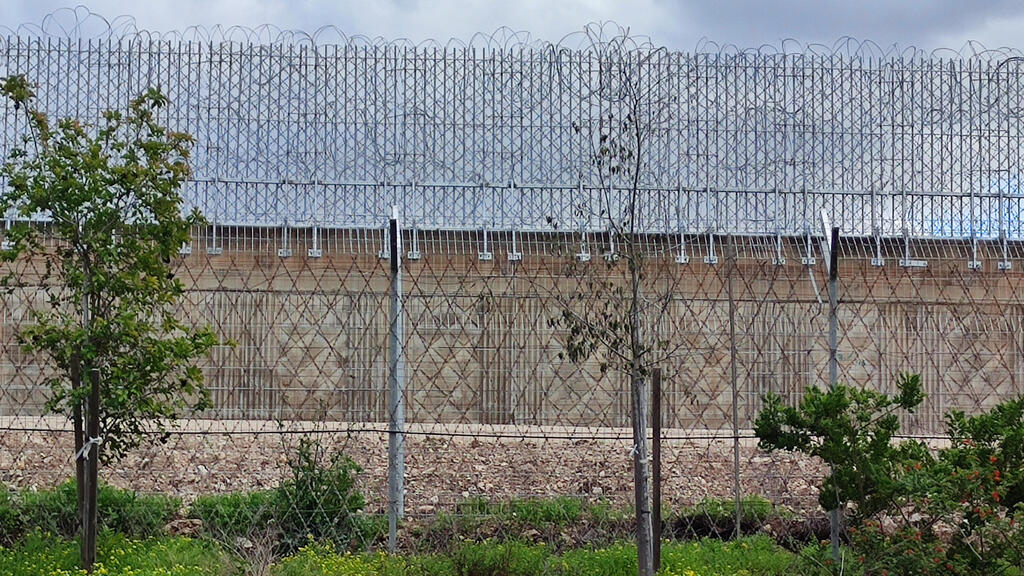
The wall behind us separates the area where we are standing from the Palestinian village of Shuweika, near Tulkarm. The physical distance between the nearest home in Bat Hefer and its counterpart in Shuweika is just 300 meters. Between them are agricultural fields where Palestinians are often present during daily routines. The Israel Defense Forces, supported by large reserve units, conduct patrols along the separation fence throughout the sector.
Still, residents remain uneasy, recalling cases in which Palestinians climbed into the community using ladders to look for work. Avi, a Bat Hefer resident, said: “Just like on October 7, there are constant concerns, but we trust the army and the local rapid-response teams and hope we do not see more infiltrations here.”
In Bat Hefer’s manicured neighborhoods, residents continue outdoor exercise despite the gloomy weather. “There is fear everywhere in the country,” Avi said. “Yes, we are very close to the separation fence, but there are concrete barriers, large coils of razor wire, watchtowers and patrols by army forces and local security teams. We have to stay alert to protect our security.”
In a new neighborhood, Shira said she and her family will move into their newly purchased apartment in a month or two. “Some have already moved in, others will soon,” she said. “There is always concern, but we trust the army and our local security teams. It is definitely frightening when you hear gunfire from the other side. We are very close and must remain ready and alert at all times to prevent attempts to reach the communities along the seam line.”
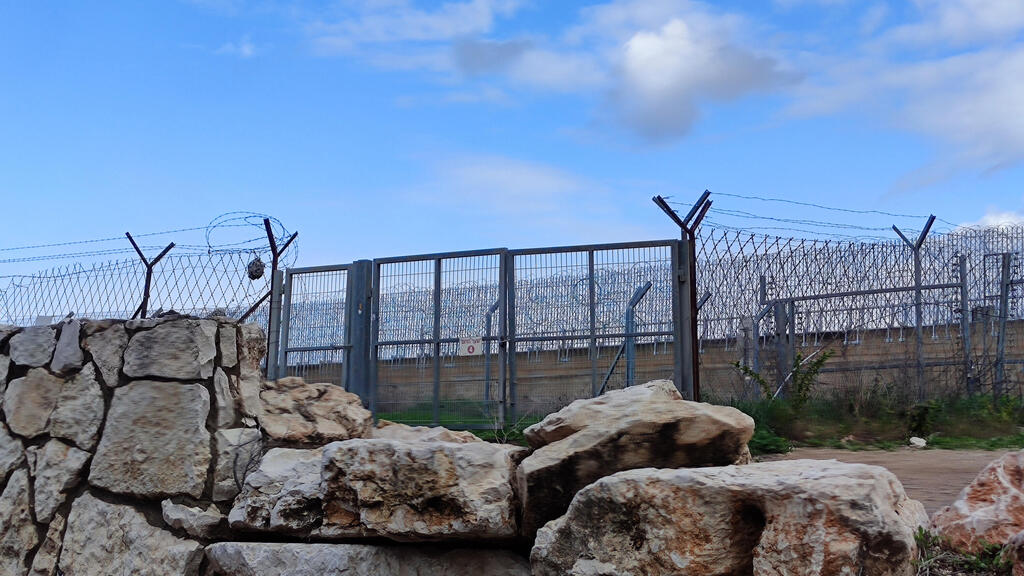
Bat Hefer is the largest community in the Hefer Valley bordering the seam line. From there, we continued toward Baka al-Gharbiya, stopping near the neighboring kibbutz of Bachan. Aharon, whom we met at a gas station near the kibbutz, said, “There is a strong fence here that is supposed to prevent crossings, like in Jerusalem, but it turns out nothing is completely secure. A Palestinian infiltrates, travels north and carries out the murder of a young woman and an older man. Who says this cannot happen here along our seam line?”
“It is clear to everyone that a terrorist will try to exploit an opportunity to jump the fence, move with help on our side for a few hundred shekels and then enter Israeli territory to carry out an attack,” Aharon said. “On Friday, the attacker entered from the Jerusalem area and reached the north to carry out an attack. It is very troubling that he moved freely without being stopped.”
(Photo: Lior Sharon)
Galit Shaul, head of the Hefer Valley Regional Council, said: “I extend my heartfelt condolences to the families of those murdered in Friday’s horrific attack and wish a full recovery to the wounded. The threat of a lone attacker is always on our agenda with the army and security forces. It is of utmost importance to prevent any infiltration and ensure there is no employment of Palestinians without permits. Unfortunately, as we saw again on Friday, the current situation is far from satisfactory.
“At a meeting we held this morning with community leaders from the seam line and the commander of the Ephraim Brigade, we stressed the need to add significant permanent army and security forces in the area to prevent infiltrations. We also emphasized the need to reinforce staffing in local command centers to provide fast and accurate alerts to security teams and forces. At the same time, we continue to call for the establishment of a buffer zone beyond the wall to prevent any approach to our communities. As has again been proven, this is a national interest: a quiet and secure seam line is essential for the security of all residents of Israel.”
Rafi Saar, chairman of the Seam Line Authorities Forum and mayor of Kfar Saba, said the Sharon region’s seam line could become a security weak point due to ongoing breaches in the fence and near-daily illegal crossings. “Infiltrations that appear civilian can be used for intelligence gathering and to prepare the ground for terrorist activity,” he said. “Recent security incidents underscore how sensitive this area is.”
“Residents of the seam line deserve security just like residents near Gaza and in the north,” Saar added. “Our responsibility as local leaders is to act in advance and not wait for disaster. The seam line must be declared a sensitive security area and a national plan advanced to upgrade the fence, strengthen technological and operational capabilities and reinforce security forces so every resident knows they are safe.”