


Questions over the confidential conflict-of-interest arrangement governing Shin Bet chief David Zini moved to the forefront Thursday after a court allowed publication that a close relative of the agency head is a suspect in a major investigation into the smuggling of goods into Gaza.
The Ashkelon Magistrate’s Court said the case involves multiple suspects allegedly involved in transferring goods worth millions of shekels from Israel into Gaza for financial gain. The court emphasized that Zini himself is not suspected of any wrongdoing and has no connection to the allegations.

Because of the family relationship, the court said, the investigation of Zini’s relative is being conducted solely by police rather than the Shin Bet, which is otherwise involved in the broader probe.
“Given the familial relationship, the investigation of the suspect is being conducted by the police and not by the Shin Bet,” the court said in its ruling.
The disclosure has renewed attention on the classified conflict-of-interest framework that governs Zini’s conduct as head of the internal security agency. That arrangement was approved in September by the advisory committee on senior appointments, chaired by former Supreme Court president Asher Grunis.
In its opinion at the time, the committee noted it had examined “a concrete matter” involving suspicion related to Zini’s son and another individual known to him, but found no ethical wrongdoing by Zini himself. The committee stressed that any Shin Bet chief must recuse himself from handling intelligence or operational matters involving close relatives, transferring such cases to other officials.
The opinion also stated that if information were to arise involving “extreme acts” by a close family member, resignation — or dismissal — could be warranted due to a severe conflict of interest and potential harm to public trust.
The smuggling investigation had been under a sweeping gag order amid widespread speculation about a “new security affair.” On Tuesday, the same court first allowed publication that a multi-suspect investigation into smuggling goods from Israel into Gaza was underway, led by the Southern District police major crimes unit and the Shin Bet.
Police said earlier Thursday that they had filed prosecutorial declarations against 13 suspects, signaling intent to submit indictments in the coming days. No decision has yet been made regarding additional suspects, including Zini’s relative, who remains in custody.
The hearing followed requests by multiple media outlets, including ynet, to lift parts of the gag order. Attorneys Tali Liblich and Natai Tzuriel represented the outlet in court.
(Photo: REUTERS/Ibraheem Abu Mustafa)
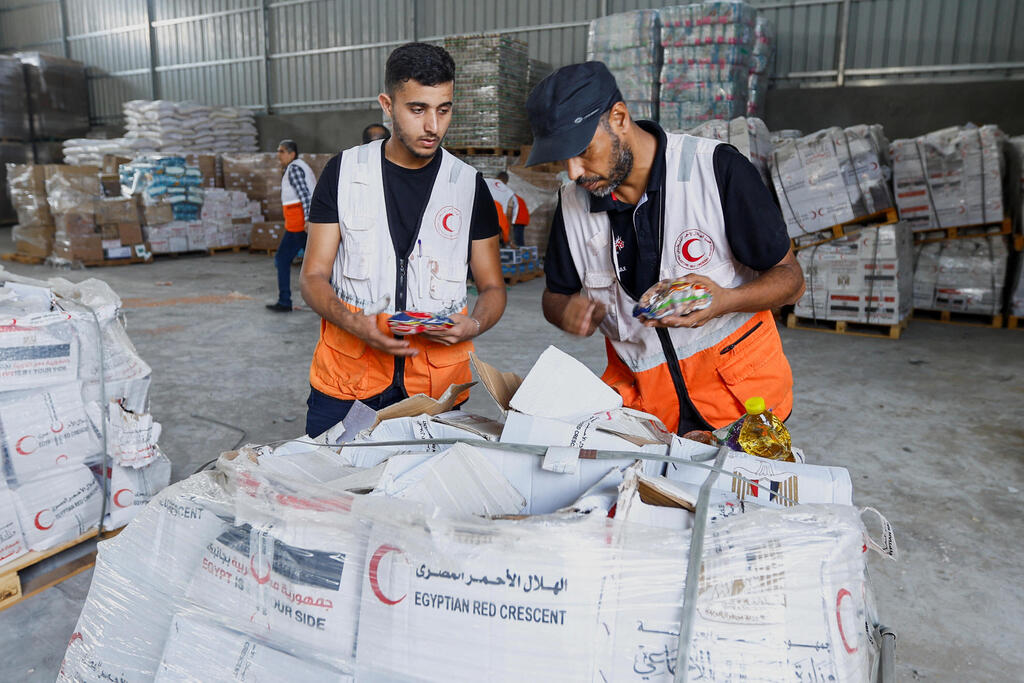
Security officials have acknowledged in recent months that thousands of items were smuggled into Gaza — and in some cases reached Hamas — over the past year, despite a declared full military blockade. Some of the goods, such as tobacco, are banned from entry and generate significant revenue. Others include dual-use items like batteries, some approved for humanitarian purposes but allegedly diverted, and others suspected of entering through illicit routes to power tunnels and military command centers.
During a cabinet meeting earlier this week, Zini warned ministers that smuggling posed a “serious problem” and urged tighter security measures, including moving inspection points closer to the Rafah crossing to prevent offloading between checkpoints, officials present said.
Zini’s father, Yosef Zini, wrote earlier this week in a private WhatsApp group that the allegations were “a crude lie,” claiming evidence had been fabricated to harm the suspect and the family. In an interview with a religious-nationalist youth website, he described the affair as politically motivated.
The suspect’s attorney, Assaf Klein, said his client “categorically denies” all allegations, including involvement in smuggling goods into Gaza. Klein described his client as a decorated individual who performed extensive reserve service since the war began and said he expects prosecutors to close the case.