

Israel will mark three years since the Oct. 7 massacre with a week of remembrance and protest events led by bereaved families and former hostages, beginning with a nationwide moment of silence at 6:29 a.m., the time Hamas launched its attack.
The Oct. 7 Council announced Sunday that the anniversary program will include memorial ceremonies, protest convoys, public testimony and demonstrations across the country, culminating in a central families’ ceremony at Ganei Yehoshua Park in Tel Aviv. The event will be hosted by former hostage Eli Sharabi, who lost his wife and daughters in the attack, and will be screened at several locations, including Hostages Square.
Gallery
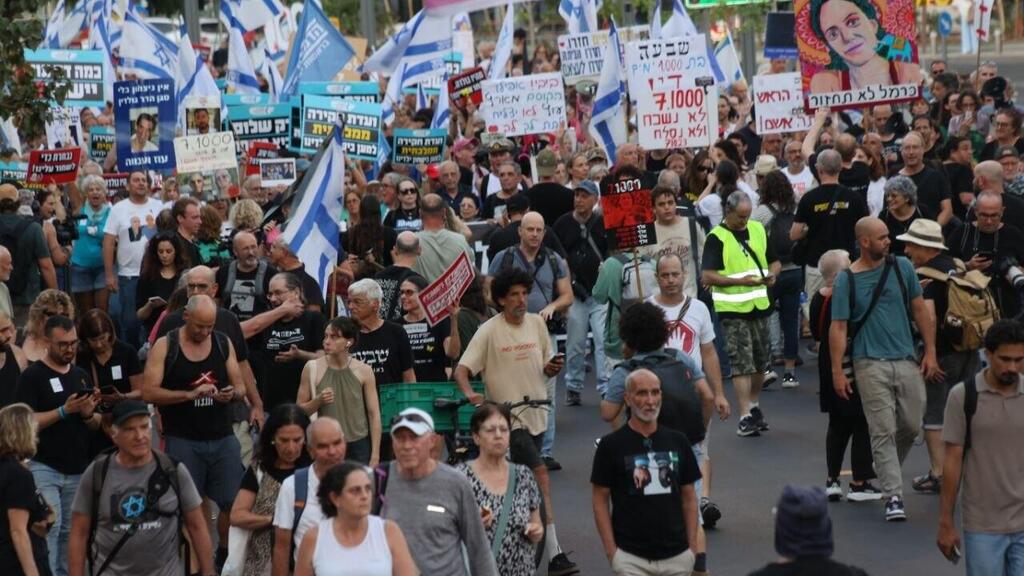
Hostages Square marking 1,000 days since the massacre, about two months ago
(Photo: Moti Kimchi)
The commemorations will begin Saturday night, Oct. 3, after Simchat Torah, with the opening of “The Space Left Behind,” a memorial exhibition at the Peres Center for Peace and Innovation in Jaffa.
On Wednesday, Oct. 7, families and civil society groups will hold events throughout the day. A minute of silence at 6:29 a.m. will be followed by remarks from Oct. 7 Council families, memorial installations and protests in Caesarea, Jerusalem, the Gaza border region and dozens of other locations.
At 7 a.m., council members and activists plan to gather outside the homes of ministers who were serving in the government on Oct. 7 for what organizers have called a “wake-up call.” Ten minutes later, a protest convoy dubbed the “Path of Abandonment” will leave Caesarea for Tel Aviv, followed at 8:30 a.m. by a women’s protest and installation at Trumpeldor Beach.
Additional convoys will leave northern, central and southern Israel at 10 a.m. for a ceremony at Ben Shemen Forest. From 11 a.m., families will take part in memorial services in Gaza border communities and elsewhere around the country.
At noon, organizers are calling for another one-minute nationwide pause at hospitals, high-tech companies, restaurants and other workplaces. The memorial exhibition at the Peres Center will also open that day, displaying personal belongings of dozens of people murdered or killed on Oct. 7, hostages who died in captivity and residents of communities near the Gaza border.
Evening protests are scheduled from 6 p.m. in Haifa, Afula, Tzemach Junction, Rosh Pina Junction and other locations. At 7:30 p.m., an open stage for testimony will begin in the Sha’ar HaNegev area, leading into the main families’ memorial ceremony at 9 p.m. in Tel Aviv.
‘It must not become just another date on the calendar’
“Three years after Oct. 7, this day must not become just another date on the calendar,” the Oct. 7 Council said. “Behind the numbers are people, families and entire lives that were cut short, and behind the disaster there are still questions the Israeli public deserves answers to.”
The council said the week was intended not only to commemorate those killed and harmed, but also to keep demands for accountability and a state commission of inquiry on the public agenda. It called on Israelis to “stop, come, listen” and join the demand for an inquiry to be established after the next government is formed.
“The Space Left Behind” exhibition will open to the public on Oct. 4 and feature personal objects that tell the stories of those killed, abducted or otherwise affected by Oct. 7. Among them are Ariel Bibas’ balance bike, IDF observer Roni Eshel’s beret, paramedic Amit Mann’s stethoscope, Yagev Buchshtab’s musical instruments and the camera of ynet and Yedioth Ahronoth photographer Roy Edan.
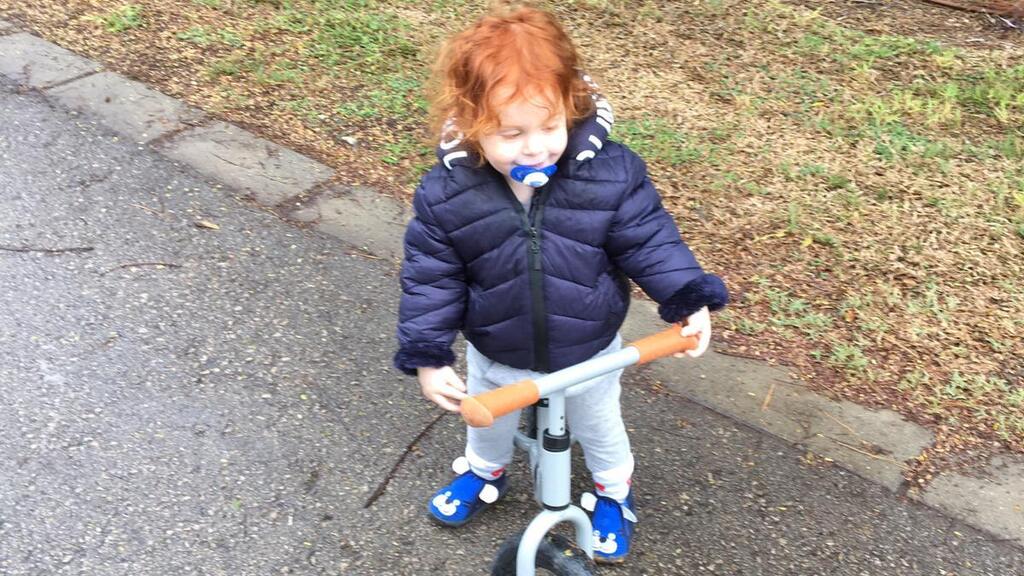
Ariel Bibas
(Photo: courtesy of the family)
The exhibition will begin with an Israeli flag from Oct. 7, burned and torn during the fighting, and end with flags carried by former hostages Matan Zangauker and Matan Angrest when they returned from captivity. Visitors will also be invited to write questions they believe should be investigated by a future state commission of inquiry.
A separate social media project, “Don’t Forget Them,” will pair 14 actors and cultural figures with 14 bereaved families. Led by Hila Avir, whose brother Lotan Avir was murdered at the Nova music festival, the project will focus not only on how the victims died, but on who they were in life.
Participants include Ania Bukstein, Yuval Scharf, Lucy Ayoub, Liraz Charhi, Yael Goldman, Shani Cohen, Naomi Levov and Yedidya Vital. The videos will be released in the days before the anniversary, with organizers saying the project is aimed especially at younger audiences and at returning the victims’ personal stories to the center of public attention.