


Officials assess that U.S. President Donald Trump is inclined to launch a broad military strike on Iran “soon,” after Tehran failed to meet American demands in negotiations. Officials in the Trump administration believe the Iranians are trying to stall and mislead the United States. On Wednesday, a diplomatic source was quoted by Al-Jazeera as saying that “American patience with Iranian delays may run out faster than Tehran thinks.”
In recent limited consultations led by Prime Minister Benjamin Netanyahu, the working assumption was that Iran would fire missiles at Israel even if the IDF does not take part in potential U.S. strikes. As a result, emergency services and the Home Front Command, the military body responsible for civilian defense, were instructed to prepare for war. Various security agencies have declared the highest level of defensive alert, and the defense establishment is on edge.
Gallery
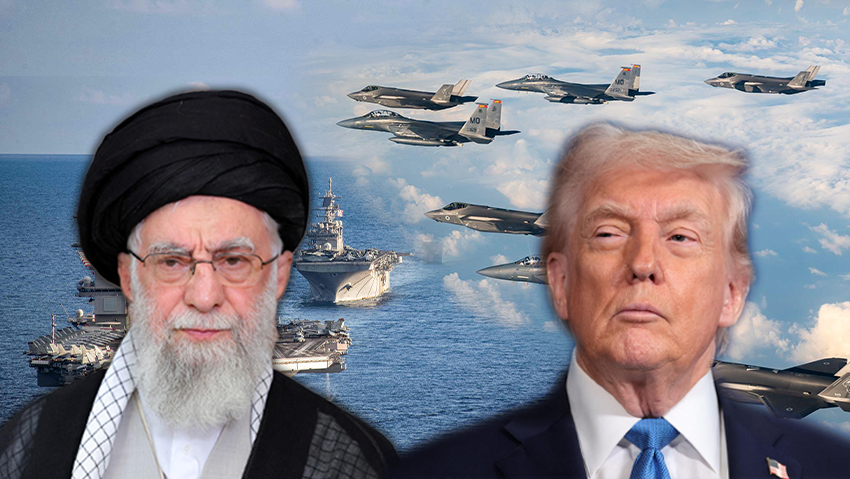
Attack is coming sooner than we think?
(Photo: REUTERS/Jonathan Ernst, Office of the Iranian Supreme Leader/WANA (West Asia News Agency)/Handout via REUTERS)
Footage from an Iranian military drill in the Strait of Hormuz


The United States has already deployed to the region what Trump described as a “beautiful armada,” capable of sustaining a prolonged war with Iran and not just a brief exchange of blows. However, Israeli officials say the exact timing of any U.S. strike remains unknown and ultimately depends on Trump. Even after a decision is made, plans could still change.
The impression in Israel is that a decisive moment is approaching and timelines are shortening. While officials spoke of two weeks just days ago, and previously of a deadline of about a month, there are now signs that action could come within days. At the same time, several considerations could delay an attack. The Board of Peace is scheduled to convene Thursday in Washington, the Winter Olympics in Italy is set to conclude only on February 22, and the Muslim holy month of Ramadan begins Wednesday. It is unclear how much weight Trump gives to those factors.
Even without a clear date, it is increasingly difficult to dispute that the United States is preparing for a prolonged confrontation with Iran — tensions that have been on the table since the “12-day war” in June but intensified following the recent massacre of protesters. U.S. officials understand that a major operation would not be a quick strike but a campaign lasting several weeks, and they are building up forces in the Middle East accordingly.
Possible objectives of such an attack could include regime change in Iran. However, U.S. officials recognize that no single blow would achieve that goal, but rather a series of strikes over several weeks. One potential target could be Supreme Leader Ayatollah Ali Khamenei, as well as institutions of the Islamic Revolutionary Guard Corps that were behind the mass killings. The Americans would like to see the Iranian public return to the streets, but for that to happen, regime opponents would need to believe that the United States is prepared to follow through and come to their aid.
Two Israeli officials also told CNN that Israel has raised its level of alert and military preparations amid “growing indications” of a possible joint U.S.-Israeli strike on Iran in the coming days. According to one military official cited in the report, Israel has accelerated its operational and defensive planning. The expected attack, if approved by Trump, would “go beyond the 12-day war and include coordinated strikes by the United States and Israel,” one source said.
Meanwhile, a meeting of the security Cabinet was postponed from Thursday to Sunday, possibly to avoid miscalculation by Iran that could prompt a preemptive strike before any U.S.-Israeli decision is made.
Hezbollah and the Houthis in focus
In the past two days, additional fighter jets, refueling aircraft, intelligence planes and command-and-control aircraft have been seen heading to the Middle East, creating a U.S. force of a scale not seen in the region for a long time. It is an imposing war machine, and it is unlikely to have been deployed merely to “park” in the region. If this is only a means of exerting pressure in negotiations, it would be an extraordinary one; the United States could strike Iran with a far smaller force.
Commander of US Central Command aboard the USS Lincoln
(Video: US Central Command)
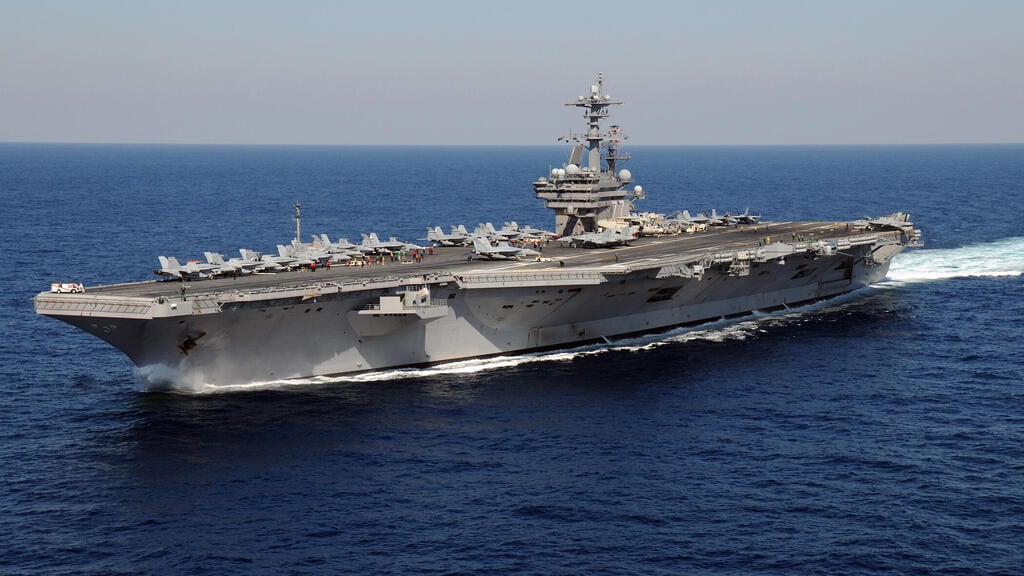
The aircraft carrier USS George Bush
(Photo: MC3 (SW) Nicholas Hall/Wikipedia)
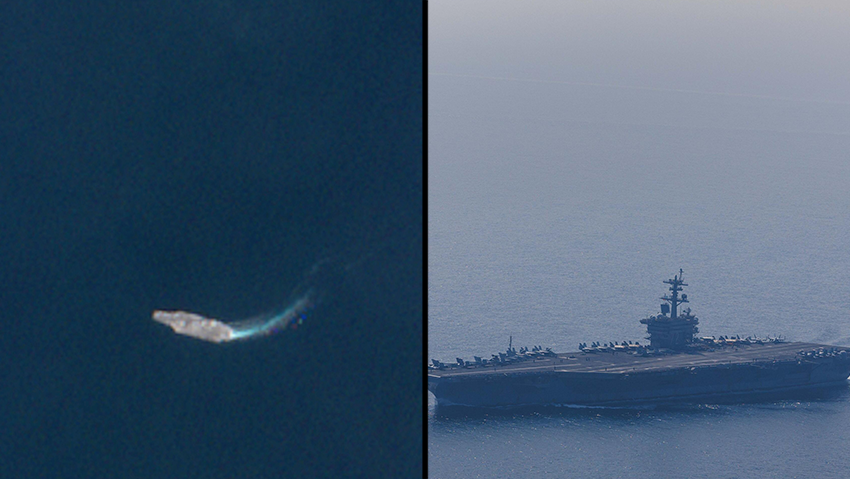
The aircraft carrier USS Abraham Lincoln off the coast of Oman
(Photo: AFP PHOTO / ESA)
One possibility that cannot be ruled out is that this large-scale threat and the deterrence it brings could ultimately push Iran to accept U.S. demands at the last moment. Trump has already demonstrated that his threats are not empty, and the American message conveyed to Tehran in talks has been: “Do not test us.”
At least publicly, however, Iran does not appear to be drawing such conclusions, and Khamenei has even threatened to bring down U.S. aircraft carriers. In Israel, that is seen as excessive arrogance that could prove costly for the ruler.
Most signs indicate that Israel would take part in such an attack and would not be instructed to stand aside. U.S. officials are said to need Israeli capabilities, particularly the experience of the Israel Defense Forces. Israel’s primary objective would likely be to destroy, or at least severely damage, Iran’s ballistic missile array. At the same time, the Israeli military could be required to contend with two additional fronts: Hezbollah in Lebanon and the Houthis in Yemen.
The assessment is that the Houthis would immediately join the fighting and launch missiles and drones at Israel. There is also a plausible scenario in which Hezbollah would not remain on the sidelines and, unlike during the “12-day war,” would take part. In that case, Israel would likely seize the opportunity to settle accounts.