

The death of Yasser Abu Shabab, a militia leader in southern Gaza who had emerged as a key figure in Israel’s effort to cultivate local forces opposed to Hamas, has exposed deep fractures within the armed groups vying for influence in Rafah.
Abu Shabab, who headed the Popular Forces militia, died after what Israeli security officials described as a violent internal dispute tied to disagreements over the group’s cooperation with Israel. While early reports in Gaza claimed he was shot in a clan clash, Israeli officials said he was beaten during a confrontation with members of his own organization. He was evacuated by Israeli forces for medical treatment but died en route to Soroka Medical Center in Be'er Sheva.
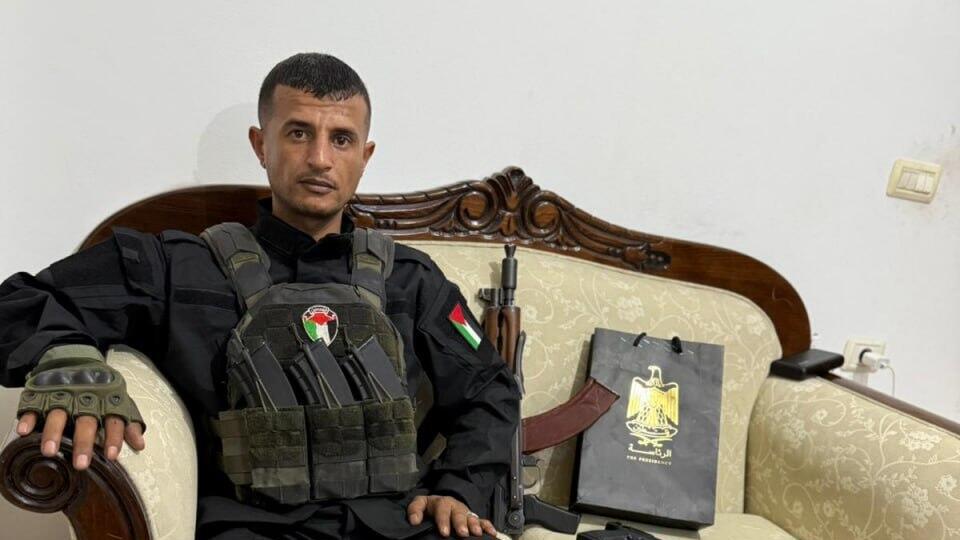
His deputy, Rassan al-Dheini, confirmed Abu Shabab’s death in a religious message on social media and told Ynet he remains in Rafah. “We held a modest burial ceremony for our hero Yasser Abu Shabab,” he said. “We will issue a full statement soon.”
The incident has dealt a significant blow to Israel’s plan to establish local, anti-Hamas forces as part of a potential postwar governing structure in Gaza. Internal rivalries, officials said, have increasingly undermined the cohesion of the very militias Israel hoped could serve as an alternative to Hamas’ control. “Every internal killing tears at the foundation we were trying to build,” one Israeli security official said. “Instead of stability, we’re seeing collapse.”
Fighting between Hamas and the Popular Forces escalated sharply in Rafah in recent days, culminating in what the militia described as its most significant clash to date. Al-Dheini, who had been hospitalized in Israel in recent weeks, praised what he called a “historic” battle and claimed the group overpowered dozens of Hamas gunmen. But those battlefield claims masked the turmoil within the ranks, where tensions between families and factions had been rising.
Abu Shabab, who openly challenged Hamas’ rule and had survived an earlier assassination attempt by the terror group, believed he was gaining ground. In a recent interview with Israeli media, he said growing numbers of young men had joined him and that Hamas fighters “run like mice” when confronted.

Rassan al-Dheini
But the movement he built proved too fragile. Residents in Gaza said Hamas supporters celebrated widely after news of his death, viewing it as a sign that competing factions were weakening themselves. “They don’t need to fight them,” one resident said. “The militias are doing the work for them.”
Al-Dheini, who is expected to assume leadership of the Popular Forces, vowed in an interview with Ynet to continue the group’s campaign against Hamas. “According to my brother Yasser’s plan, we will be exactly where we were — even more determined and stronger,” he said. “We will continue fighting until the last terrorist is gone. We will restore hope to all Palestinians.”
Still, the fallout from Abu Shabab’s death illustrates the problem at the heart of Israel’s strategy: no stable, unified force currently exists that could replace Hamas’ governing and security structures. The militias are fragmented, prone to infighting and struggling to build legitimacy.
“With every leader who falls, a vacuum opens — and the chaos grows,” one Gaza-based source said. “For now, Hamas remains the only organized alternative.”