

Prime Minister Benjamin Netanyahu will depart Tuesday for Washington ahead of a closed-door meeting with U.S. President Donald Trump, as Israeli officials express growing concern over a potential U.S.-Iran deal they fear could sideline Israel’s strategic interests.
Netanyahu is scheduled to take off from Tel Aviv at noon and land in Washington around 1 a.m. Wednesday, Israel time. The meeting with Trump is set for Wednesday morning at the White House and will be held without media presence, a departure from the leaders’ past encounters, which typically included joint press events and photo ops.
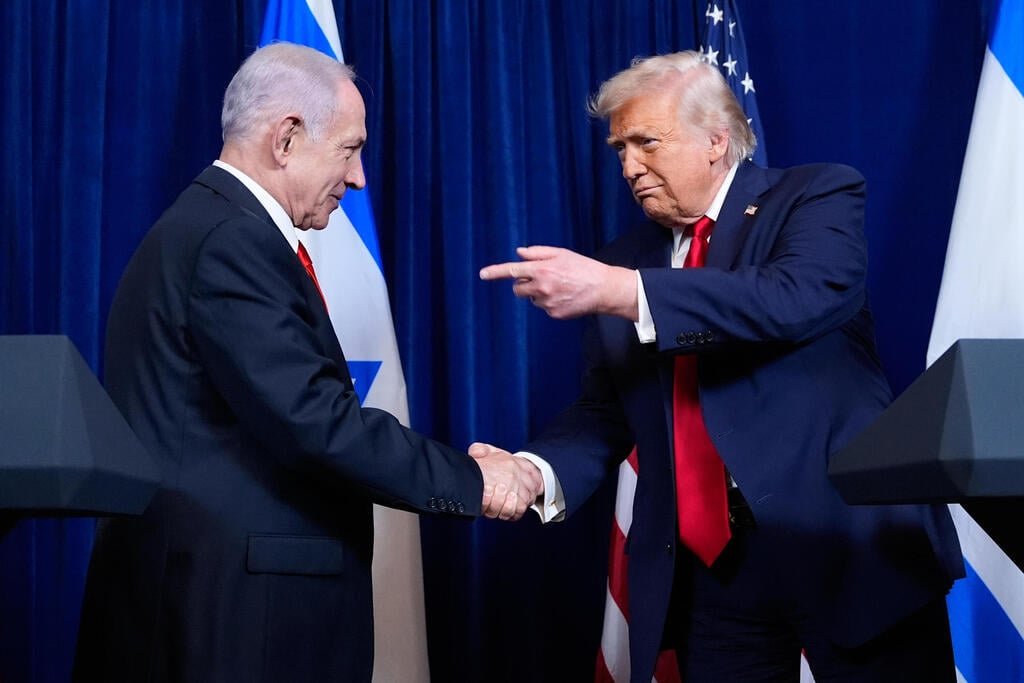
The decision for a private working meeting reportedly came from the White House, contrasting with previous summits, such as their previous meeting at Trump’s Mar-a-Lago estate in Florida. That visit featured public remarks and a joint press conference. This time, Netanyahu will be accompanied by a small delegation, including his military secretary Maj. Gen. Roman Gofman and acting National Security Adviser Gil Reich.
The absence of media has sparked speculation in Jerusalem that Trump may have agreed to meet Netanyahu out of diplomatic courtesy but wished to avoid the public fanfare of past meetings. One possible reason, Israeli officials say, is to conceal divisions between the two over the shape of a potential agreement with Iran.
Senior Israeli officials have voiced concerns that Trump, under pressure from regional actors including Saudi Arabia, Egypt, Qatar, Turkey and his envoys Jared Kushner and Steve Witkoff, may pursue what they call a “lightweight” nuclear deal—one focused solely on uranium enrichment, without meaningful oversight by the International Atomic Energy Agency (IAEA). Such a deal, they warn, could “lock in” Israel’s options and make it harder to take independent action against Iran.
“There’s a real concern this is heading toward a deal that’s bad for us,” said one senior official, speaking on condition of anonymity. “It’s not just Kushner and Witkoff—there are many players influencing Trump, and the direction is worrying.”
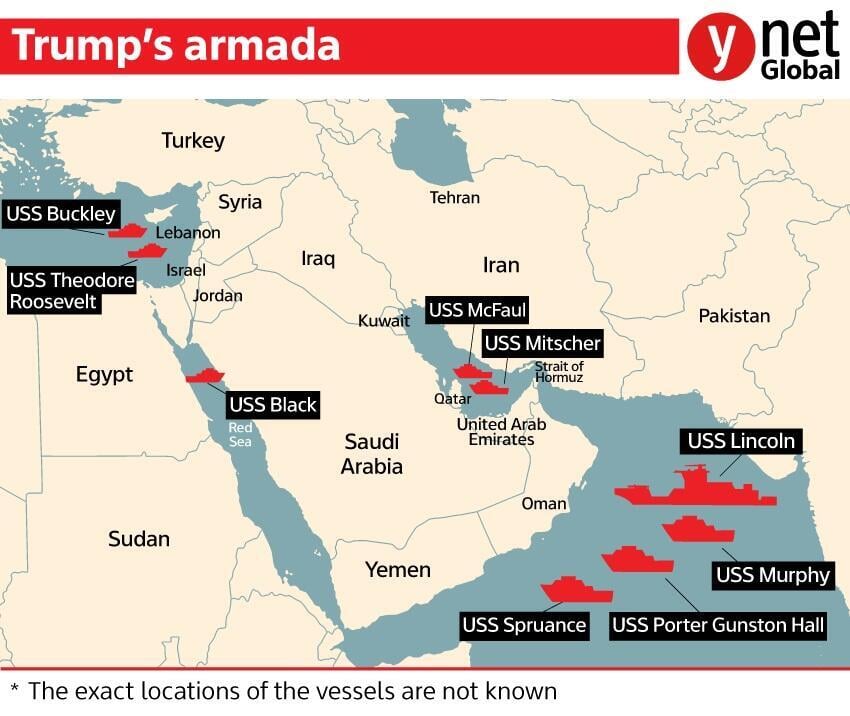
Trump's armada
During the private meeting, Netanyahu is expected to outline Israel’s red lines: zero enrichment on Iranian soil, removal of enriched uranium stockpiles, reinstatement of robust international inspections and strong enforcement mechanisms. He will also press Trump to include restrictions on Iran’s ballistic missile program—an issue Israeli officials say has not received sufficient attention from the U.S., despite posing a growing threat to both Israel and Europe.
In the background, the U.S. continues to build up military assets in the region, should Trump decide to consider a military option against Iran. However, Netanyahu’s delegation does not include senior defense officials. Initial discussions included the possibility of bringing Brig. Gen. Omer Tishler, the incoming Air Force chief and the main liaison with the U.S. military, but that idea was shelved over fears it could be seen as an effort to provoke or prepare for war.
Vance: 'Trump will set the red line in Iran talks'
U.S. Vice President JD Vance said during a visit to Armenia that President Trump would ultimately determine the red lines in the ongoing negotiations between Washington and Tehran.
Asked whether the United States would accept limited uranium enrichment by Iran or insist on zero enrichment as a non-negotiable condition, Vance responded: “I think the president is going to make the ultimate determination about where we draw the red lines in the negotiations.
Vance: 'The president is going to preserve decisional space for himself'


Reflecting on earlier negotiations, he added: “If you go back to the original negotiations that happened between us and the Iranians, the president was trying very, very hard to actually strike a constructive deal that would have been good for the United States. And frankly, the entire administration agreed if the Iranians were smart enough to have made that agreement, then it would’ve been good for them too.”
Pressed for specifics on the current U.S. position, Vance declined to outline policy publicly. “I’ll let the president speak to exactly where he wants to set the lines of negotiation,” he said. “As you guys know, he typically does that privately. He doesn’t announce what he is going to do in a negotiation because he thinks that it constrains him. In private, I think he’ll have a lot of good conversations with his team and with others in the days and weeks to come.”
“With all due respect to our friends in the media,” he added, “the president is going to preserve decisional space for himself, and that means not revealing too many of his cards publicly.”
Iranian protesters in the streets of Tehran, January 9
(Video: Reuters)
Vance was also asked whether the negotiations include discussion of Iran’s violent crackdown on protesters who demonstrated over the country’s cost-of-living crisis—an issue that had previously drawn public condemnation from Trump and a pledge of support for Iranian citizens.
“The president said this publicly. It’s already very much been part of the negotiations that we've had,” Vance confirmed. “It’s one of the things that the president made a very strong demand. There were prisoners who were going to be executed, the crackdown, of course, was very brutal and violent and as the president and the entire administration have said, we stand with the Iranian people.”
“We stand with the right of peaceful protest around the world, and certainly, people who want to exercise that right in Iran. The president has made that part of the conversation that he's had—not just with the Iranians, but with people all across the region. I’m sure that will continue.”