

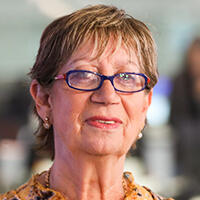
Attorney General Gali Baharav‑Miara's office announced on Thursday that oversight of the investigation into the case of former military advocate general Yifat Tomer-Yerushalmi will be transferred to State Attorney Amit Aisman due to a potential conflict of interest.
The move came following a legal opinion by Justice Ministry legal adviser Yael Kotik, who determined that Baharav‑Miara is precluded from overseeing the investigation into Tomer-Yerushalmi. The opinion was drafted at the request of Deputy Attorney General Gil Limon, amid a dispute between Justice Minister Yariv Levin and Baharav‑Miara over the handling of the case.
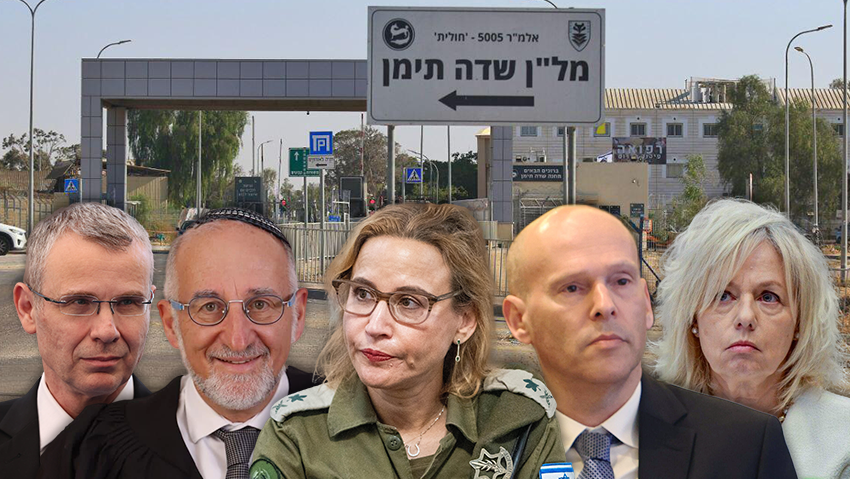
Tomer‑Yerushalmi admitted to leaking a video that allegedly shows reserve soldiers abusing a Palestinian detainee at the Sde Teiman detention facility after more than a year of concealment during which she issued false statements to the High Court of Justice about the status of the leak investigation. Attorney General Gali Baharav‑Miara supported those statements in court.
“There is a possibility that the leak remained concealed within a small circle at the Military Prosecution Office, but alongside this it is difficult to ignore the concern that the number of individuals involved may have been greater. It is therefore not inconceivable that, alongside investigation of the leak itself, the police may consider probing whether the investigative team was aware of or ignored the possibility that the former military advocate general was involved in the leak," Kotik wrote.
"If such a direction proves necessary, it may become necessary to investigate those supervising the investigative team. One cannot dismiss the possibility that the attorney general or her office will need to be questioned.”
Following Tomer-Yershalmi's admission, Levin informed Baharav‑Miara that he was barring her from involvement in the investigation, but she rejected his stance, calling his political interference improper, baseless and damaging to her role. Kotik noted in her opinion that her view does not assert that Baharav‑Miara was aware of false reports to the High Court of Justice.
Kotik also criticized the oversight carried out by Baharav‑Miara: “From the moment the attorney general is charged with accompanying the investigation from its start, including guiding the parties on investigative directions and decisions on whom to investigate or call, there is a concern she may be required to decide whether to expand the probe and to what extent. Among the relevant questions: whether the leak investigation was conducted by appropriate standards or with eyes closed, whether supervision was proper and what interface existed between the deputy state attorney and the attorney general.”
She added: “Even if the suspects are only personnel of the Military Prosecution Office and they misled the State Attorney’s Office and the attorney general, authorities will still need to collect evidence and testimonies about who communicated and how the false information was transferred, evidence that becomes investigative material. At the same time, the supervising party will need to examine the versions offered by those under investigation, who may attempt to portray their own role differently and make claims about the prosecution and the attorney general’s office, claims which will at least require review.”
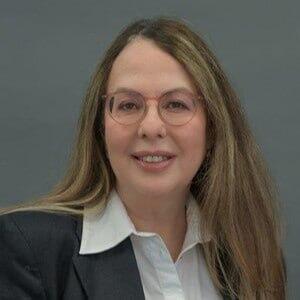
Justice Ministry legal adviser Yael Kotik
(Photo: Justice Ministry)
Kotik emphasized that Baharav‑Miara may at least serve as a witness in the case. “Needless to say, a person required to testify in a case, even if not indicted, cannot be both privy to the full investigative materials and simultaneously manage or participate in the investigation. Such involvement can reduce the probative value of the testimony and perhaps nullify it, since in a criminal proceeding it will properly be presented as testimony reflecting the prosecution’s narrative, not an objective account. A conflict of interest may arise whenever an overseeing party had prior involvement in the events under investigation, not just when suspicion is directed at that party.”
She further wrote: “Even if one could assume that at very early stages the investigation may have been accompanied by the attorney general or another party previously involved, at this point the accompaniment must be limited and one cannot rely on the personal involvement of those parties. Even if it is not known whether an expansion of the investigation concerning them will be required, from a forward‑looking viewpoint it is unclear how this issue can be dealt with retroactively without raising a concern of actual conflict of interest in the conduct of its early phases. Accordingly, the correct and responsible path at this stage is to establish distance and avoidance of involvement of those persons who participated in the investigated events.”
Kotik concluded: “This is a case of special public sensitivity, both by reason of the serious nature of the alleged offenses in the matter of the leak and the sensitivity of their publication, publicly and even internationally, and also by reason of the exceptional suspicions now directed at the former military advocate general and her staff, suspicions that by themselves are capable of undermining public trust in the justice system and in law enforcement agencies. In this context, weight must be accorded to the question of maintaining public trust in the law enforcement system. Precisely in such a proceeding, it is highly important to ensure that the system operates objectively and to neutralize the risk of conflict of interest before it occurs, even if there is no certainty that it will.”
She stressed: “It should be emphasized again that this cautious position is not a finding in respect of any person, nor a suggestion of blame. Its sole purpose is to prevent a possible future scenario, which if realized, would be difficult or even impossible to remedy retrospectively. And heaven forbid, if it is found that the concern was unfounded and not realised, no harm is done by the caution taken. On the other hand, if no careful steps were taken in advance and the concern is realized, serious damage will result. In the circumstances where we deal with a particular matter that does not entail preventing the office holder from performing her role, and where it is possible to transfer responsibility to another party, it appears that the cautious path recommended is preferable.”
In light of Kotik’s findings, Baharav‑Miara will notify the High Court that she has decided during the investigative phase to hand over leadership of the case to the state attorney’s team. Should the investigation conclude and it be shown that Baharav‑Miara was not involved in concealing the leak, the file would revert to her jurisdiction.
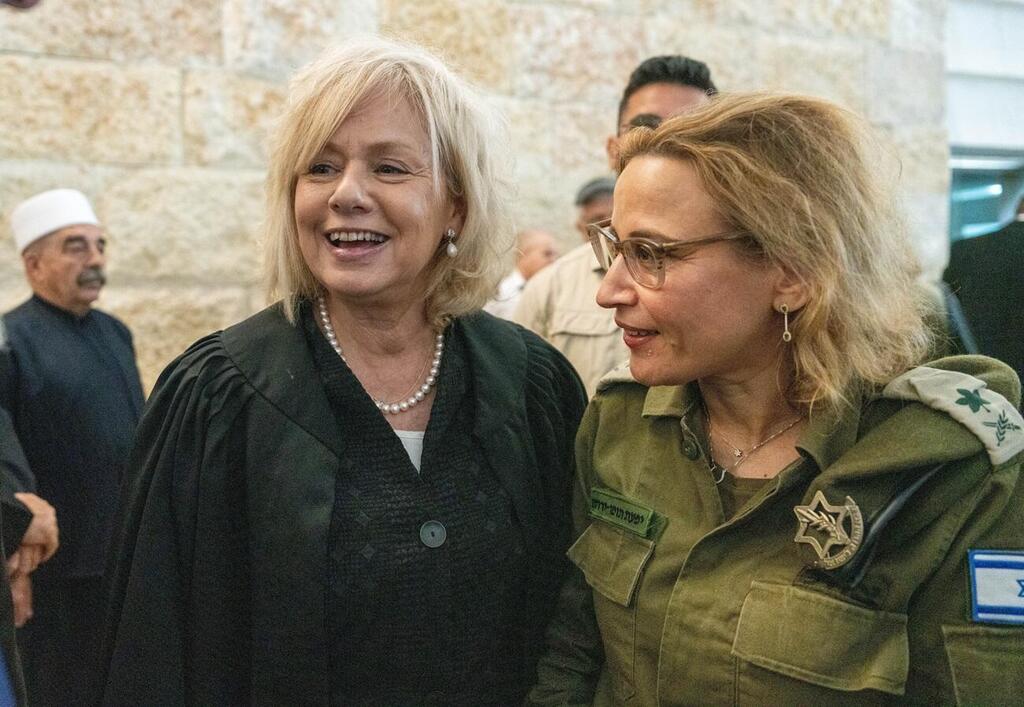
Attorney General Gali Baharav‑Miara and former military advocate general Yifat Tomer-Yerushalmi
(Photo: Shalev Shalom)
Despite opposition from Baharav‑Miara, Levin announced Tuesday that he had decided to appoint retired judge Asher Kula, 71, the state ombudsman for judges, to oversee the investigation into the leak of the Sde Teiman video.
Amid his claims that Baharav‑Miara faces a conflict of interest in the case, Levin explained his choice of Kula as follows: “I believe that the state employee assigned to this role must meet, as far as possible, the following criteria: a public servant; knowledgeable and experienced in criminal law; heading a system capable of supporting the execution of the task; independent of any government minister and of the attorney general’s office or its subordinate bodies; and enjoying broad public trust, which is essential given the sensitivity of the matter and the complexity of the current period.”
Levin added: “After giving the matter serious consideration and receiving his consent, I intend to assign the role to the commissioner for complaints against judges, the honorable retired Judge Asher Kula, with the commission providing all necessary services for the role. I believe that both personally and institutionally, the ombudsman is best suited for this task. His appointment will garner broad public confidence, which is vital under the current circumstances.”
Senior legal officials sharply criticized Levin’s decision, telling Ynet that “the justice minister is not interested in the investigation, only in removing the attorney general. He is acting without authority, tainting the investigation and harming it in the process.”
Kula, for his part, clarified that he was not taking a position on whether the attorney general faces a conflict of interest, nor on the question of the minister’s authority. In a statement, he said: “The ombudsman agrees to accept the role should it be officially assigned to him, subject to all applicable law.”