

Less than a day of fighting was enough to reignite the direct confrontation between Israel and Iran, and even as U.S. President Donald Trump repeatedly says a deal with Tehran is closer than ever, Iranian officials are already presenting the brief round as a victory.
Mohammad Bagher Ghalibaf, speaker of Iran’s parliament, wrote Monday on X that Tehran had “broken the ceasefire equation and its violations.” Addressing Israel and the United States, he added: “Until you have a real will to build trust, Iran’s response will be the same.”
The remarks came shortly after Israel announced a full return to routine, except for communities along confrontation lines, following the brief escalation sparked by Israeli strikes in Beirut and Iranian missile fire toward Israel. Reports said Iran launched about 10 ballistic missiles at northern Israel after an Israeli strike in Beirut’s southern suburbs, with no Israeli casualties reported.
Other Iranian officials quickly joined the threats. Ebrahim Azizi, head of the Iranian parliament’s National Security Committee, said Tuesday morning that “any miscalculation against Iran’s national security will be met with a harsh and regrettable response, much more severe than previous actions.”
Ebrahim Rezaei, spokesman for the Iranian parliament’s National Security and Foreign Policy Committee, told Al Jazeera: “If the Israeli attacks against Beirut are repeated, our punishment will be harsher. The security system in the region has changed.”
Trump, meanwhile, says the United States is close to reaching an agreement with Iran. Speaking to reporters at John F. Kennedy International Airport after attending the NBA Finals at Madison Square Garden, he said there was “a good chance” of signing within “two or three days.”
“We are very close to a very good, strong and powerful deal,” Trump said. “If we go and bomb, they will have nothing left. We can do that very easily if we want. We will spend another two or three weeks bombing, but the strait will not be open for months. If we bomb, a lot of people will be killed. Who wants that? I don’t want that.”
Rezaei, however, presented a different picture. “We are not in a hurry regarding negotiations,” he said. “We have not asked for negotiations with America even once. They are the ones seeking them.”
Another senior Iranian official told Al Jazeera that Washington had changed the memorandum of understanding and warned that “any violation of the ceasefire could affect the negotiations.”
“Iran will not tolerate such violations,” the official said. “No agreement can be reached if our frozen funds are not released and the sanctions are not lifted. Stability and security in the region can only be achieved through a real deterrence mechanism.”
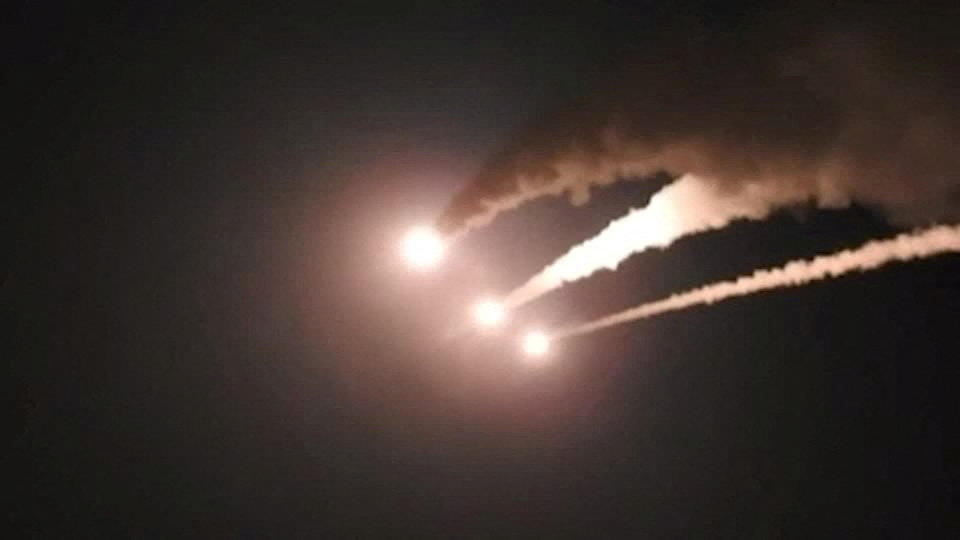
'Iran has created an equation, a dictate.' Missiles launched toward Israel
(Photo: WANA (West Asia News Agency)/ via REUTERS)
Mohsen Rezaee, an adviser to Supreme Leader Mojtaba Khamenei, said the talks were taking place “under the shadow of distrust toward America.” He warned that Iran would respond to “any kind of aggression in the Strait of Hormuz and the Persian Gulf” and would keep “its hand on the trigger” to establish regional security.
Mohammad Bagher Zolghadr, secretary of Iran’s Supreme National Security Council, added: “If the evil alliance makes a mistake, the region will become hell.”
Quds Force commander Esmail Qaani also claimed Monday that “from the Strait of Hormuz to Bab el-Mandeb, from the Persian Gulf to the Red Sea, there will be a new security belt of resistance. The attacks by Israel and the United States in the region will be met with a response from the united resistance front.”
'The Yemeni presence carries a message to the enemy'
The Houthis, meanwhile, also signaled their return to the campaign, launching a drone toward Eilat around midnight, after Israel had announced a return to routine in most communities.
The Lebanese newspaper Al-Akhbar, which is affiliated with Hezbollah, quoted a “knowledgeable military source in Sanaa” as saying that the attack “against Tel Aviv confirms that they have major military surprises for the enemy, because the weapons that will be used in maritime or aerial confrontations will be of a high level.”
“The early Yemeni presence in this confrontation carries more than one message to the enemy,” the source said. “Sanaa will not allow it to dominate the battlefields, in Lebanon or in Palestine.”
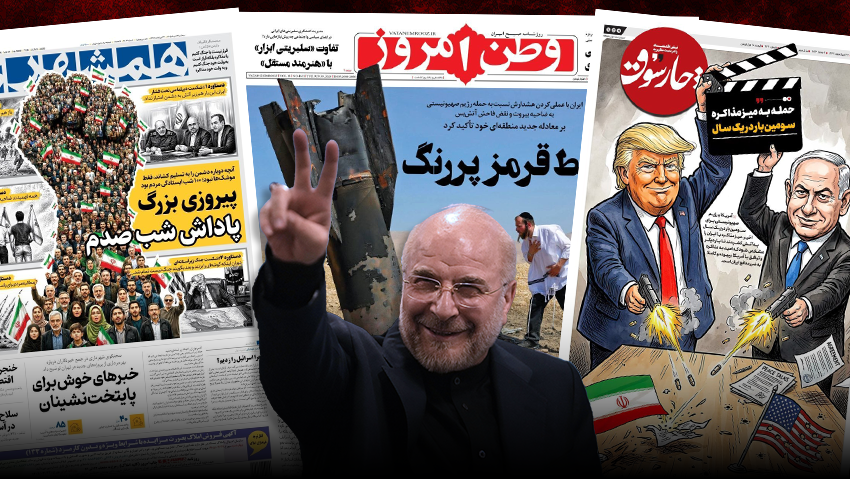
In the pro-regime Iranian newspaper Vatan-e Emrooz, commentators emphasized what they described as the “new regional equation” achieved by Iran. Mohammad Mokhber, political adviser to Iran’s supreme leader, accused the United States and Israel in an interview with another pro-regime outlet of having “set fire to the negotiating table with Iran.”
The Tehran municipality-owned newspaper Hamshahri even published what it called “five achievements” credited to Iran after the short round of fighting. Among them was the unification of fronts following the Beirut strike. “Everyone understood that Dahieh and Lebanon are not out of the picture,” the paper wrote.
“The Iranian regime is celebrating its victory day all over again because they did several things that are new even from our perspective,” Beni Sabti, an Iran expert at the Institute for National Security Studies, told the ynet studio.
“First, for the first time, they are coming to the aid of their branch, their proxy, which they cultivated for 47 years to defend Iran,” he said. “Suddenly the bowl has been turned over and they are coming to help Hezbollah. In addition, this is the first time Iran opens fire at Israel without direct provocation against it.”
Sabti said Iran’s posture stemmed from “hubris, arrogance and the poor results of the last two wars against Iran.”
“In the end, everything is connected to Trump,” he said. “He is the one who cut off the wars. He is the one who gave them a very big advantage in reaching this narrative, that they are the ones winning the war. That is also what happened in this one-day war. He again stops us and restrains us.”
According to Sabti, Iran has created “an equation, a dictate,” two words he described as “very bad for Israel.”
“We are no longer in the same place vis-à-vis Iran, and unfortunately a situation has emerged in which we are now like a ‘proxy’ of the United States, just as Hezbollah is for Iran,” he said. “We have gone down a level. Once we were facing the Iranians, and now we are facing Hezbollah. The Iranians will have an excuse to attack us if we attack Dahieh or carry out a broad attack in southern Lebanon. If Israel thought it had the upper hand, it would have attacked Dahieh this morning as well.”
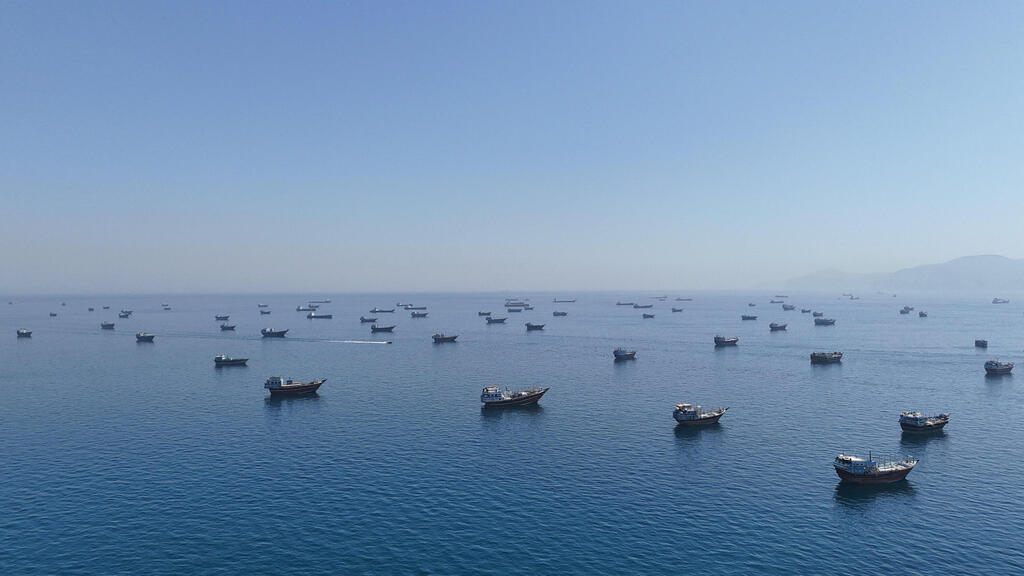
Strait of Hormuz
(Photo: REUTERS/Stringer)
He added that the United States and Israel now have different interests. “JD Vance said, ‘We have different and divided interests.’ They want to bring down the price of oil, to free the strait through bribery. They will give this bully, this highway robber of the Iranian regime, the strait. We want to uproot the problem, and that is why an event has been created here that did not exist before.”
Sabti argued that Vance and Trump were pushing an agreement further away through their statements.
“They are not giving Iran the feeling that it will be in serious trouble if it does not compromise,” he said. “Every time you feed the monster, it grows. Its appetite grows.”
He said the dynamic in Tehran now resembles a competition among extremist organizations.
“It is a little like the competition between Hezbollah, Hamas and Islamic Jihad over who is more extreme now,” he said. “The competition is not over who is more willing to compromise. In the years of President Rouhani, who made the first nuclear deal, so to speak, they gave up all their nuclear activity because they saw the American military approaching. Today they see the United States entangled. The aircraft carrier no longer scares them, Israel is limited by their new and very surprising defender, Trump, and that is how the appetite grows.”