


Behind Israel’s decision to halt strikes in Iran at the request of U.S. President Donald Trump was a dramatic day of coordination, conflicting messages and heavy American pressure on Prime Minister Benjamin Netanyahu.
According to sources familiar with the talks, Israel had prepared for a far more significant strike in Iran, but Trump blocked it at the last moment after concluding that the event could spiral into broader regional escalation and endanger contacts toward an agreement with Tehran.
Gallery
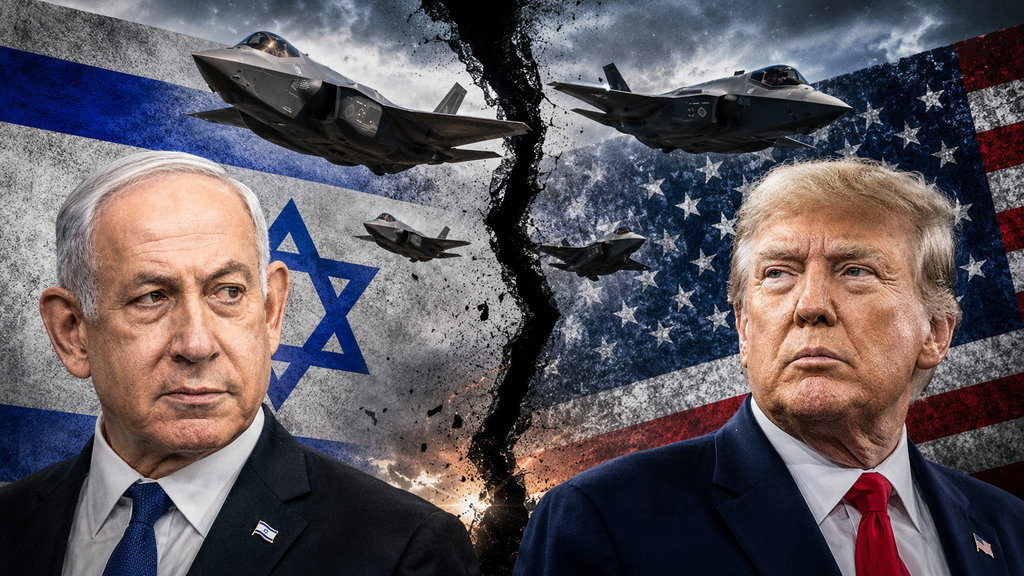
Dozens of fighter jets were supposed to take part in an attack on a series of targets across Iran
The sources said that, contrary to the impression created by Trump’s public comments, the U.S. president knew in advance about the Israeli strike in Beirut’s Dahieh district. They said Trump had authorized Netanyahu to strike in Beirut if Israeli communities were hit, but later presented a different picture, suggesting he had not known about the strike in advance. The same sources said the claim that Trump did not know Israel would strike overnight does not reflect the full picture.
According to the sources, the IDF updated U.S. Central Command on all details of the strike, including the target list. The American understanding, they said, was that Israel would carry out a limited operation in Dahieh, send a deterrent message to Hezbollah and Lebanon, and then close the incident. Trump, according to the sources, went to sleep knowing Israel was expected to strike, but under the assumption that the move would be measured and would not drag the entire region into a wider round.
But in the early morning hours, when Washington realized Israel was also preparing a much more significant response in Iran, the picture changed. According to the sources, Trump understood that Israel might use the Iranian fire and the developments in Lebanon to expand the campaign and hit strategic targets in Iran. A source familiar with the details said the White House feared Netanyahu was, in effect, trying to torpedo the possibility of reaching an agreement with Iran by creating a new security reality.
At that point, Trump called Netanyahu. According to the sources, the conversation was very firm. The U.S. president made clear to the prime minister that if Israel launched a broad strike in Iran, it would be left alone. Netanyahu argued that Israel had to respond after the Iranian fire, and that failing to respond would harm deterrence. Trump understood Israel’s need to respond, but demanded that the response be limited and measured, not one that would open a new campaign against Tehran.
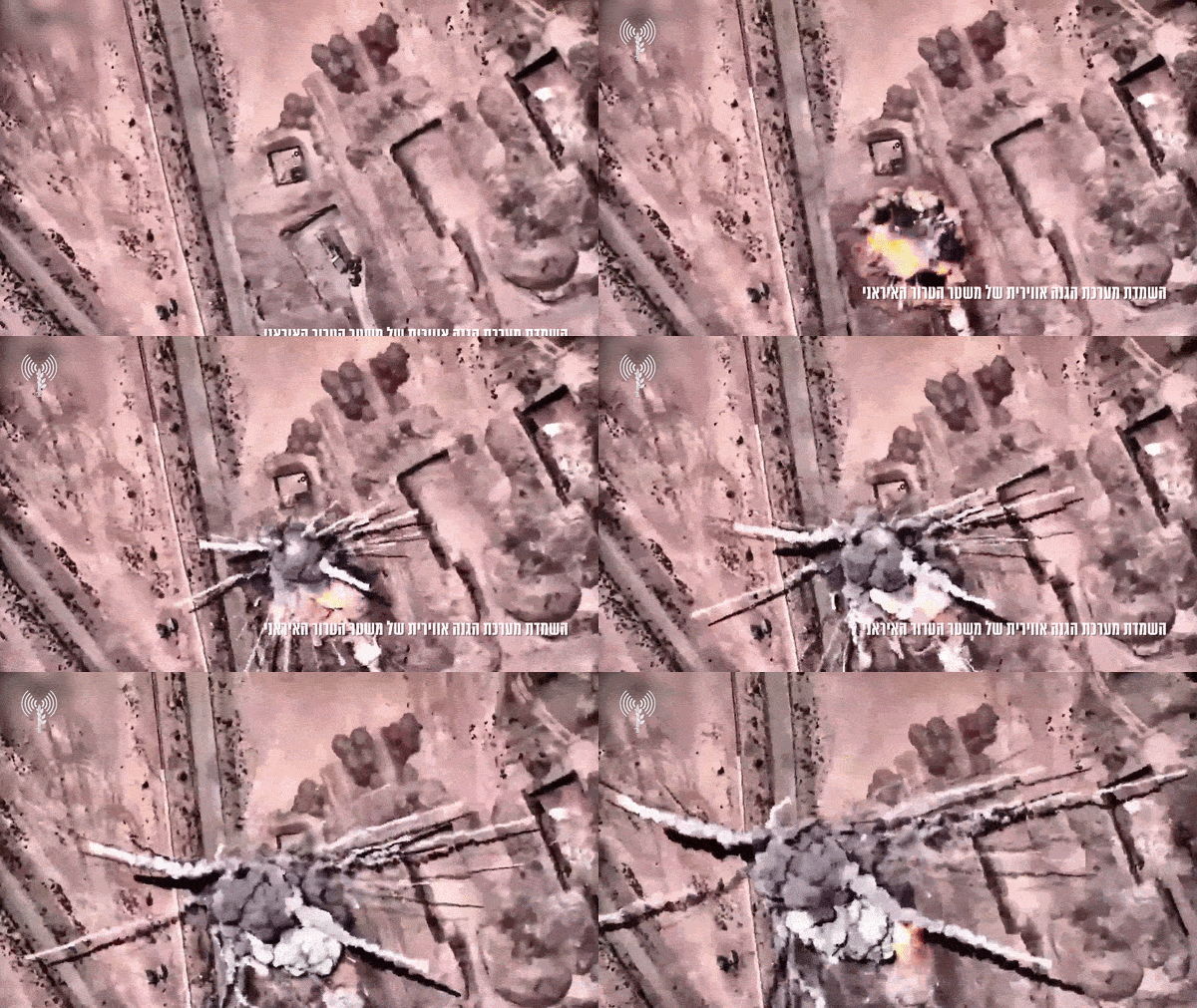
Israeli strike in Iran
(Photo: IDF)
Israel had already prepared plans for a much broader strike than the one carried out. According to Israeli sources, dozens of fighter jets were supposed to take part in an attack on a series of targets across Iran. But after the call with Trump, Netanyahu informed the defense establishment that the plans had to be stopped. The IDF canceled strikes planned for later in the day and overnight, and in practice the round with Iran was halted long before Israel had exhausted it.
According to the same sources, the mood in Israel is one of deep disappointment. In Jerusalem, officials believed the incident could have been used to achieve significant gains against Iran, especially after the regime in Tehran tried to establish a new equation under which an Israeli strike in Lebanon would be answered with fire at Israel. From the point of view of Israeli officials, this was an opportunity to make clear to the Iranians that such an equation would carry a direct and heavy price.
But Tehran moved quickly. The Iranians understood that Trump wanted above all to prevent regional deterioration and preserve the possibility of reaching a deal, and by morning they announced that they were prepared to stop military operations. That announcement gave Trump the diplomatic window he needed to press Netanyahu to halt the strikes and close the incident before it spun out of control.
Only after long hours of silence did Netanyahu release a short prerecorded video that attempted to construct a narrative of victory, while the reality was the opposite.
Israel wanted to strike Tehran as early as Thursday
Within hours, Israel moved from preparing for a broad strike in Iran to an almost complete halt of the operation. It was not only an operational decision, but a moment that illustrated the limits of Israel’s freedom of action against Iran when Washington opposes escalation. Even if Jerusalem presents the episode as coordination between allies, in practice Trump was the one who set the boundaries.
According to a series of reports and briefings by sources familiar with the details, Israel had considered significant military moves in the Iranian arena in recent days. But those same sources point to a troubling picture: not a consistent, planned move, but a sequence of intentions that tightened and loosened according to diplomatic pressure, above all American pressure, which according to the claims included direct involvement by Trump, who spoke several times with Netanyahu. Although those conversations were calmer than the “shouting call,” Trump’s messages folded Netanyahu and stopped the escalation with Iran.
A source familiar with the details said that as early as Thursday, Israel had very much wanted to bomb Tehran, possibly as a last attempt to thwart the bad agreement emerging with Iran. Trump pressed for it not to happen, and the strike was indeed shelved. Israel then saw Hezbollah fire toward the Galilee as an opportunity to put the plan back on the table, and thought in terms of a domino effect: Israel would strike in Dahieh, Iran, seeking to create a new equation, would respond with missiles, and Israel would have justification to strike.
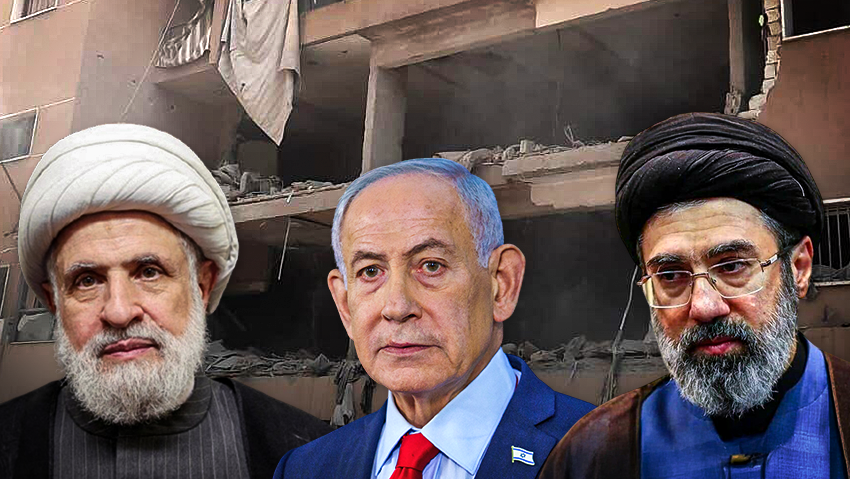
Israel understands the die may again be cast in Lebanon
(Photo: Shalev Shalom, Reuters)
In Jerusalem, officials believed this would be an opportunity to settle accounts with the Iranians and hit infrastructure and energy targets in a way that would accelerate the fall of the regime. But then came Trump’s brake.
The defense establishment is still trying to present the episode as proof that Israel acts, responds and does not allow Iran to dictate new equations. Behind the scenes, however, the picture is more complicated: Israel struck, Iran responded, and in the end the United States determined when the round would stop. That gap, between the firm public messaging and the dependence on American pressure, may be the central story of the past day.
Israeli officials say “the campaign in Lebanon will continue,” and that the IDF will keep operating according to the equation that fire at northern communities will be answered with a strike in Dahieh. But that issue too leaves an open question: Will Israel really be able to continue acting in Lebanon with the same force if, every time the Iranians try to connect the arenas, Trump intervenes to prevent broader escalation?
In that sense, Iran may not have achieved a dramatic military victory, but it did manage to pose a complex diplomatic test for Israel: whether every Israeli strike in Dahieh or southern Lebanon could trigger an Iranian response, draw American intervention and narrow Jerusalem’s room for maneuver. That is exactly the equation Israel tried to prevent, and it may now become the central challenge of the next rounds.
Iran is far from deterred, and Trump wants a deal at almost any cost
Danny Citrinowicz, a senior researcher in the Iran and Shiite Axis program at the Institute for National Security Studies and a former head of the Iran branch in the IDF Military Intelligence Directorate’s research division, said the latest events show how much the campaign against Iran has become a strategic failure.
According to Citrinowicz, Israel now faces a difficult dilemma: respond and risk a direct confrontation with the U.S. president, or avoid responding and allow Iran to entrench a new equation that would significantly restrict Israeli freedom of action against Hezbollah.
He said the latest developments show that despite two military campaigns against Tehran, Iran is far from deterred. On the contrary, the Iranian leadership is projecting high self-confidence, and is above all convinced that there is currently no credible threat, neither from Israel nor from the United States, that can force a fundamental change in its policy. At the same time, Trump appears to prefer reaching an agreement with Iran at almost any price, even if the price for Israel is reduced freedom of action.
“This is the price of a campaign that produced impressive tactical achievements, but failed to achieve its main strategic goal: toppling the regime,” Citrinowicz said. “Instead, Israel finds itself with less freedom of action, Iran with more self-confidence, and the United States with a growing desire to end the crisis through a diplomatic arrangement.”
In the end, the current round ended not with a decisive outcome, but with a halt. Israel again proved its operational capabilities, but also its diplomatic limits. Iran paid a price, but managed to stop the escalation at a time convenient for it. And Trump, who made clear to Netanyahu who sets the boundaries of the campaign, signaled that as far as he is concerned, the central goal is not expanding the fighting, but closing it through an agreement.
The question left open is not whether there will be another round, but when. The Iranians have learned where pressure can be applied, and Israel understands that the die may again be cast in Lebanon, the arena where it is still far from a decisive outcome, and where every instance of fire toward the north could again become a test of equations, responses and American pressure at the moment of truth.