


The aircraft carrier USS Gerald R. Ford has departed for the Middle East amid tensions with Iran, accompanied by six destroyers, U.S. security officials said Tuesday.
According to the officials, the carrier strike group set sail from the Caribbean Sea, where the Ford had recently been involved in the operation to capture Venezuelan President Nicolas Maduro, and is now heading into the Atlantic Ocean en route to the region.
Gallery
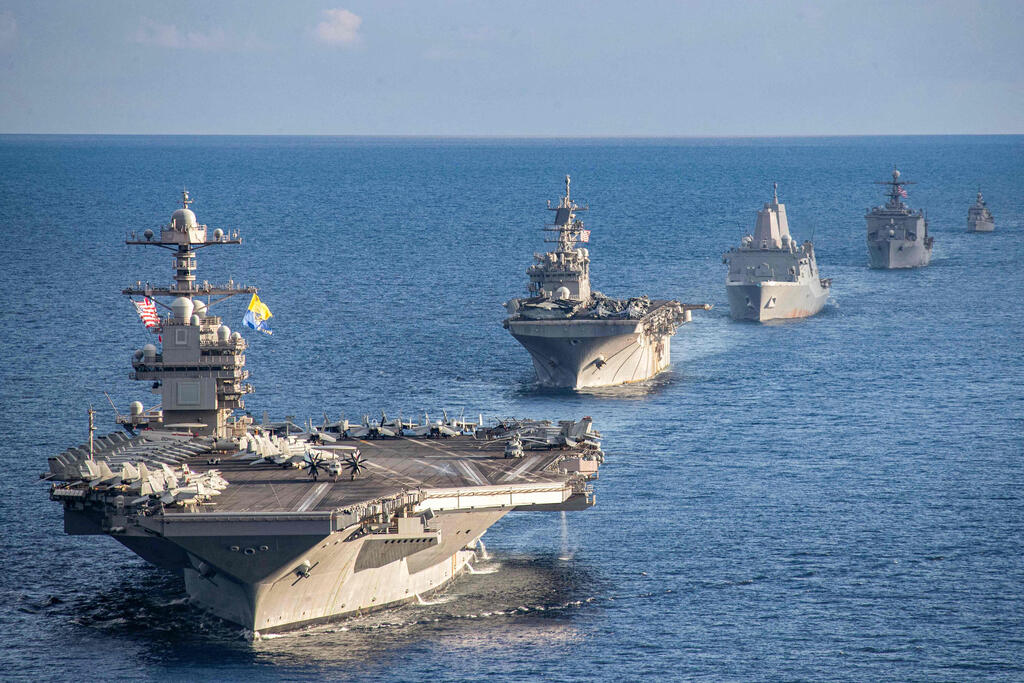
The USS Gerald R. Ford strike group
(Photo: Maxwell Orlosky / US DEPARTMENT OF DEFENSE / AFP)
A U.S. official said there has been progress in diplomatic contacts with Iran, though many details remain unresolved. The Iranians, the official said, indicated they would return within two weeks with detailed proposals to address several outstanding gaps between the sides.
The Washington Post reported that six destroyers are accompanying the Ford, including the USS Mahan, USS Thomas Hudner, USS Winston S. Churchill, USS Bainbridge and USS Stockdale.
The report of the carrier’s deployment came hours after negotiations between Washington and Tehran concluded in Geneva.
Badr Albusaidi, Oman’s foreign minister, who is mediating the talks and hosted Tuesday’s indirect discussions between U.S. envoys Steve Witkoff and Jared Kushner and Iranian Foreign Minister Abbas Araghchi, expressed optimism.
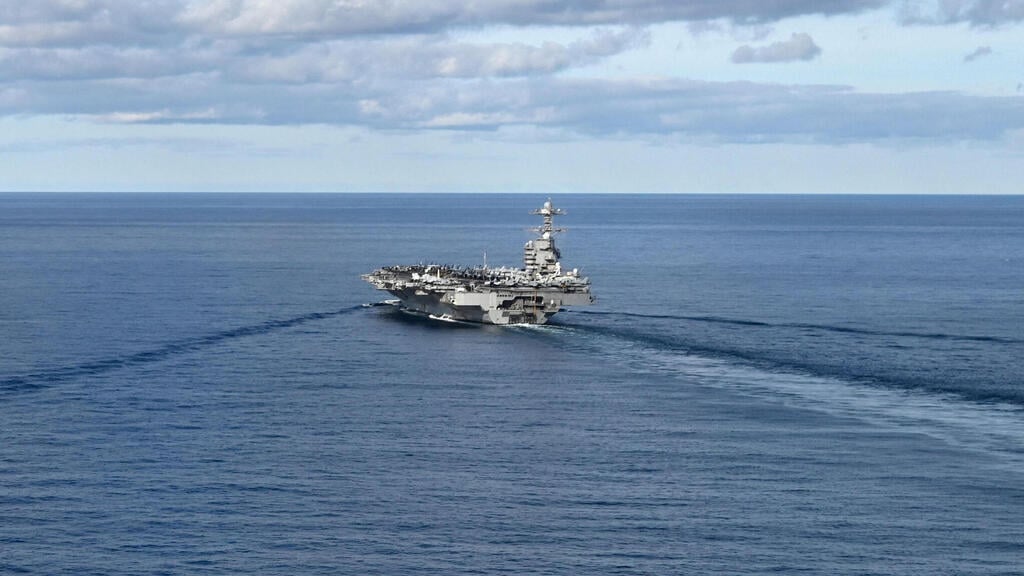
The USS Gerald R. Ford
(Photo: Jonathan KLEIN / AFP)
“Today’s indirect negotiations between The Islamic Republic of Iran and the United States of America in Geneva concluded with good progress towards identifying common goals and relevant technical issues,” Albusaidi wrote on X.
“The spirit of our meetings was constructive. Together we made serious efforts to define a number of guiding principles for a final deal. The contribution of the IAEA Director General Rafael Grossi was much appreciated. Much work is yet to be done, and the parties left with clear next steps before the next meeting.”
The deployment also comes after Iran’s Supreme Leader Ali Khamenei warned that Tehran has the capability to sink U.S. ships. “We continue to hear that the United States is sending destroyers toward Iran,” Khamenei said. “American destroyers are undoubtedly dangerous, but the weapons that can sink them are more dangerous.”
He cautioned President Donald Trump against launching an attack, saying the U.S. military “may suffer a blow so severe it will not recover.” Even the strongest army in the world, he added, “can sometimes suffer a devastating strike.”
Earlier Tuesday, Araghchi described the second round of nuclear talks with the United States as “very serious,” saying the sides had reached understandings on several fundamental issues that could form the basis of a possible agreement.
Araghchi noted that the progress made does not mean his country will reach an agreement soon with Washington on Tehran’s nuclear program, and added that good progress had been made and that the direction was positive, though no date has been set for the next round.
The parties agreed to work on draft language before convening a third round, he said, adding that they would review two copies of a potential agreement and continue discussions after consulting their respective governments.
Meanwhile, Iran’s Fars news agency reported that parts of the Strait of Hormuz were closed for several hours Tuesday for “security measures,” as the Islamic Revolutionary Guard Corps conducted exercises aimed at preparing forces for potential threats. Iranian officials said the temporary closure was intended to ensure maritime safety during the drill.
The Wall Street Journal reported that, in an effort to advance the talks, senior Iranian officials floated the possibility of suspending uranium enrichment, transferring part of Iran’s enriched uranium stockpile outside the country and pursuing economic agreements with the United States. According to the report, Iran has avoided committing to a full halt in enrichment, and the proposal may fall short of the threshold set by Trump.