

The killing Sunday of Haytham ‘Ali Tabataba’i, Hezbollah’s No. 2 commander and the terrorist group’s acting military chief, has prompted the IDF to raise alert levels along the northern border amid concerns the group may attempt to retaliate.
The IDF said it is conducting continuous assessments, boosting readiness and reinforcing air defenses. Military officials say possible Hezbollah responses include rocket fire toward Israel’s interior, an attempted infiltration or raid on IDF positions along the Lebanon frontier, or action carried out by the Houthis in Yemen on Hezbollah’s behalf. Another scenario under consideration is that the weakened terrorist group may choose not to respond at all.
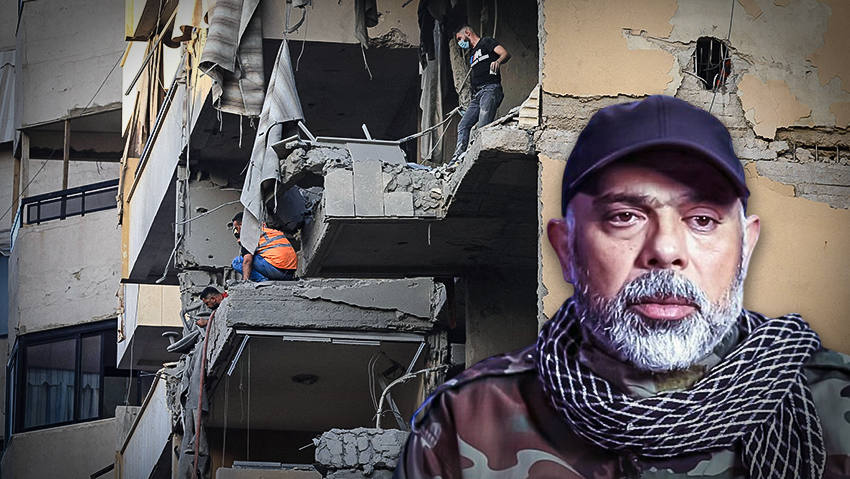
Tabataba’i was killed in an Israeli airstrike on his safehouse in Beirut’s Dahieh district, marking the first Israeli operation there since June. The strike was part of an operation the military called “Black Friday.” The IDF confirmed the killing several hours after the attack and released footage documenting the operation. Hezbollah later acknowledged his death but did not issue an explicit threat.
Despite that, the IDF is preparing for the possibility of a short, preemptive operation in Lebanon aimed at deterring Hezbollah and degrading its capabilities. A year has passed since a ceasefire was reached in the north, but the provision requiring Hezbollah to disarm — partly through the Lebanese army — has not been implemented. Israeli officials say the country is nearing the most significant test yet of the “zero tolerance” policy adopted after the Oct. 7 attacks.
In its formal response, Hezbollah said Tabataba’i “was killed defending Lebanon following a treacherous Israeli strike in Dahieh,” and called him one of the leaders who helped ensure that “the resistance remains strong.” The statement said its fighters would “carry his blood and advance with courage to foil the projects of the Zionist enemy and its sponsor, America.”
Prime Minister Benjamin Netanyahu said Israel “will not allow Hezbollah to rebuild its strength,” and called on the Lebanese government to fulfill its obligations and disarm the group. IDF Chief of Staff Lt. Gen. Eyal Zamir hinted at possible further action, saying: “There will be no containment. We may be required to return to fighting in arenas where we have already fought.”
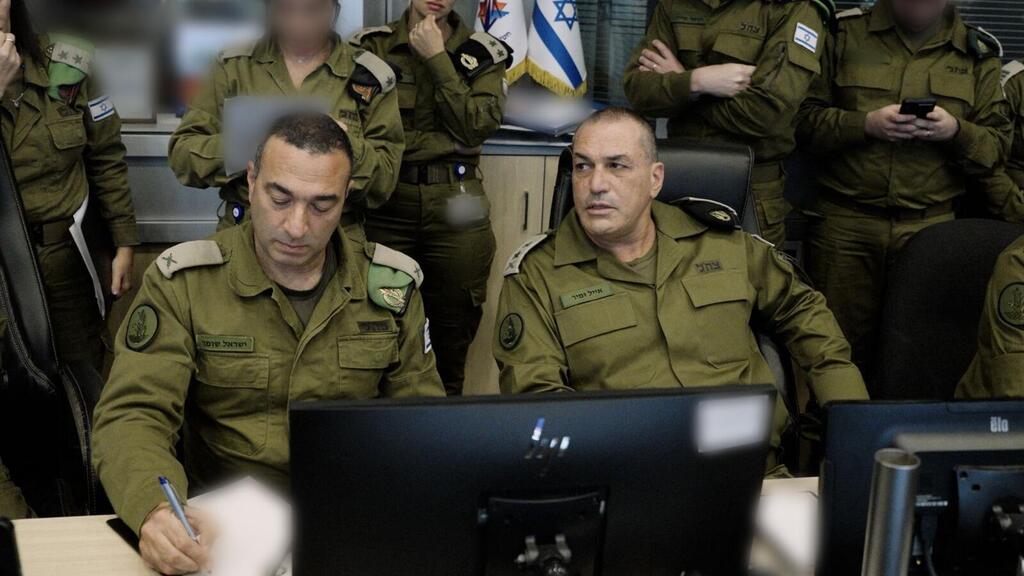
IDF chief Zamir and senior officers during the Beirut strike
(Photo: IDF)
Lebanese media described the killing as a major escalation. The front page of the daily An-Nahar declared that the assassination signaled “the approach of a wider explosion.” The Lebanese outlet Al-Modon reported that residents of Dahieh experienced “shock, screams and a street full of people” in the moments after the strike. According to the report, Hezbollah operatives set up roadblocks within minutes, and clashes broke out when journalists attempted to film the scene.
Tabataba’i, long considered one of Hezbollah’s most secretive and influential military figures, was designated an international terrorist by the United States in 2016, and Washington offered a $5 million reward for information about him. His assets under U.S. jurisdiction were frozen, and American entities were barred from doing business with him.
Separately, the IDF said it launched a general staff drill early Monday, named “Shield and Strength,” designed to test the military’s readiness for a range of scenarios. The exercise began with a surprise inspection of the 210th Division, responsible for the frontier with Syria and for outposts extending into the Syrian Golan.
The two-day drill will include assessments, decision-making processes at all command levels, activation of alert measures and wartime force management. The IDF said there is no specific security concern and that residents in the Golan and nearby valleys will see heavy troop movement, hear explosions and observe increased aerial activity.
The military said the exercise was scheduled in advance as part of its 2025 training program.