

Iran-backed Houthi forces have been accused of using artificial intelligence to imitate a senior Yemeni commander and circulate a false withdrawal order while their fighters were advancing on the strategic Red Sea port of Mocha, in what Saleh’s forces say was an attempt to sow confusion during one of the Houthis’ most significant offensives in years.
An audio recording resembling the voice of Lt. Gen. Tareq Saleh, commander of the UAE-backed National Resistance Forces, circulated as Houthi fighters pushed through government-held positions along Yemen’s western coast. The recording purported to present Saleh ordering or announcing a withdrawal as his forces came under growing pressure around Mocha. Saleh’s military media later said the recording had been fabricated using artificial intelligence and falsely attributed to him in an effort to confuse soldiers, influence perceptions of the battle and damage morale. The claim that AI was used to create the recording has not been independently verified.
The disputed recording told troops that advances and retreats were a normal part of war and instructed units to pull back toward Mocha, according to reports that monitored its circulation. Saleh’s forces responded by warning that authentic statements from the commander would be released only through official National Resistance military channels and that material attributed to him elsewhere should be treated as unauthenticated.
The alleged deception came at a particularly vulnerable moment. Houthi forces were advancing rapidly through territory held by forces aligned with Yemen’s internationally recognized government, while reports from the battlefield were changing by the hour. According to conflict-monitoring reports, messages were also circulated offering amnesty to fighters who surrendered their weapons and went home. Neither the impact of those messages nor the effect of the purported fake audio on troops has been independently established.
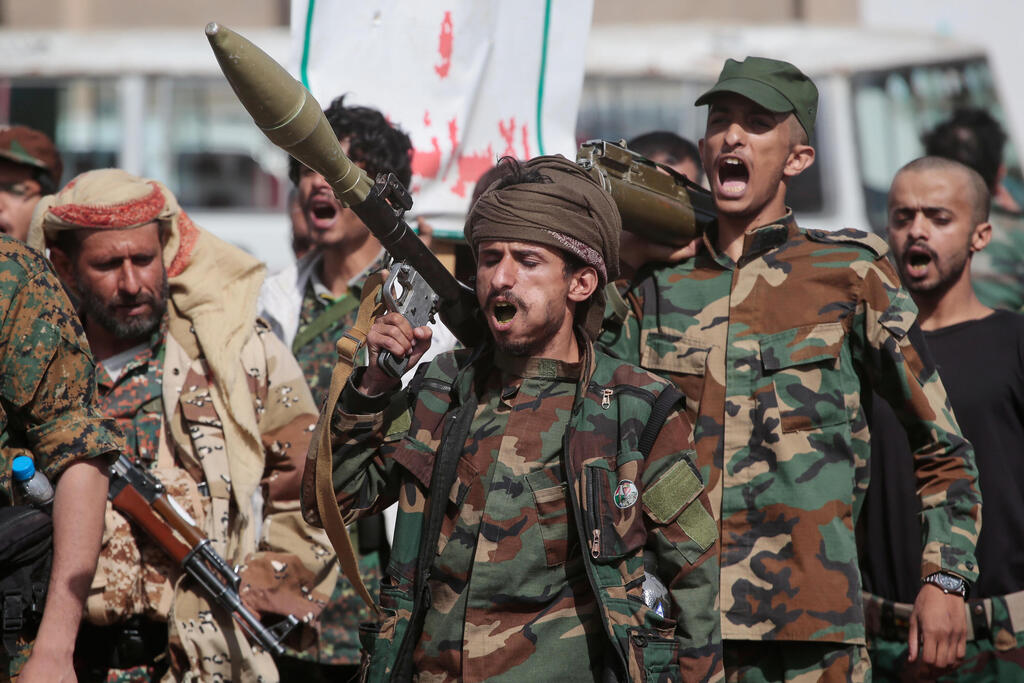
Saleh is a nephew of former Yemeni President Ali Abdullah Saleh and commands one of the most important anti-Houthi formations on Yemen’s western coast. Mocha had become the principal base of his National Resistance Forces, making the city’s loss both a military and symbolic blow to the forces opposing the Houthis.
Houthis race toward Bab al-Mandab
The controversy over the recording unfolded during a wider Houthi breakthrough along the Red Sea coast. The group seized Mocha on Thursday after government-aligned forces withdrew under heavy pressure. Three Yemeni government sources also confirmed the city’s fall to Reuters, while Saleh described the move by his forces as a tactical withdrawal intended to allow them to regroup.
The capture of Mocha was only one stage in a rapid southward advance. Houthi fighters continued toward Dhubab and moved onto islands in the Bab al-Mandab Strait, including Mayun, also known as Perim. By Friday, reports said the group had taken control of Yemen’s entire Red Sea coastline and established a much stronger position around the narrow waterway connecting the Red Sea with the Gulf of Aden.
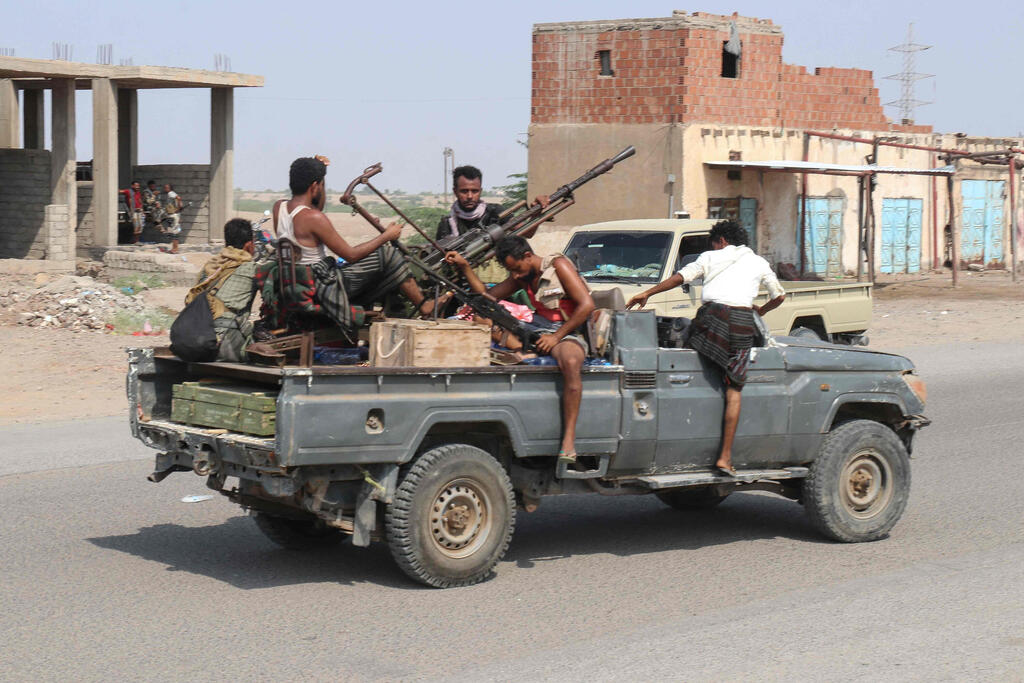
Fighters loyal to Yemen’s Saudi-backed government man a checkpoint near Hodeidah amid renewed clashes with the Houthis, September 5
(Photo: Khaled ZIAD / AFP)
Bab al-Mandab is one of the world’s most important maritime chokepoints. Ships passing through it can continue north through the Red Sea and Suez Canal, making it a critical route between Asia, the Middle East and Europe. The Houthi advance has therefore raised concerns far beyond Yemen, particularly as shipping through the region has already been disrupted by years of Houthi attacks and wider instability around the Strait of Hormuz.
The latest offensive is also among the Houthis’ biggest territorial gains since a 2022 truce largely froze the main front lines of Yemen’s civil war. The renewed fighting has displaced tens of thousands of civilians and raised fears that the conflict could again expand after years of relative military stalemate.
Reuters reported that the Houthis’ advance was aided by Iranian arms and direct guidance from Iran’s Islamic Revolutionary Guard Corps, citing Yemeni government, Iranian and regional sources. The seizure of Mocha has strengthened the Houthis’ position along the Red Sea while placing further pressure on Saudi Arabia and other regional governments backing Yemen’s internationally recognized authorities.
A separate case of AI and weapons development
The allegation that the Houthis used AI to impersonate Saleh emerged at the same time as separate evidence that actors operating in Houthi-controlled northern Yemen had been using advanced AI tools for military-related work.
Anthropic, the U.S. company behind the Claude AI system, said in a threat-intelligence report released this month that it had identified a weapons-development cell in northern Yemen using Claude Code to work on guidance, navigation and control software for guided weapons. The company did not publicly identify the group as the Houthis, and the case has not been linked to the disputed Saleh recording.
Explosions and flames at a military camp in northern Yemen in footage released by the Houthis, who said the site held ‘Saudi weapons trucks’


According to Anthropic, the Yemen-based actors were working on three programs: a guided rocket using a commercially available flight computer, a multistage ballistic missile with a stated range goal of more than 2,000 kilometers, and a missile family that included a proposed hypersonic-glide variant. The users employed several Claude instances simultaneously, assigning them tasks resembling those of members of an engineering team, including software development, research, code review and simulation.
Anthropic said the actors conducted a live test of a guided rocket in Yemen and then returned to Claude for help analyzing the failure. The company said it shut down the accounts involved and shared information about the activity with government and private-sector partners. It did not say the actors had successfully produced an operational weapons system with the model’s assistance.
There is no evidence that the northern Yemen weapons-development case and the alleged impersonation of Saleh were part of the same operation. But the accusations surrounding the Mocha battle point to a different potential use of the technology: not building weapons, but manipulating information in the middle of a fast-moving offensive, when a convincing order in a commander’s voice could itself become a battlefield tool.