


The 174 passengers aboard the terrifying flyDubai flight to Tel Aviv were not saved by an intelligence warning or sophisticated technology. When the crisis erupted, a wounded captain, four Israelis who intervened and other pilots aboard the aircraft managed to regain control and bring the plane to an emergency landing in Saudi Arabia.
The outcome was extraordinary, but precisely because disaster was averted, the incident raises a broader question: What do we really mean when we talk about an intelligence warning?
Gallery

FlyDubai incident highlights Israel’s challenge: preparing for threats intelligence cannot predict
(Photo: REUTERS/Ammar Awad)
There was no advance warning of what happened aboard flyDubai Flight FZ1073. Nearly three years after the Oct. 7, 2023 attack, Israel’s security establishment presented Prime Minister Benjamin Netanyahu this week with an updated assessment covering threats from Iran, Gaza, the West Bank and elsewhere in the region. An attempted takeover of a passenger jet bound for Israel was not among the scenarios under discussion.
That does not necessarily amount to an intelligence failure. No security establishment can prepare around every conceivable action by every individual. The problem is that events can change the strategic picture almost instantly. U.S. President Donald Trump demonstrated that Thursday when he said that, “based on what I’m hearing,” Iran may have been connected to the flyDubai incident. If Iran was indeed behind the attempted attack, it would mark an especially troubling development.
The same principle applies to the IDF’s broader situation assessment. Intelligence is constantly collected and translated into operational planning, but in the Middle East the picture can shift while those plans are still being prepared. A new piece of intelligence, a political statement or an unexpected event can suddenly force commanders to rethink assumptions.
Iran remains at the center
Iran currently sits at the center of Israel’s security assessment because developments there have the potential to reshape the entire region. According to the assessment, there is currently no concrete intelligence indicating that Iran is preparing an imminent missile attack on Israel.
The concern instead focuses on the pressure being applied to Tehran by Washington and the possibility that Iran could eventually face a choice between accepting an agreement it does not want and returning to confrontation. Israeli planners are examining scenarios in which Tehran could launch a preemptive strike, currently regarded as a lower-probability possibility, or act because it believes Israel is preparing to attack first.
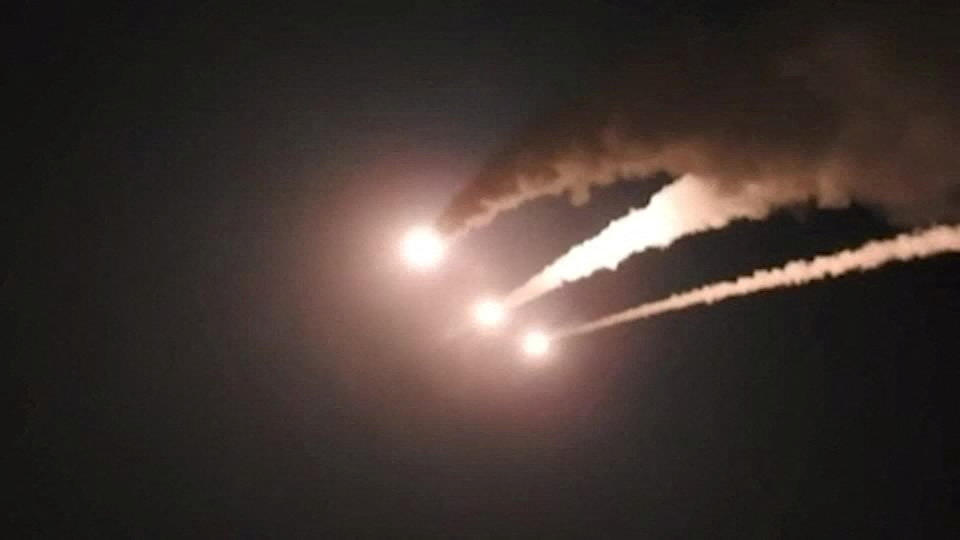
Iranian missiles launched toward Israel on June 7
(Photo: WANA (West Asia News Agency)/ via REUTERS)
The U.S. midterm elections and Israel’s election could also be viewed in Tehran as an opportunity to make moves on the nuclear front, based on the assumption that political constraints might limit the ability of Israel or the United States to respond. Such a development could itself force Israeli action.
For now, however, the assessment remains that an Iranian attack is not expected in the immediate future. That could change quickly, and the IDF is preparing for the possibility of renewed fighting on short notice, with the Air Force maintaining a high level of readiness.
Gaza, Lebanon and the West Bank
The picture elsewhere is more immediate. In Gaza, there is a specific warning that Hamas may attempt to abduct an Israeli soldier near the so-called Yellow Line. The alert level has consequently been raised in both IDF divisions deployed in the Strip.
Preventing such an attack would be particularly difficult at positions inside hostile territory, without a continuous physical barrier and amid widespread destruction. Hamas is also believed to retain tunnels that have not yet been discovered. Southern Command chief Maj. Gen. Yaniv Asor has therefore ordered heightened readiness at military posts and is personally conducting inspections and speaking with soldiers stationed there.
In Lebanon, the current assessment is that Hezbollah remains constrained and lacks the level of Iranian backing it would like, while trying to rebuild capabilities as the IDF continues operations aimed at preventing that recovery. As elsewhere, however, the assessment could change quickly.
The West Bank is regarded as especially volatile. The IDF has established an additional divisional headquarters there as part of efforts to strengthen command and control.
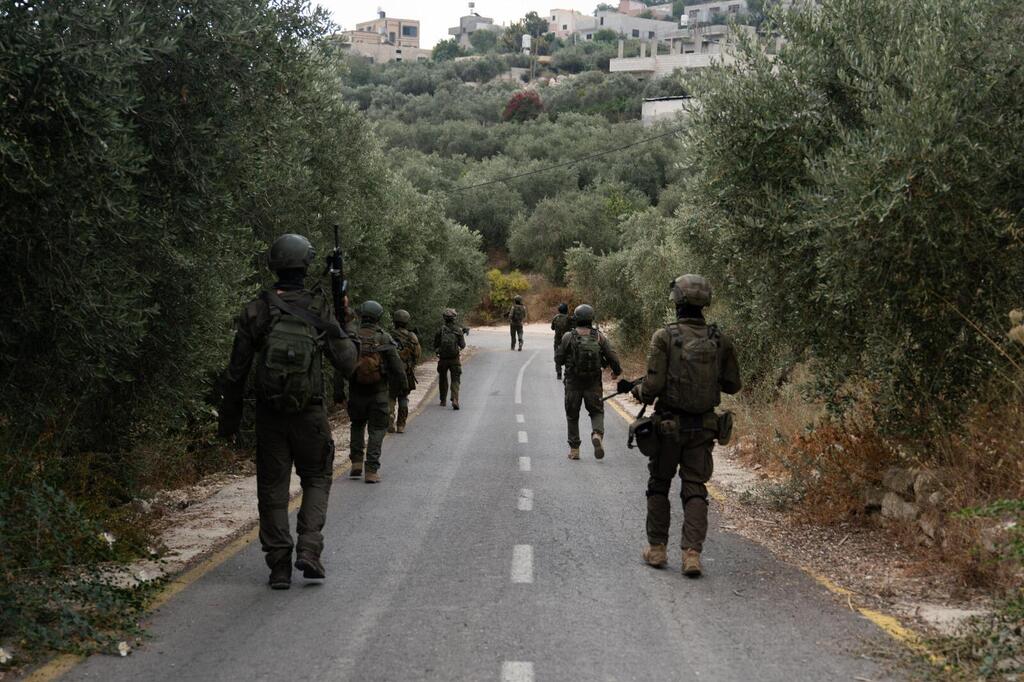
IDF forces in the West Bank
(Photo: IDF)
The West Bank is also the only front where there is no continuous fence and security zone separating hostile forces from Israeli civilians. Growing friction, an increase in nationalist violence and elections in Israel, the United States and potentially the Palestinian Authority could all create opportunities for attempts to inflame the area. Central Command currently has 26 battalions deployed there.
Intelligence is not a prediction
That is the central distinction. A situation assessment is not a forecast carved in stone. It is a constantly changing picture.
A meaningful warning is also more than a general statement that Hamas may be planning something or that Iran could attack. The more useful intelligence becomes, the more it answers concrete questions: what is going to happen, where, when and how?
Perfect intelligence does not exist. But the more specific the information, the more effectively it can be turned into action: moving forces, changing deployments, tightening security, closing routes, raising alert levels or disrupting an attack before it happens.
That remains one of the central lessons Israel’s security establishment has confronted since Oct. 7. Receiving information is not enough. The challenge is understanding what it means and translating it into decisions before the threat materializes.
And that leads to a second question. It is not enough to ask whether Hamas intends to act or whether Iran might attack. Security planners must also ask what happens if they do.
Are the forces positioned correctly? Are defenses ready? Do existing procedures fit the threat? Does Israel have the tools to respond?
The past week, like Oct. 7, is a reminder that intelligence will never catch every threat in time. With Iran dominating the threat picture and the West Bank on edge, Israel’s real test is readiness for the surprises no assessment can predict.
In the Middle East, reality can change while the assessment is still being written. That is why preparedness cannot depend solely on knowing in advance exactly what the next threat will look like.