


Three years into the war in Gaza, the IDF is deepening its operational pressure and control in the coastal strip. In an IDF podcast, Gaza Division commander Brig. Gen. Liron Batito, who commanded the Givati Brigade on Oct. 7, 2023, gave an extensive overview of the military’s control of the Strip, targeted killings of senior Hamas figures, the complex dilemmas surrounding the hostages and the recovery of communities near the Gaza border.
According to Batito, the defensive concept along the Gaza border has undergone a fundamental change, and the military now maintains extensive control inside the territory. “The Gaza Division is currently in a situation where we control 63% of the territory,” he said. “We have established nearly 40 new outposts, and that gives us a very significant advantage. The defense is now forward-based — the communities are behind us, and before anything else, IDF soldiers are positioned up front.”
Watch: Elimination of Hamas' Northern Gaza Brigade commander
(Video: IDF Spokesperson's unit)


Under the October 2025 ceasefire agreement between Israel and Hamas, led by U.S. President Donald Trump, Israel was to hold 53% of the Strip.
Batito emphasized the military’s freedom of action and its continued efforts to disrupt Hamas’ supply and operational networks.
“Our control of the crossings is such that Hamas can no longer bring in what it used to,” he said.
“We carry out a great many operations to strip it of capabilities, strike operatives, seize weapons and, perhaps most importantly, preserve operational freedom of action. In addition, we are drilling throughout the entire Strip to map and locate underground infrastructure. Even though we have already achieved a very significant result and destroyed almost all of the underground network, we continue to drill every few meters, go deep and use technological means. Hamas is in a very, very difficult situation.”
Gallery
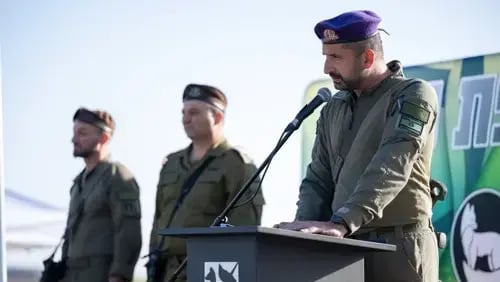
Gaza Division Commander, Brigadier General Liron Batito, at his inauguration ceremony in February
(Photo: IDF Spokesperson's Unit)
As part of the effort to strike Hamas’ chain of command, Batito said the military has come close to eliminating the leadership of its military wing.
“When you look objectively at three years of fighting, we have eliminated all the heads of the military wing — all the brigade commanders and most of the battalion commanders,” he said. “Just in the past week, we eliminated two brigade commanders — the Rafah Brigade commander and the Khan Younis Brigade commander — and they are already the second and third generation of commanders to be eliminated.”
In September alone, about 70 terrorists were killed, including three brigade commanders, two battalion commanders and nine company commanders. Among those killed were 17 “NILI terrorists” who were involved in the raid into Israel, holding hostages captive and abducting civilians into the Gaza Strip.
Elimination of the terrorist who kidnapped Noa Argamani
(Photo: Gideonim Unit 33 from Lahav 433)
Among the prominent figures killed over the past month were Khan Younis Brigade commander Mohammed Yazouri, Rafah Brigade commander and head of operations for the military wing Nael Abu Obeid, northern Gaza Brigade commander Izz al-Din Bikh and Hamas finance department director Mohammed Abu Alwan.
Also killed were Saher Nidal Lutfi Saqr, the motorcycle driver who abducted Noa Argamani and Avinatan Or from the Nova music festival, and Ismail Ibrahim Darwish Qandil, who took part in the raid and in the killing of Nahal Brigade commander Col. Yonatan Steinberg.
The IDF said that “the series of eliminations is the result of prolonged intelligence and operational work that matured into several opportunities within a short period of time. Some of the operatives and commanders hide in tunnels and blend into densely populated areas, and therefore prolonged surveillance is sometimes required to achieve a high degree of certainty regarding their identity and location, and to create the conditions that allow for a precise strike while minimizing harm to uninvolved civilians.”
The IDF also said Hamas is no longer the military and governing organization it was on the eve of Oct. 6, 2023. Its organic battalion structure has been dismantled, its senior command chain severely damaged and many core infrastructure assets destroyed. At the same time, the terrorist organization continues its efforts to rebuild and rearm, while continuing to recruit operatives from among Gaza’s population.
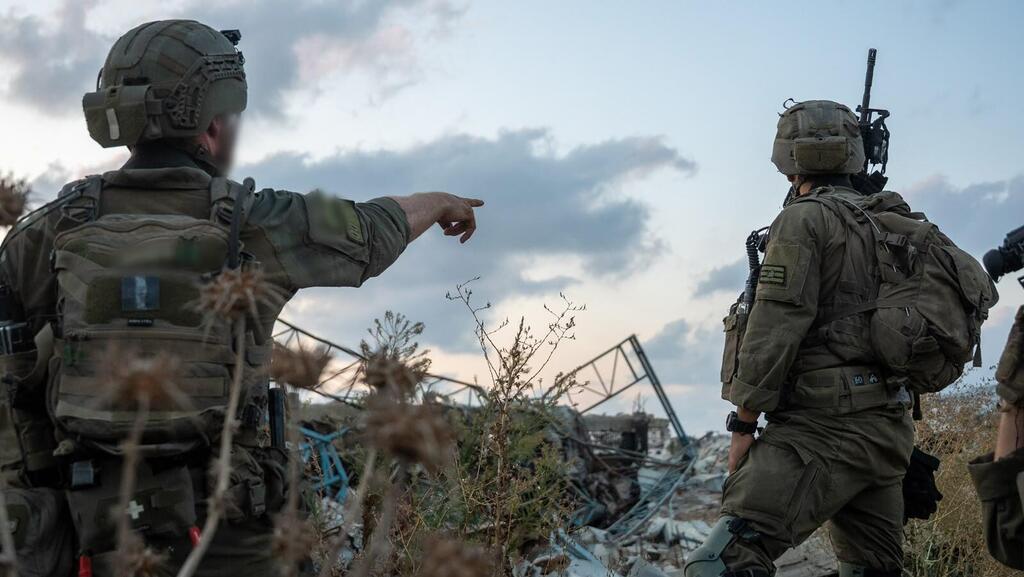
IDF forces in Gaza
(Photo: IDF Spokesperson's Unit)
During September, Southern Command operations focused on targeted strikes against figures involved in force buildup, attacks on concealed command posts and the neutralization of Hamas civilian-security control centers intended to tighten its grip on the population — all while troops continue to face enormous complexity in combat on the ground.
'A drive to remember what happened here'
Batito also recalled one particularly dramatic moment from the beginning of the war, involving the reality in which the IDF was fighting while Israeli hostages were being held in Gaza.
“Toward the end of the first month of the war, we were at a location where we knew a family of living hostages was being held,” he said. “We were preparing to rescue them, day after day, but they weren’t coming out. I prayed they would come out so we could create an opportunity and pull them out.
“Twenty-four hours before the first deal, in one of the hardest decisions, we decided to leave the area. If we had acted there, we would have endangered them. At first I did not believe we would manage to bring everyone back during a period like this, but the fact that we succeeded in bringing them home is an incredible achievement and part of what makes us unique.”
Alongside the military data, Batito pointed to what he described as an unprecedented recovery by communities along the confrontation line.
“It’s incredible. Ninety percent of the Gaza border residents who were here on October 7 have returned to live here,” he said. “More than that, every kibbutz and many of the moshavim are expanding, and new people are coming to live here. People are coming home.”
At the same time, Batito stressed that alongside the renewed growth, responsibility for the failure and the trauma remain deeply ingrained.
“There is no point in avoiding it. There was a failure here, and there is trauma here that must be remembered,” he said. “I often drive on the roads and every so often stop at a memorial, at the Nova site, and take a walk by myself. Just to walk around, look at the faces and remember what happened here.
“It is something that also keeps you alert, keeps you on edge. Memory is very important.”