

National Security Minister Itamar Ben-Gvir dramatically escalated his confrontation with Israel’s police leadership on Sunday, accusing the force’s top investigations official of dishonesty and claiming Attorney General Gali Baharav-Miara was using pressure against Police Commissioner Danny Levy. The remarks widened a feud that until now had largely centered on Levy, with Ben-Gvir turning his attention to Deputy Commissioner Boaz Balat, head of the Police Investigations and Intelligence Division, following reports that Balat had ordered investigators not to transfer information connected to the election interference investigation to the Shin Bet without his approval.
“I think Boaz Balat is the attorney general’s emissary for closing cases, covering things up and sweeping them under the rug,” Ben-Gvir told 103FM. He later called Balat “a fraud” and “a liar,” accusing him of taking control of the investigations division and interfering in a case that had been handled by Lahav 433 chief Manny Binyamin. Balat’s directive did not halt cooperation with the Shin Bet, but required officers to receive his approval before providing election-related information or investigative assistance.
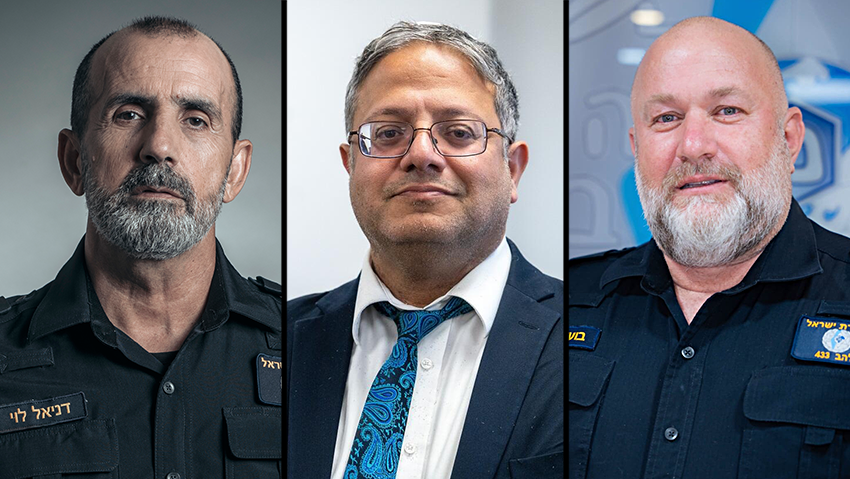
Danny Levy, Itamar Ben-Gvir, Boaz Balat
(Photo: Israel Police, Shalev Shalom, Ilya Melnikov)
The dispute comes amid tensions between police, the Shin Bet and legal authorities over the investigation into suspected foreign attempts to influence Israel’s election. Ben-Gvir used the controversy to promote broader allegations involving foreign money and Arab political parties, citing reports that Shin Bet Director David Zini had spoken of 100 million shekels being transferred and claiming Qatar may have been involved. Those claims have not been established as investigative findings, and the suspicions remain under examination.
Ben-Gvir then returned to Levy, whose appointment he once strongly championed, claiming the commissioner’s approach toward him had changed because of pressure from Baharav-Miara. “Google it. It is not that complicated to understand why the commissioner changed 180 degrees,” he said. “He was a commissioner who implemented the government’s policy. I was pleased with him.” Ben-Gvir alleged that the attorney general pressures Levy during meetings and has unspecified “pressure points” she can use against him, but presented no evidence to support the claim.
Asked what he meant, Ben-Gvir pointed to police spokesman Deputy Commissioner Arieh Doron and then raised a separate controversy surrounding work carried out at Levy’s private home. “Check what his role is in this story,” Ben-Gvir said of Doron, before referring to allegations of building violations at Levy’s home and questioning the involvement of police personnel in overseeing construction there. He suggested the affair could leave Levy vulnerable to pressure from the attorney general, saying: “The attorney general intimidates people.”
Ben-Gvir added that had Levy discussed the matter with him, he would have warned the commissioner against any building violations or accepting improper assistance. He then contrasted the allegations with his own conduct, saying he refuses even minor discounts or gifts because of the scrutiny placed on public officials. “If you are a public figure, protect yourself,” he said. “Everyone is watching you.”
Israel Police declined to respond to Ben-Gvir’s allegations. The confrontation has turned a dispute over investigative cooperation into another public battle between the national security minister and the senior police officials responsible for running the force.