

Residents of northern Israel watched with skepticism Tuesday evening, under barrages of rockets and drones, as a historic round of negotiations took place in Washington between Israel’s ambassador Yechiel Leiter and Lebanon’s ambassador Nada Hamadeh Mawad, led by U.S. Secretary of State Marco Rubio. For now, despite Prime Minister Benjamin Netanyahu’s declaration that the goal is peace with Lebanon, the reality in the north appears far from it. Hezbollah’s rocket fire points to a terror organization that will find it very difficult to abandon its ambitions — and certainly will not agree to disarm.
Until midday on Tuedsay, an unusual and surprising calm prevailed in Kiryat Shmona. Residents feared it signaled a “ceasefire deal” being hastily concluded overseas, but within hours Hezbollah resumed fire in full force, and two drones exploded in Nahariya, one at the entrance intersection to the city. Shortly afterward, the IDF issued a statement warning of widespread barrages toward communities across the Galilee.
The start of the peace talks in Washington
(Photo: Shmulik Almani, Israeli Embassy in Washington)


Shortly before Hezbollah resumed its attacks, Northern Command chief Maj. Gen. Rafi Milo visited the Kiryat Shmona municipal emergency operations center and met with Mayor Avichai Stern. No major news emerged from the meeting. When we arrived at the fortified compound minutes after he left, Metula Regional Council head David Azoulay also arrived to “have coffee” with Stern.
'Set up a tent on the Lebanese side and a tent on the Israeli side'
The two disagreed over the importance and meaning of the talks in Washington. “I am certainly in favor of direct talks with the Lebanese government,” Azoulay said. He explained: “We must remember that in the end, no matter how strong it is and no matter how much time it is given, the IDF cannot dismantle Hezbollah. Let’s not delude ourselves. It cannot reach every house or every Kalashnikov. Ultimately, it is the Lebanese government that must do this job.”
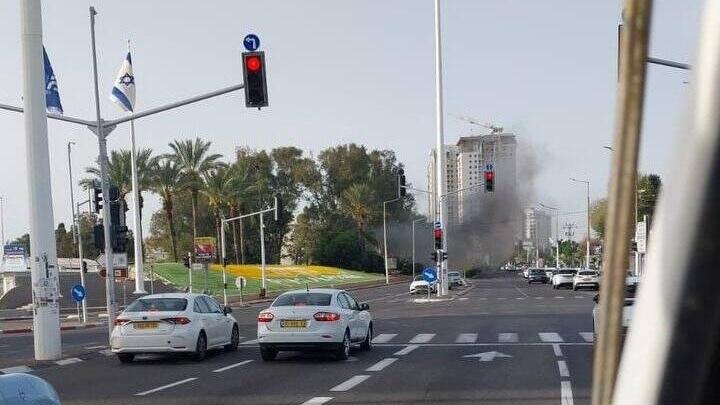
Azoulay believes Israel should continue “to pound Hezbollah and weaken it as much as possible, and at the same time, France, the United States and the moderate Sunni countries that want to help Lebanon — should help. They should pay Lebanese soldiers higher salaries than those received by Hezbollah members. In the end, even some Hezbollah members who lay down their arms could integrate into the Lebanese army. Hezbollah must be weakened, while the Lebanese army and government become stronger than it.”
Does Azoulay believe there is still a chance for a breakthrough in the negotiations? “In the U.S., things like this are not finalized. If we want to make ‘peace,’ we need to open the crossings at Naqoura or here at the Good Fence in Metula, and sit down to talk here. Set up a tent on the Lebanese side and a tent on the Israeli side and talk here. If we do it right, within two to four years, we can bring the Abraham Accords here as well.”
'Lebanon is unable, unwilling — and lying'
His counterpart on the front line, Stern, sounded far less optimistic. “If a left-wing government were conducting negotiations with Lebanon today, we all know how the right would respond,” he said. He noted that “in 1992, Rabin’s government conducted ‘peace talks’ ahead of the Oslo Accords, and Likud in the opposition warned that we were not prepared to be ‘victims of peace.’ We in Kiryat Shmona and the frontline communities are not willing to be victims of peace. We must not negotiate with terrorists.”
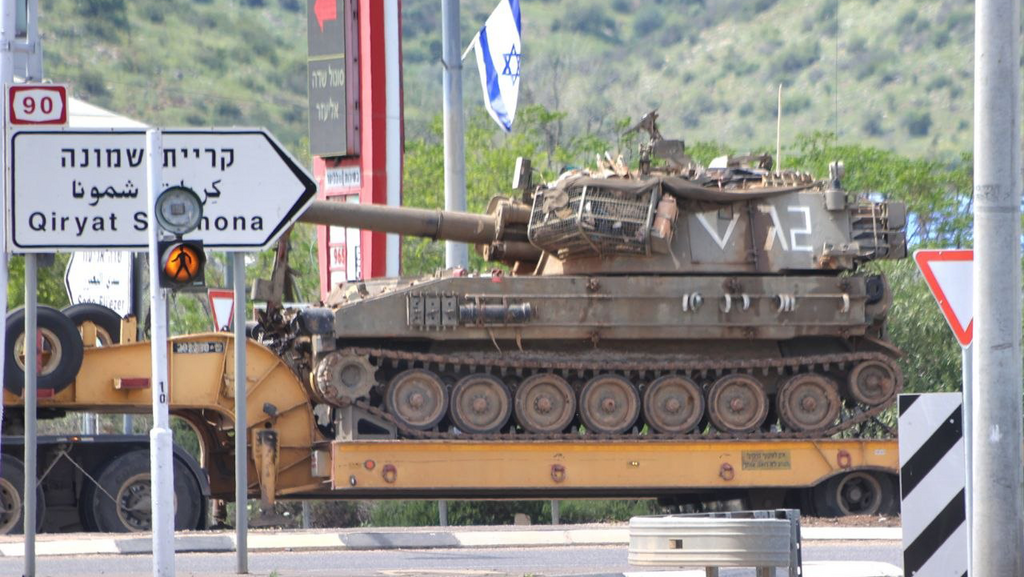
IDF tank being transported to the Lebanese border in the Kiryat Shmona area
(Photo: Motti Kimchi)
According to him, “there is no reason to negotiate with a country that is unable and unwilling, and lies to everyone about dismantling Hezbollah.” Stern added: “We have already been in this place in March, when we were brought back to the city and told there would be ‘an American representative who would enforce the Lebanese army’s commitment to dismantle Hezbollah’ — and we see what is happening today and from where Hezbollah is firing at us.” He said residents should place their trust in “the government in Jerusalem to provide solutions and ensure our security, not in the United States and certainly not in Lebanon.”
'Negotiating with the enemy is a stab in the heart'
At roughly the same time the meeting in Washington began, around 6 p.m. Israel time, Hezbollah intensified its fire, launching several consecutive barrages toward the north, underscoring that the organization not only opposes the talks but is prepared to act to disrupt them. The same sentiment of “resistance” was also evident online, where a campaign by Hezbollah supporters against the negotiations between Lebanon and Israel has been gaining momentum.
Under the hashtag “This is how we negotiate,” users have been posting images, including of attacks on Israel (from Hezbollah publications). One post read: “Negotiating with the enemy is a stab in the heart of Lebanon.” Another featured an image of Lebanese Prime Minister Nawaf Salam kneeling, alongside the caption: “Does not represent me.”
The meeting between the ambassadors in Washington lasted two hours. At its conclusion, Leiter said: “The Lebanese government made clear that it is no longer held hostage by Hezbollah. We are united in the desire to free Lebanon from Hezbollah. There were excellent talks today, in an excellent atmosphere. We spoke about the need to see Lebanon prosper, and to see our border as a stable and respectful one, where people cross in business suits to conduct commerce, and perhaps also in swimsuits to vacation.”
Israeli Ambassador to the US Yechiel Leiter on the negotiations with Lebanon
(Photo: Israeli embassy)
Lebanon’s ambassador to Washington said that “the preliminary meeting was good.” She thanked the United States for hosting and assisting the talks, and called for a ceasefire and “the return of displaced people to their homes.” She also called for practical steps to ease Lebanon’s severe humanitarian crisis, for full implementation of the 2024 ceasefire agreement, and emphasized Lebanon’s full sovereignty over all its territory, against the backdrop of IDF presence in large areas of southern Lebanon.
'Direct negotiations at an agreed time and place'
A joint statement issued after the meeting included a single sentence attributed to the United States, Lebanon and Israel: “All parties agreed to launch a process of direct negotiations at a time and place to be agreed upon regarding its format.”
The State Department said the meeting included Rubio, adviser Michael Needham, U.S. Ambassador to Lebanon Michel Issa, Israeli Ambassador to the U.S. Yechiel Leiter, and Lebanese Ambassador Nada Hamadeh Mawad. “This meeting marks the first high-level engagement between the governments of Israel and Lebanon since 1993,” it said. “Participants held a productive discussion on the steps needed to launch direct negotiations between the two countries.”
The State Department added: “The United States congratulated both countries on this historic achievement and expressed its continued support for the talks, as well as for the Lebanese government’s plans to restore its monopoly on weapons and end excessive internal Iranian influence. It also expressed hope that the talks would go beyond the 2024 agreement and lead to a comprehensive peace accord. It further emphasized Israel’s right to defend itself against ongoing Hezbollah attacks, and that any ceasefire agreement must be between the two governments, under U.S. auspices, and not through any separate track.”