

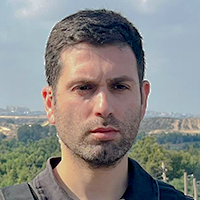
Defense Minister Israel Katz and IDF Chief of Staff Lt. Gen. Eyal Zamir have agreed to merge overlapping probes into the military’s failures on Oct. 7 and bring in the defense establishment comptroller, the Defense Ministry said Wednesday, following a public clash over the findings of a high-profile meta-investigation into the army’s shortcomings during Hamas’ surprise attack on southern Israel.
According to the statement, Katz and Zamir met for a second time and resolved that a unified review will include both the supplementary probes ordered by the chief of staff and the broader review Katz demanded following the report by the so-called Turgeman Committee, led by retired Maj. Gen. Sami Turgeman.
Gallery
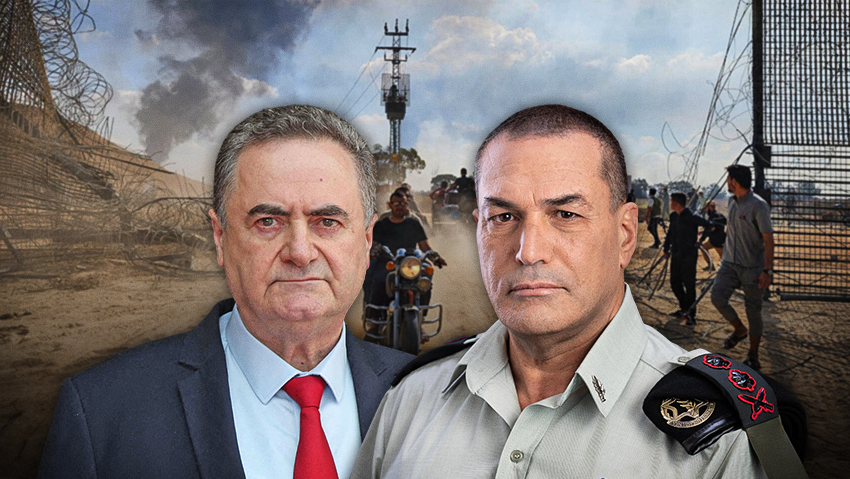
Defense Minister Israel Katz and IDF Chief of Staff Lt. Gen. Eyal Zamir
(Photo: IDF, Menahem Kahana/AFP, Hani Alshaer/AFP)
Under the agreement, the defense establishment comptroller will serve as an observer on the investigation team, including in the probe of the so-called Jericho Wall plan, referring to a Hamas attack outline the IDF had obtained years earlier, and the examination of the military’s intelligence and operational failures on Oct. 7.
The comptroller will also review the investigation into the Air Force and the Turgeman Committee’s findings concerning Brig. Gen. Omer Tischler, who served as Air Force chief of staff during the Oct. 7 attack and whose potential promotion to Air Force commander has become a source of tension, partly prompting the renewed review.
Katz’s concession followed a demand by Zamir, as Tischler is the leading candidate to become the next commander of the Israeli Air Force. Both the Air Force’s internal review and the Turgeman Committee found that the branch met its readiness targets in accordance with the directives of the Operations Directorate and the Southern Command.
Military officials assess that the decision to add the defense establishment comptroller as an observer to the supplementary investigations is largely symbolic and intended to enable Katz to step away from the ongoing dispute over military inquiries. Nevertheless, there are concerns within the IDF that political figures may continue to delay the appointment of the next air force commander—a process that has already been stalled for two months.
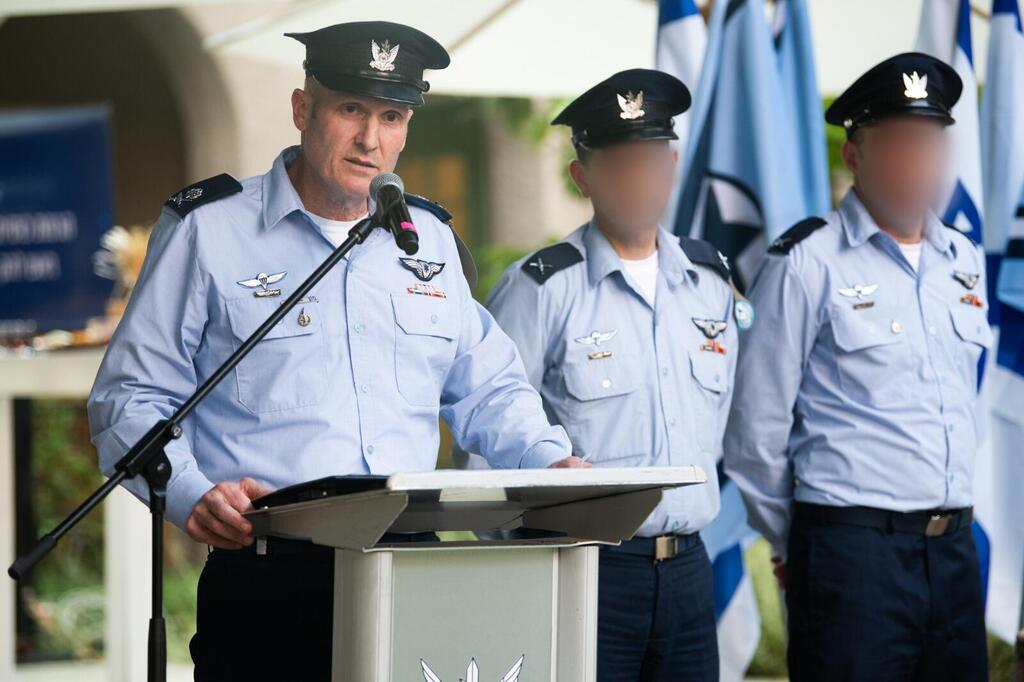
Air Force Commander Maj. Gen. Tomer Bar
(Photo: IDF)
Current IAF commander Maj. Gen. Tomer Bar is set to complete his term in April. Senior appointments of this kind are typically made at least six months in advance to allow for a smooth transition. The position requires deep familiarity with the Air Force; it is not one that can be filled by a senior officer from an unrelated branch, such as armored or artillery forces. Building the commander’s core staff, setting strategic direction and shaping operational doctrine are all processes that begin months before a new commander formally takes office.
While there is currently a major general from the Air Force on the General Staff—C4I Directorate head Aviad Dagan—Tischler remains the primary candidate due to his combat pilot background and senior operational roles within the IAF. Dagan, by contrast, is a former combat navigator.
On Wednesday morning, the IDF reiterated that Zamir’s acceptance of the Turgeman Committee’s report—published over the weekend—paved the way for Tischler’s promotion. The report concluded that the Air Force fulfilled all of its defined operational requirements on the morning of October 7, and in some cases exceeded them, though even that level of readiness was not enough to counter Hamas’ surprise attack, which caught the entire military unprepared.
The Turgeman Committee found that the Israeli Air Force did indeed fail to defend the country’s airspace in one key area: low-altitude threats, specifically the drones and motorized paragliders that infiltrated communities near the Gaza border during the first hour of Hamas’ surprise attack on October 7.
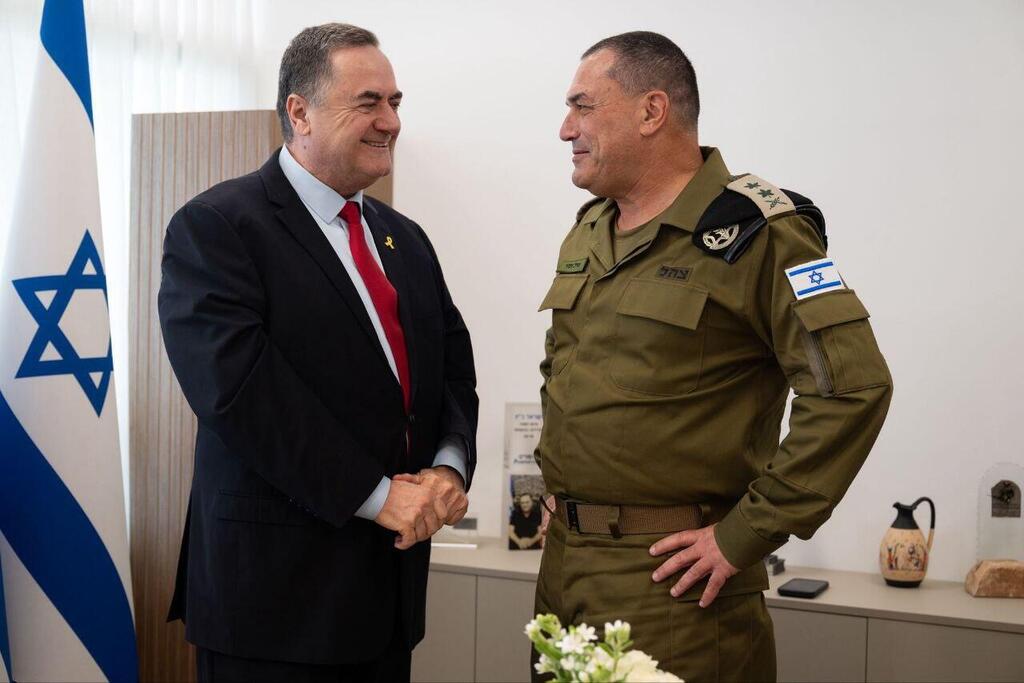
Katz and Zamir
(Photo: IDF)
In his summary of the investigations, Zamir wrote that in the years leading up to the attack, and in line with General Staff directives, the Air Force had focused primarily on strategic force buildup aimed at Iran, on the “campaign between the wars,” and on countering perceived major threats from Israel’s northern front.
“When the war broke out, the Air Force met the targets defined for it by the General Staff,” Zamir added. “All levels of IAF readiness were activated and met their objectives. However, the Air Force was not adequately prepared in the early hours of the attack for the scale of the assault due to the fundamental element of surprise. The military did not raise its alert level or threat assessment during the night, and there was a lack of clarity in the situational picture during the most critical early hours. Still, the Air Force managed within a few hours to adapt its operations to a scenario that far exceeded its reference threats.”
Within the IDF, there remains concern that Tischler’s promotion could still be delayed—possibly deliberately—by political leadership. In that event, current commander Bar may be asked to extend his term by several months. Zamir is expected to push forward with the appointment in order to avoid harming Israel’s strategic air arm, which already plays a leading role—and is expected to continue doing so—in military operations across volatile theaters such as Lebanon, Iran and Yemen.
Amid upheaval in the IDF's senior ranks following the submission of the Turgeman Committee report and its assignment of personal responsibility to senior defense officials, Katz ordered a reexamination of the report. Katz, who learned from media reports about the chief of staff’s decision to impose personal conclusions and take command-level measures, said he had instructed Defense Establishment Comptroller Brig. Gen. (res.) Yair Volansky, “to conduct an in-depth review of the report.”
Among other things, Katz stated in his announcement last month that the comptroller would examine “whether there is a need for further investigations in areas the IDF has not previously investigated, and which the Turgeman Committee also did not address due to its review being limited to existing inquiries—including the Jericho Wall document—and to complete investigations that the committee flagged as inadequate and insufficiently thorough.” Katz has since reversed his position, and the comptroller will now serve only as an observer.
Following Katz’s order to reexamine the report, Zamir issued a strongly worded statement the same evening. “The decision to cast doubt on a report compiled over seven months by 12 generals and brigadier generals, approved by the chief of staff and presented personally to the minister, is troubling,” he wrote. Katz responded that the freeze on senior military appointments would remain in effect and stated, “I will not engage in arguments through the media”—though the public confrontation continued.
In a nine-page document released last Friday, the chief of staff for the first time called for an investigation into the role of the political echelon in shaping the strategic outlook that led to the October 7 massacre. He implied that personal conclusions and dismissals should not be limited to the IDF, and clarified that all findings from the probes would be delivered directly to him and would be used solely at his discretion.
In a summary to commanders based on the “meta-investigation,” the chief of staff called for an “external and independent” commission of inquiry to also examine the role of the political leadership, stating, “It is not appropriate to direct all attention solely at the IDF.” He issued veiled criticism of the political echelon’s role in the failure, and wrote that it is necessary to scrutinize “the security doctrine regarding the Gaza Strip” in the years preceding the massacre—a process, he said, that must also inform Israel’s approach to other fronts.
“Over the years, a narrow, defensive containment concept took shape, prioritizing enemy attrition through intelligence and firepower. The idea was to maintain Hamas in a deterred and weakened state—‘to buy it off with money’—on the assumption that quiet in its sector would allow Israel to focus on other challenges. In practice, this avoidance-based approach enabled Hamas to conduct a significant military buildup,” he wrote.