


The French-Saudi conference at the UN ended with nine new countries recognizing the Palestinians’ right to statehood, less than two years after Hamas’ deadly October 7 massacre.
What unfolded in New York may have been “much ado about nothing,” but it marked a yellow card for Prime Minister Benjamin Netanyahu’s government. Israel still enjoys backing from U.S. President Donald Trump, yet faces hard choices about how to respond.
French President Emmanuel Macron at the UN
(Video: UN WEB TV)


At the close of the conference, Israel suffered a significant blow. Once seen as a victim of Hamas’ atrocities, Israel now finds itself cornered, with 153 nations recognizing Palestinian independence. Decades of efforts to prevent such recognition have unraveled, creating a new diplomatic reality. In the UN General Assembly this week it was clear: Israel has reached a new low on the world stage.
Where once recognition came mainly from Arab and non-aligned states, this time it was liberal democracies—France, the UK, Canada, Australia, Spain and others—that led the charge. These “like-minded” states carry symbolic and moral weight, and Israel now expects that even the few democracies still holding out, such as Finland, Japan and South Korea, will eventually join.
Among Israel’s diplomatic setbacks, Saudi Arabia stands out. Once hailed by Israel and Trump as a linchpin for reshaping the Middle East, Riyadh has instead moved to align with Gulf partners in ways that isolate Israel.
The attempt to assassinate Hamas’ leadership in Doha has only deepened that perception. Qatari Emir Sheikh Tamim bin Hamad Al-Thani lashed out at the UN, condemning Israel’s actions in his capital as “state terrorism” and accusing Netanyahu of opposing peace both now and in the future.
France’s alliance with Saudi Arabia in convening the conference strengthened both Paris and Riyadh. For President Emmanuel Macron, the initiative also served as a counterweight to strained ties with Trump over NATO, trade and personal frictions.
Gallery
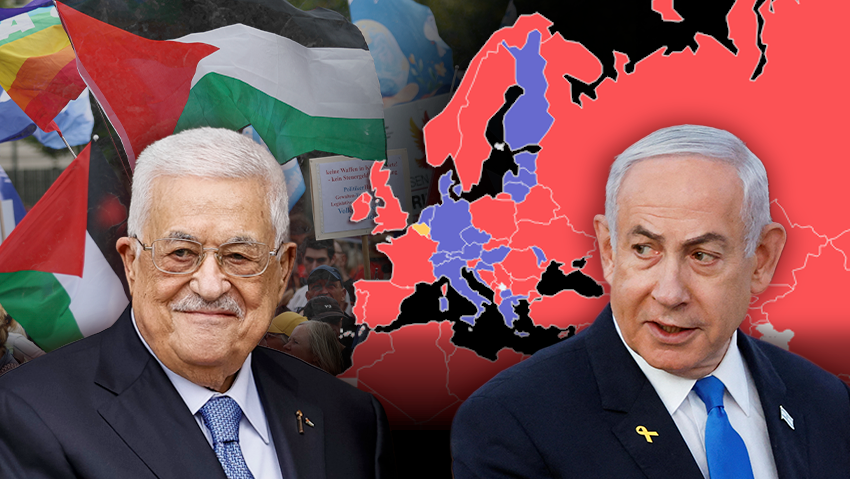
Palestinian Authority Chairman Mahmoud Abbas, Prime Minister Benjamin Netanyahu
(Photo: Maryam Majd/Getty Images, REUTERS/Amir Cohen, Pablo Blazquez Dominguez/Getty Images)
In the wake of the recognition wave, world powers are warning Israel not to retaliate by annexing parts of the West Bank. Such moves, they caution, would be seen as deliberate provocation and could spark not just condemnations but Security Council action or even the severing of ties.
Trump’s support for Israel remains strong. At the UN, he denounced the recognition moves as “rewards for Hamas” and insisted that peace must start with the immediate release of hostages. His backing, however, is not guaranteed. Given his unpredictability and sensitivity to economic interests, Israel cannot afford to gamble all its chips on the Trump administration.
Israel’s immediate challenge is ending the Gaza war quickly and decisively, with U.S. support, to reduce the risks of deepening isolation. Prolonged fighting raises the threat of boycotts, protests, legal pursuits abroad and antisemitic incidents worldwide.
While the recognition of a Palestinian state by nine more countries has no practical impact on the ground—it changes nothing for ordinary Palestinians in Ramallah, Nablus or Deir al-Balah—the symbolism is damaging for Israel.
The sight of Macron and the Palestinian envoy receiving applause in New York was a diplomatic humiliation, magnified by Israel’s failure to present an alternative vision for the region.

U.S. President Donald Trump at the UN
(Photo: TIMOTHY A. CLARY / AFP)
Netanyahu has delayed his official response until after meeting Trump, underscoring Washington’s decisive role. The episode highlights Israel’s growing dependency on its American patron. In the absence of U.S. approval, annexation is unlikely, despite talk of it from Netanyahu’s coalition.
Not all outcomes were negative. Belgium, for instance, tied its recognition to the release of hostages and Hamas’ disarmament. Andorra set similar conditions, while Israel managed to persuade Finland, New Zealand and especially Japan to hold back.
Germany, Italy, Hungary, the Czech Republic and Argentina also resisted the recognition push, albeit for reasons ranging from historical caution to political opposition within the EU. Still, France is already planning a second wave of recognitions, hoping to recruit Asian nations like South Korea and Singapore. Israel will need to fight hard diplomatically to blunt the momentum.
Possible Israeli responses range from punitive diplomatic measures against France and the Palestinian Authority, to more radical options such as dissolving the PA altogether. The most likely scenario, however, is that Israel will mount a forceful response—both to deter further recognitions and to reassure its domestic audience—even if its actual deterrence on the diplomatic stage has eroded.
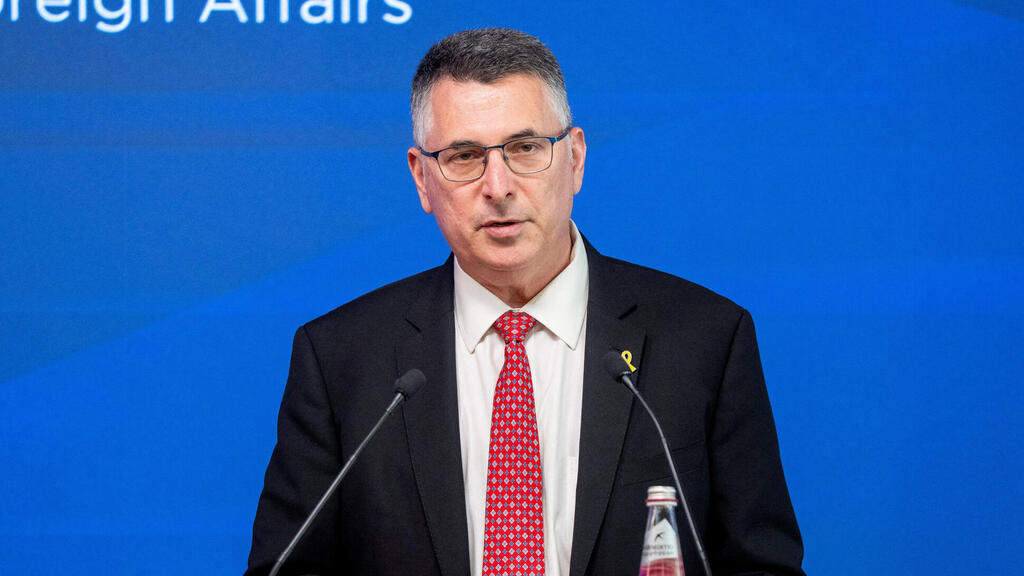
Foreign Minister Gideon Sa’ar
(Photo: Ritzau Scanpix/Ida Marie Odgaard/via REUTERS )
Netanyahu’s government has also sought to rally opposition leaders abroad. Foreign Minister Gideon Sa’ar has spoken with opposition figures in Australia, Canada and the UK, eliciting harsh criticism of their governments’ recognition moves. Some, like Canadian MP Melissa Lantsman, have already launched petitions portraying recognition as a gift to Hamas.
For now, Israel remains battered but not broken. The applause for Macron at the UN may not have shifted realities on the ground, but it has underscored Israel’s growing isolation and the urgent need for a coherent diplomatic strategy.