

The Pentagon has asked the White House to approve a request for more than $200 billion from Congress to fund the war in Iran, a massive sum that is expected to face stiff resistance from lawmakers opposed to the conflict, The Washington Post reported on Wednesday overnight.
According to the report, the figure would go well beyond the cost of the administration’s airstrike campaign so far and would instead be aimed at urgently expanding production of critical weapons depleted during three weeks of U.S. and Israeli strikes on thousands of targets. Three people familiar with the matter told the newspaper the Defense Department has been considering funding packages on that scale.

It remains unclear how much the White House will ultimately ask Congress to approve. One senior administration official said that some White House officials do not believe the Pentagon’s request has a realistic chance of passing on Capitol Hill. The Pentagon has floated several versions of a supplemental funding request over the past two weeks, according to the official and three other people familiar with the matter.
Any such request is likely to trigger a major political fight in Congress. Public support for the war remains lukewarm, Democrats have sharply criticized the campaign, and while Republicans have signaled support for a supplemental package, they have yet to settle on a legislative strategy or identify a clear path to overcoming the Senate’s 60-vote threshold.
The issue also creates a political challenge for President Donald Trump, who campaigned on ending U.S. military entanglements abroad and repeatedly attacked the Biden administration over the scale of spending on the war in Ukraine. By December, Congress had approved roughly $188 billion for the war in Ukraine, according to the U.S. special inspector general for Operation Atlantic Resolve.
The Defense Department declined to comment and the White House did not immediately respond to requests for comment, the report said.
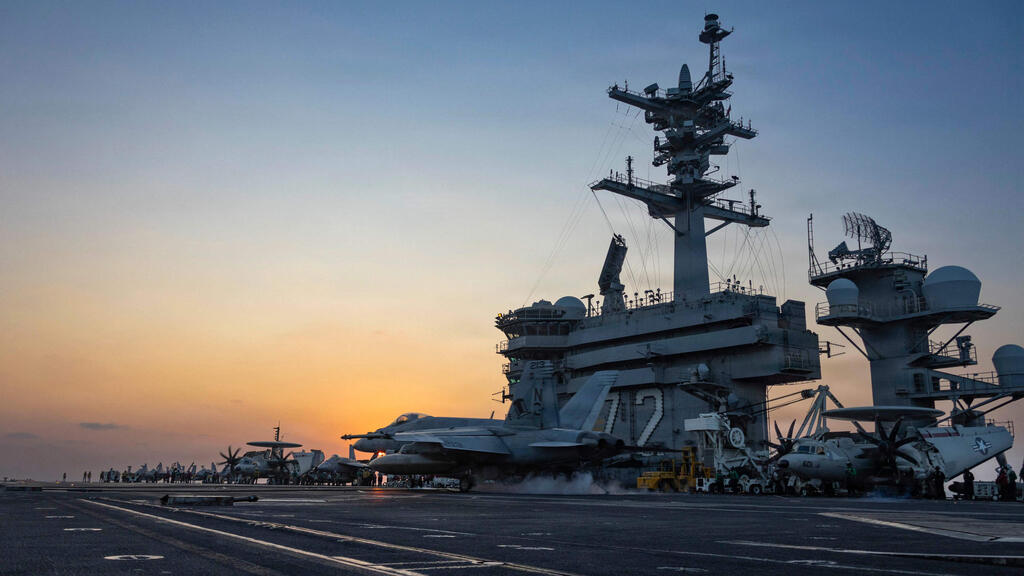
The aircraft carrier USS Abraham Lincoln
(Photo: AFP/ US NAVY / US CENTRAL COMMAND PUBLIC AFFAIRS)
The cost of the Iran war has risen rapidly, surpassing $11 billion in the first week alone, according to multiple officials cited by the newspaper. Soon after the joint U.S.-Israeli campaign began late last month, the Trump administration began preparing an additional funding request to help cover the cost of the war while preserving the military’s readiness to respond to threats elsewhere.
Inside the Pentagon, the effort has been led by Deputy Defense Secretary Steven Feinberg, who has spent much of the past year focused on the U.S. defense industry and on expanding production of precision munitions, which have been heavily depleted by the conflict, according to two people familiar with the matter.
One of those people said Feinberg’s office assembled several possible funding packages in an effort to quickly address munitions shortages and spur the U.S. defense industry to ramp up output.
Even before the war in Iran, Trump had called for a $1.5 trillion defense budget, more than 50% above the previous year’s level. It remains unclear whether any supplemental request would count toward that total. The White House Office of Management and Budget objected during internal discussions, arguing the figure was too high.
Sen. Tom Cotton, R-Ark., chairman of the Senate Intelligence Committee, has also pushed for the administration to include additional funding for the intelligence community in the final package.
Budget experts say the fight over the Pentagon’s request could become a referendum on public support for the war itself, with critics expected to use the debate to signal opposition to continued U.S. involvement.
“We have made some cost estimates of the costs of the war based on the limited data available, but there’s tremendous uncertainty, and Congress wants to know what the bill is,” Mark Cancian, a senior adviser at the Center for Strategic and International Studies, said. “If the administration asks for more money, there will be a big political fight because all the anti-war sentiment will focus on that request.”
Experts also warned that even if Congress approves more funding, money alone may not quickly solve the Pentagon’s supply problems. Expanding production depends on available workers, factory capacity and the raw materials needed to produce advanced weapons systems.
“Just throwing lots of money into the industrial base doesn’t necessarily get you things sooner, but you’re definitely not going to get it sooner if you don’t,” Elaine McCusker, the Pentagon’s former acting comptroller and now a defense budget analyst at the American Enterprise Institute, told the newspaper.