


Only about a week and a half remains before candidate lists close for Israel’s October 27 Knesset election, and despite weeks of primaries, launches and political maneuvering, the electoral map is still far from settled.
Some parties, including Likud, the Democrats and Religious Zionism, have already held primaries, but even their lists are not final. The full picture in each political bloc remains unresolved, along with several other major questions. These are the key ones.
Will Yoav Segalovitz join Ra’am?
Former deputy public security minister Yoav Segalovitz has left Yesh Atid and is holding talks with Ra’am chairman Mansour Abbas about potentially joining the party’s list.
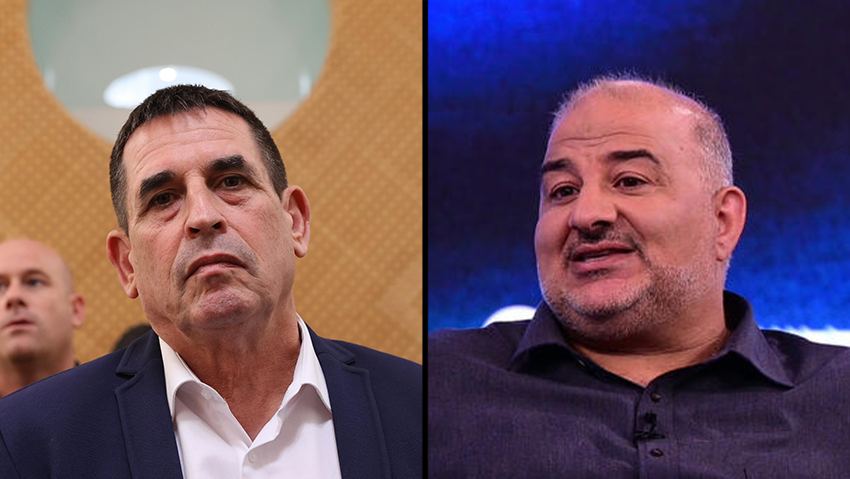
The move is part of an effort to prevent Ra’am from being automatically ruled out as a future coalition partner, not only by the right but also by most parties in the anti-Netanyahu camp. Despite optimistic reports about the talks and a joint photograph of Abbas and Segalovitz published last week, no formal announcement has yet been made.
Are last-minute recruits coming for Eisenkot, Bennett and Lieberman?
According to current polls, Naftali Bennett and Yair Lapid’s Beyahad alliance has far more potential candidates than realistic Knesset seats. Avigdor Lieberman’s Yisrael Beytenu is also not short of names to fill its slate.
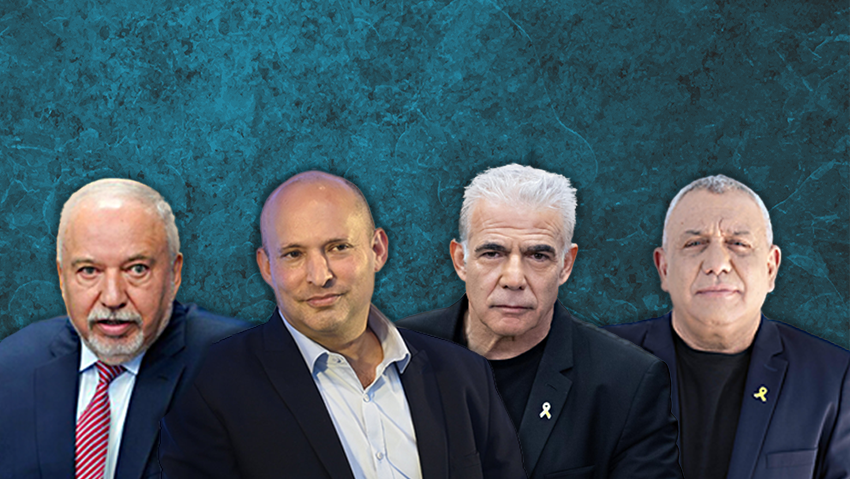
Avigdor Lieberman, Naftali Bennett, Yair Lapid, Gadi Eisenkot
(Photo: Shalev Shalom, Yair Sagi, Yuval Chen, Alex Kolomoisky)
The only major centrist party that still has significant room is Gadi Eisenkot’s Yashar. Polls currently project it at 23 to 25 seats, and its upward momentum could continue, giving Eisenkot a large number of realistic positions that remain unfilled. Former lawmakers Elazar Stern and Roy Folkman were the latest to join him last week.
What happens with Likud’s reserved slots?
Likud chairman Benjamin Netanyahu has so far used only one of his reserved places for an outside candidate, businessman Oren Dobronsky.
In the coming days, he may try to address the shortage of women in realistic positions by reserving a spot for a female candidate. He also remains in contact with former Kulanu chairman Moshe Kahlon in an effort to add a figure with a strong economic and social profile.
The question is how Netanyahu will use the many reserved slots he worked hard to secure. Part of the answer may lie in his next problem.
Who will Smotrich run with?
With Ofer Winter and Itamar Ben-Gvir firmly refusing to unite with him, the most likely option at this stage is for Bezalel Smotrich and three other Religious Zionism candidates to be incorporated into Likud through reserved slots, with the two parties running together in a technical bloc.

Bezalel Smotrich
(Photo: Yuval Chen)
Netanyahu is far from enthusiastic about that scenario. He fears that bringing hard-line religious Zionist figures into Likud could make it harder to attract moderate voters. At the same time, he knows that if Smotrich is left on his own, part of his ideological base could move to Ben-Gvir’s Otzma Yehudit.
Netanyahu would prefer Smotrich and Ben-Gvir to run together and win a modest number of seats. But as the merger options for smaller right-wing parties close, he may be forced to solve the Religious Zionism problem himself.
Will there be another merger on the right?
At the moment, the chances of another major merger on the right appear limited.
The bloc currently includes Likud, Otzma Yehudit, Religious Zionism, Ofer Winter’s party, Gilad Erdan’s party, Avi Maoz’s Noam and Moshe Feiglin. Netanyahu is pressing for mergers that would reduce the bloc to four parties, but most of the main players remain firmly opposed.
One reason is the latest polling trend, which shows Otzma Yehudit consistently clearing the electoral threshold on its own. That could turn Ben-Gvir into the leader of a significant independent party and give him substantial leverage, status and a senior position if a right-wing coalition is formed.
Winter has also become a headache for Netanyahu’s bloc. After being underestimated at the start of the race, his Amcha Yisrael party became the only new party to consistently clear the threshold in polls following its launch last week.
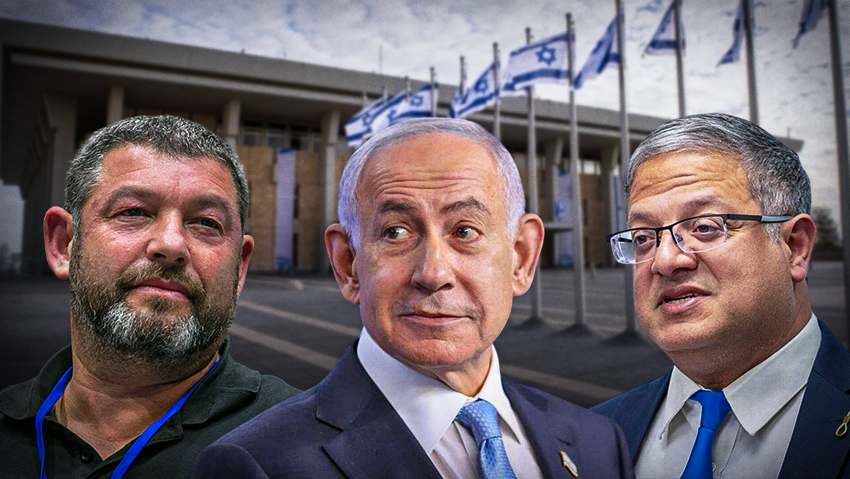
Ofer Winter, Benjamin Netanyahu, Itamar Ben-Gvir
(Photo: Ido Erez, Shalev Shalom, Alex Kolomoisky, Shutterstock)
Party officials reject any merger outright. Winter sees no reason to join one of the existing players and is trying to position himself as a home for disappointed right-wing voters. He argues that his growth potential has not yet been exhausted and has no interest in bringing in an “old player” who could slow the momentum of his new political brand.
Winter is aiming for the Defense Ministry and is presenting a slate in which no candidate played a role in shaping the outgoing government’s security policy. To avoid losing momentum on the right and blunt Likud attacks against him, he declared last week that Netanyahu is the only candidate he would recommend for prime minister.
“The leader of the right-wing camp is Netanyahu, and he is the only one we will recommend,” Winter said.
For now, Winter and Ben-Gvir are both operating independently, seeking to accumulate as much political power as possible for the day after the election.
Will Gantz keep demanding the top spot?
Many are now asking what Benny Gantz wants and where he is heading.
Will he insist that Blue and White continue running alone despite polls predicting a collapse? Will he join another political force? And if so, will he give up leadership of the merged party?
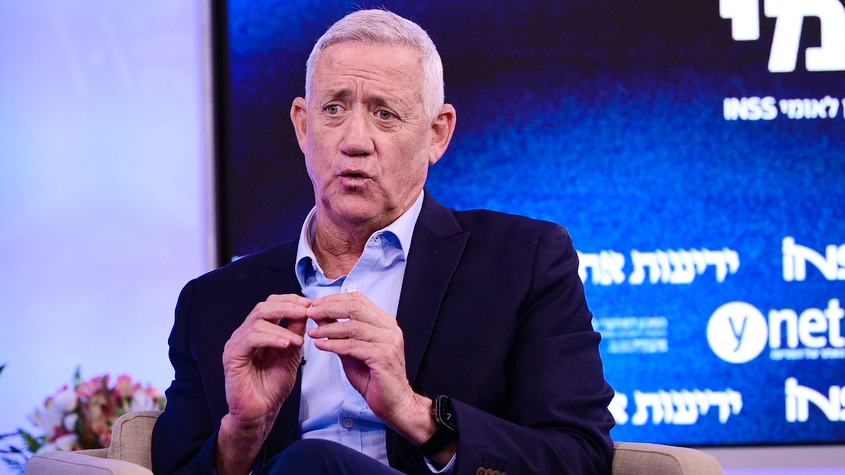
Benny Gantz
(Photo: Yuval Chen)
For now, Gantz appears determined to keep maneuvering until the last possible moment before the filing deadline.
Last week, ynet published footage from a gathering in Netanya in which Gantz acknowledged that he was holding parallel talks with several figures, including his former partner Chili Tropper. He also hinted that his ego would not determine the outcome.
Publicly, however, he continues to demand the No. 1 position. That could still change as pressure mounts ahead of the deadline.
Who will drop out at the last minute?
Several small satellite parties are still preparing to run, even though none is consistently clearing the electoral threshold.
Among the most prominent are Chili Tropper and Yoaz Hendel’s Zionist Home-Reservists party, Gilad Erdan and Yuli Edelstein’s Unity party, Gantz’s Blue and White, Sharren Haskel’s Israel First and Yaron Zelekha’s party.
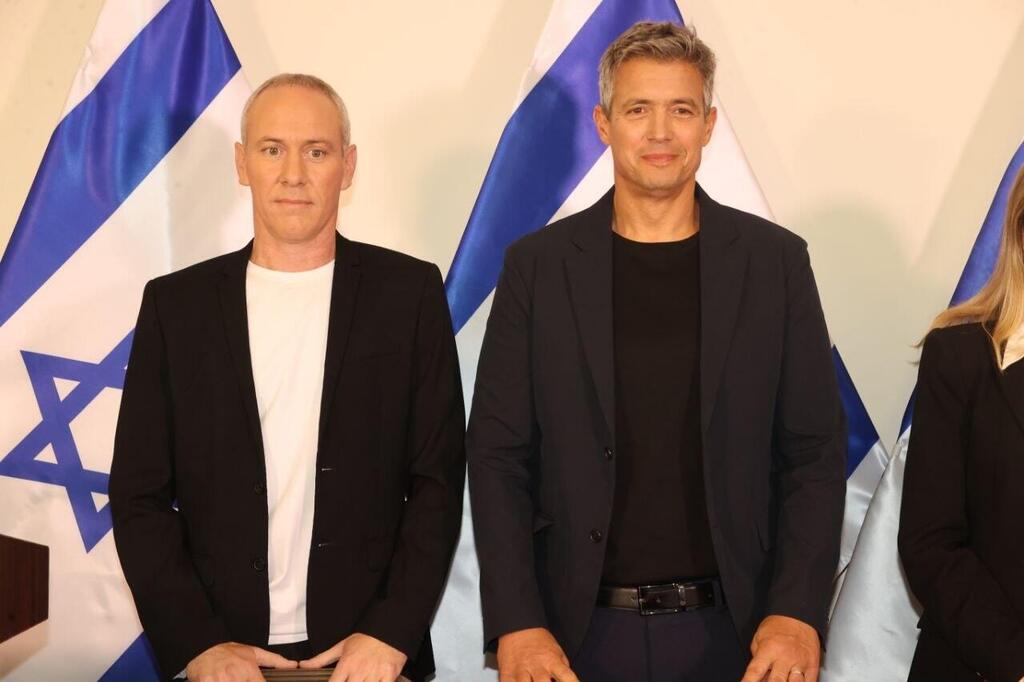
Chili Tropper and Yoaz Hendel
(Photo: Moti Kimchi)
The expectation is that unless a major merger gives them a realistic path above the threshold, most will not submit lists and will withdraw from the race within the next week and a half.
Gantz and Tropper have both said separately that they intend to act responsibly and avoid wasting votes. Erdan is also expected to seek an alliance rather than insist on running to the end if polling remains unchanged.
These parties have largely been described as the “third bloc,” based on the idea that many Israelis feel politically homeless. Their internal polling suggested that about 300,000 voters do not know whom to support and are tired of political boycotts.
So far, however, that sentiment has not translated into real electoral strength. Without a major merger bringing those forces together, many are unlikely to remain on the political map by the filing deadline.
Will a ‘star’ join at the 11th hour?
Most of the familiar names have already chosen their political vehicles.
Several parties continue to promise surprises, but the pool of potential high-profile recruits appears to have been largely exhausted. Even if additional candidates join, there is little indication that any will bring exceptional electoral value.
Likud is still hoping to bring Kahlon into the fold and is looking for high-profile figures from the technology sector. Elsewhere, however, the names already announced are likely to form the core of the lists submitted in about a week and a half.