

While much of the discussion surrounding last week's Likud primaries focused on reserved slots, political hit lists, recommended-candidate slates and speculation about party heavyweights Amir Ohana, Tally Gotliv, Yariv Levin and Shlomo Karhi, Energy Minister Eli Cohen preferred to run a campaign under the radar. It paid off.
Cohen finished first by a huge margin over the second- and third-place candidates, after also finishing near the top in the previous Likud primary. Likud members clearly like him, but to most Israelis he remains something of an enigma, with relatively little known about him. That is his weakness — and his strength.
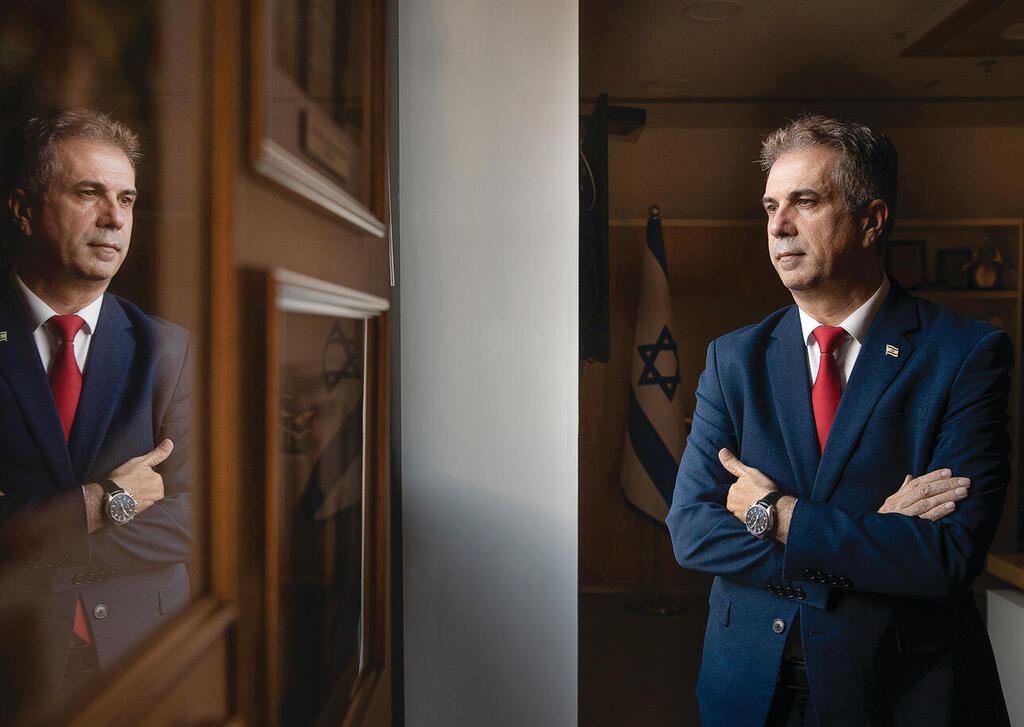
“I’m certainly happy with the result,” Cohen said in his first interview since his primary victory. “Likud members are smart people who love the country. They chose a strong slate of people who get things done. And I want to tell you that in every ministry I’ve served in, I’ve proven myself through actions and delivered results for the public. The word ‘give up’ doesn’t exist for me.”
How does your victory square with the populist, combative rhetoric within Likud?
“Today, people want to choose someone who gets things done, not someone who only talks. And thank God, succeeding time after time speaks for itself. During the primaries, I didn’t campaign against anyone. I focused mainly on what I had done: how I managed to break the Israel Electric Corp.’s monopoly, how I ensured that the energy sector functioned flawlessly, how I reached a gas deal with Egypt and how I secured visa-free travel to the United States.”
So you cracked the formula for beating populism and shouting.
“Yes. I think actions beat populism and shouting.”
Before the primaries, no one was talking about Eli Cohen. Did that help you take the top spot?
“In the previous primaries, they predicted I would finish sixth, and I finished second. This time, they thought I would finish in the top three — and I came first. I had a feeling that this time, too, I would beat the polls. But I know one thing: I get up every morning at 7 and work all day for the good of the country.”
Finishing first in the Likud primaries is indeed an impressive political achievement and a statement of intent about the future. Moshe Kahlon, Gideon Sa’ar, Gilad Erdan and Yuli Edelstein have all been there before.
“I’m glad that, like them, I managed to finish first.”
But Prime Minister Benjamin Netanyahu also politically destroyed all four of them.
“I will continue working with Netanyahu, and I’m pleased to have his confidence. Netanyahu is the right person to lead the State of Israel for the next four years. I think he delivered unprecedented achievements during this term. From the devastation of Oct. 7, we have become the strongest power in the Middle East.”
Do you see yourself running for the Likud leadership after Netanyahu?
“That question isn’t relevant right now. We are two and a half months out from an election, and I’m focused on one thing only: ensuring that Likud, led by Netanyahu, wins.”
Why are Likud ministers afraid to say that they are worthy and capable of replacing Netanyahu one day? Are you so afraid of him that you can’t bring yourselves to say it?
“We are on the eve of an election, and what is special about Likud is that we are united around Netanyahu. Likud is the most democratic party, compared with the left, which is constantly working to eliminate its own leaders. You can see they have nothing except ‘Anyone but Bibi.’”
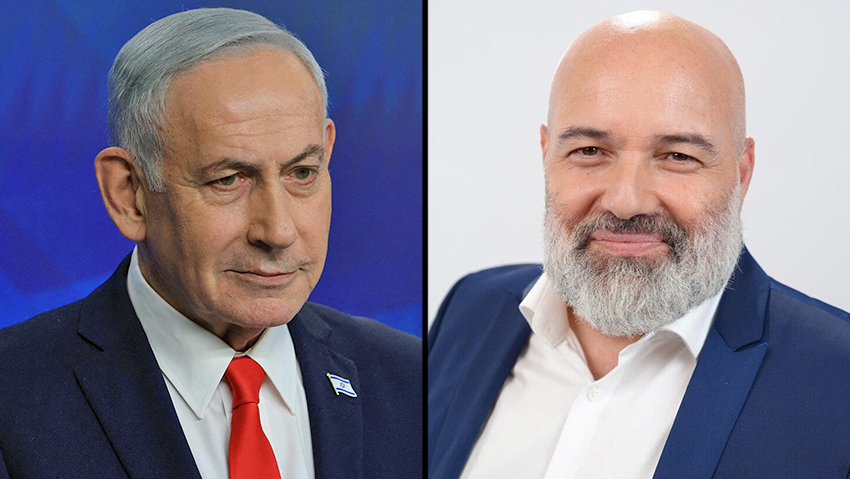
Prime Minister Benjamin Netanyahu; Oren Dobronsky, a tech entrepreneur who received a reserved spot on the Likud slate from Netanyahu
(Photo: REUTERS/Ronen Zvulun, Likud)
Why did Netanyahu demand nine reserved spots on the slate? Doesn’t he trust Likud members?
“I think the prime minister looks at other parties, where the party leader determines the entire slate however he sees fit, and that is why he wanted those reserved spots for himself as well. In the end, the prime minister determines 25% of the slate through reserved slots, while 75% is determined by party members.”
Not simply a treasurer
Cohen, 53, began the current government’s term as foreign minister before moving to the Energy Ministry as part of an internal political arrangement. He has his sights set high. The next job he is eyeing is finance minister.
“I definitely expect to hold a senior position in the next government,” he said. “The three most senior portfolios are foreign affairs, finance and defense. Since I’ve already been foreign minister, the Finance Ministry interests me. I think that in the next term, the Finance Ministry must remain in Likud’s hands, and I have the qualifications for the job: my experience in the business world, my training as an accountant and my personal background. I would want to lead a free-market economy with social sensitivity.”
What do you think of Finance Minister Bezalel Smotrich?
“In my view, the finance minister should not be the treasurer who simply hands out money. A finance minister needs to grow the pie, create engines of growth, ensure that young people want to live in this country, give them the opportunity to earn a decent living and work to reduce social disparities.”
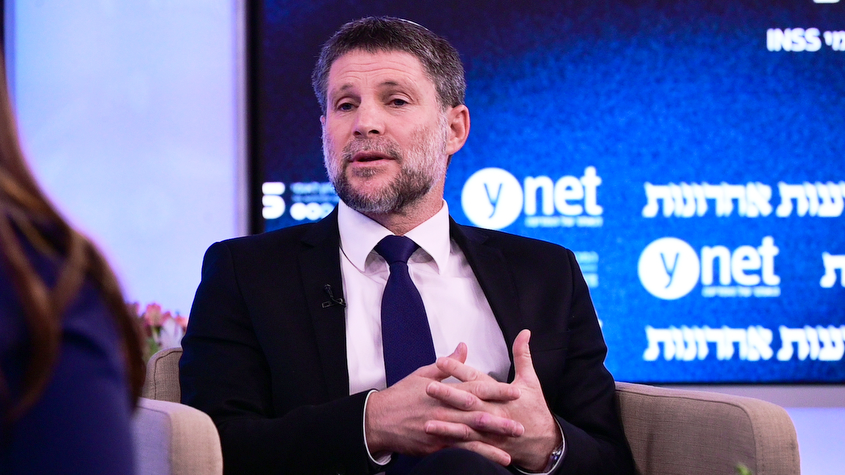
Finance Minister Bezalel Smotrich
(Photo: Yuval Chen)
Is it a mistake to appoint a finance minister who represents a particular sector?
“As I said, the Finance Ministry must remain with the ruling party.”
Netanyahu did everything he could to bring Otzma Yehudit lawmaker Almog Cohen onto the Likud slate. Cohen himself said there are no longer any differences between Likud and the hard-right Otzma Yehudit. Is Likud no longer the party it once was?
“Likud is a governing party, a responsible party. It is the party of all the people of Israel — of the periphery and the center, Sephardim and Ashkenazim, traditional Jews, secular Jews and Haredim.”
And you aren’t offended when Likud is compared with Otzma Yehudit?
“Likud is not Otzma Yehudit. Likud is the party of the people of Israel.”
Cohen appears to recognize the potential electoral damage posed by legislation that would allow many Haredi, or ultra-Orthodox, men to continue avoiding military service, as well as a measure aimed at preventing the arrest of draft evaders and deserters.
“We need to complete the conscription law,” he said. “We have to increase equality in sharing the burden, and our Haredi brothers must also enlist. Anyone for whom Torah study is not a full-time occupation — 60% of Haredim — must enlist. It is important for security, it is important for the economy and it is important for bringing unity to the people of Israel.”
You could have done that during the last term, and you didn’t.
“The government before us, the Lapid-Liberman government, which was the most anti-Haredi government since the establishment of the state, failed to bring in a single recruit. And we were occupied mainly with managing the war. Unfortunately, there are those who try to diminish the achievements, but the State of Israel’s achievements in this war are unprecedented. All those who challenged the State of Israel did not live to die of old age. Not Hassan Nasrallah, not Yahya Sinwar and not Ali Khamenei. We prevented Iran from obtaining a nuclear weapon.”
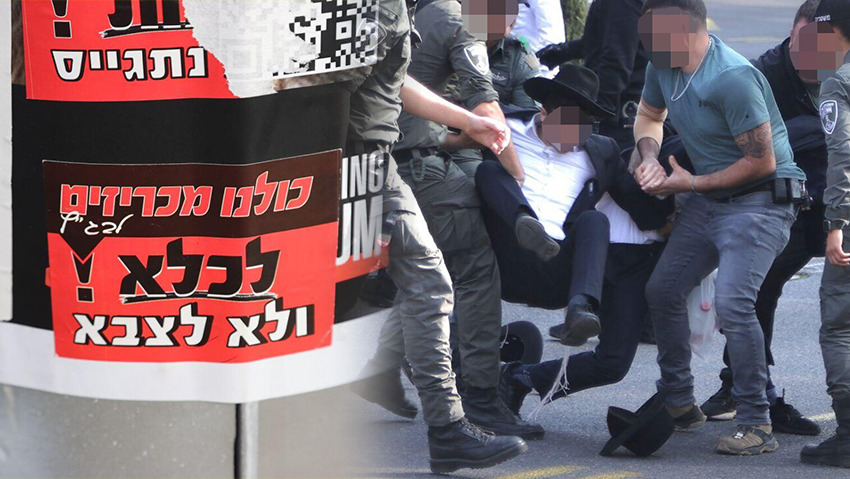
Haredi protesters demonstrate against military enlistment, and a sign reading, 'We all declare: Prison, not the army!'
(Photo: Moti Kimchi)
You didn’t prevent it. Maybe you delayed it. Some experts argue that after two rounds against Iran, we are back where we started.
“Fine, we delayed it. But the war against Iran was a tremendous victory and an enormous achievement.”
I’m not sure the public sees it that way. Otherwise, you would be cruising to victory in the election.
“If we hadn’t attacked, Iran would have a nuclear weapon. People in the intelligence community say we delayed Iran’s nuclear program by two, three or four years. One thing is clear: If Iran tries to restart its nuclear program, we will be on our way there to strike. We have already demonstrated our capabilities.”
In other words, Israel needs to strike Iran again?
“I’ll say it again: If Iran makes the mistake of trying to restart its nuclear program or its ballistic missile program, even if there is an agreement with the United States, we will be there to strike.”
There were significant achievements in the campaign against Iran. On the other hand, we achieved none of the war’s three objectives: eliminating the nuclear program, eliminating the ballistic missile program and bringing down the regime.
“If we had not launched that campaign, Iran would already have a nuclear weapon. Look at the State of Israel’s deterrence. The fact is that until a few weeks ago, Iran attacked most of the countries in the region. Who didn’t it attack? The State of Israel, because it knows we have deterrence. To this day, Mojtaba Khamenei has not emerged from the hole where he is hiding. He knows the long arm of the State of Israel can reach anywhere.”
Does Israel have a plan to create a route that bypasses the Strait of Hormuz?
“The prime minister and I are currently working with the United States to advance the creation of a route that would bypass both the Strait of Hormuz and Bab el-Mandeb. The idea is to lay pipeline infrastructure, some of which already exists in Saudi Arabia and Israel.”
What is your biggest achievement at the Energy Ministry and the Foreign Ministry?
“My most significant achievement at the Energy Ministry is that the energy sector functioned flawlessly during the war, despite all those scenarios about blackouts and generators. And, of course, breaking the Israel Electric Corp.’s monopoly is also a very significant achievement. At the Foreign Ministry, after many years, I managed to complete the effort to secure visa-free travel for Israeli citizens traveling to the United States.”
It’s who you know
As someone who came to Likud from former finance minister Moshe Kahlon’s Kulanu party, Cohen has difficulty aligning himself with the confrontational rhetoric directed at the judiciary by Justice Minister Yariv Levin or Knesset Speaker Amir Ohana. Nor is he willing to say he would defy a ruling by the High Court of Justice.
“The government is not above the law, but neither is the court above the law. There is a sense that the balance between the branches of government has been disrupted,” Cohen said. “When we see attempts to interfere with the appointment of Roman Gofman as head of the Mossad or David Zini as head of the Shin Bet, then intervention by the High Court is unnecessary.”
I’m sorry, but the High Court approved both Gofman’s appointment and Zini’s appointment.
“Yes, but I think the petitions regarding Gofman and Zini should have been dismissed outright. They should not even have reached a hearing. We need a court that acts according to the law. We need a court that enjoys the public’s trust. I want a court in Israel that represents all parts of society, like in the United States. The ‘friends appointing friends’ system in the courts has to end. I succeeded in life because of who I am, not because of friends. That is how it should be in the military, in politics and in the judicial system.”
According to media reports this week, Netanyahu is deeply concerned about polling for Likud and the broader right-wing bloc. He reportedly believes he has lost 10 Knesset seats during the current term and is uncertain whether he can win those voters back. Cohen argues that Likud is consistently underestimated in polls.
“In 2015, the polls gave Likud 21 or 22 seats. We finished with 30 seats and won. In the last election, the polls gave our bloc 57 or 58 seats, and we ended up with 64. In other words, there is a bias in the polls. In the actual results, the right always gets stronger. I believe that even those who are undecided and sometimes talk about wanting change, when they come to vote, their hand will tremble. They won’t want a government formed here with the Islamic Movement.”

A Hamas terrorist in southern Israel during the October 7 attack
Maybe their hand won’t tremble because of Oct. 7 and Netanyahu’s responsibility for the deadliest massacre in the country’s history?
“The issue of Oct. 7 needs to be investigated by a national commission of inquiry that examines everyone going back years. But today, the State of Israel is the undisputed power in the Middle East. We have achieved successes on every front. So I’m confident that this time, too, we will get far more than the polls predict.”
There is still a cloud hanging over the issuance of a diplomatic passport to Yair Netanyahu. Why did you get yourself caught up in that affair?
“This investigation should never have been opened because Yair Netanyahu’s passport had been renewed for security reasons several times by several directors-general, beginning in 2009. Diplomatic passports were also issued to mayors, as had been done in the past, because of the international activities they conduct as part of their official duties.”
Your son served in the reserves in Lebanon. You are a member of the Security Cabinet and are expected to make decisions that also concern Lebanon. Does that affect your decision-making?
“I try to make decisions based solely on what is right and best for the security of the State of Israel. Sometimes Security Cabinet decisions mean that my son is also called up for reserve duty. A month ago, he completed several months of reserve service in Lebanon. By day, I’m a Cabinet member, and on quite a few nights, I’m also a worried father. I understand the significance of the decisions we make. And yes, I can tell you that I’m proud of him and his friends.”