

Maj. Gen. (res.) Eli Zeira, who led the Military Intelligence Directorate during the Yom Kippur War and came to be seen as one of the officials most responsible for the intelligence failure that preceded the 1973 attack, died Friday at age 97.
Zeira was born in 1928 in Haifa. He enlisted in the Palmach in 1946 and fought with the Yiftach Brigade in the 1948 War of Independence. He served on three fronts during the war: against the Arab Liberation Army in the Galilee, the Arab Legion near Latrun and the Egyptian army in the northern Negev. By the end of the war he was a company commander.
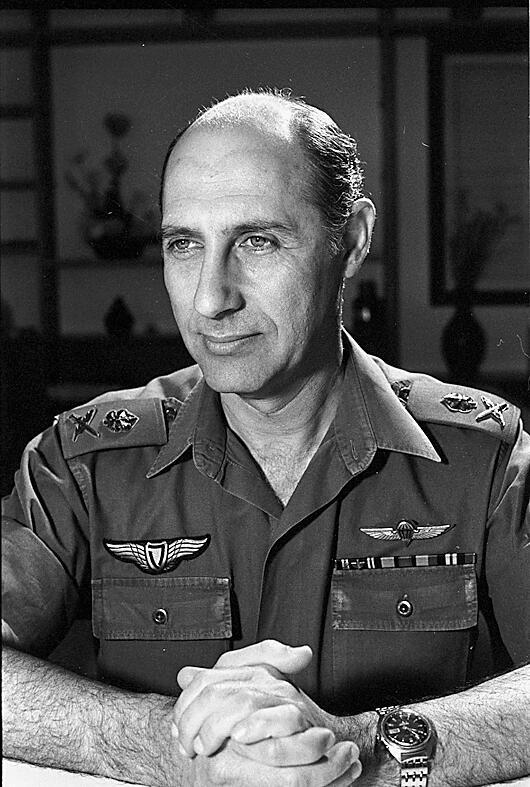
(Photo: David Rubinger)
From 1949 to 1950 he commanded the squad leaders school in the Southern Command. He then spent a year in the U.S. Army’s company commanders course and, after returning to Israel, became an instructor at the battalion commanders school. In 1953 and 1954 he led a branch in the General Staff’s Planning Department, and from 1954 to 1955 he served as chief of staff to IDF Chief of Staff Moshe Dayan.
In 1956 he commanded the 51st Infantry Battalion of the Givati Brigade. After the brigade was disbanded he was appointed head of operations in the General Staff, including during the Sinai Campaign. He later completed a U.S. Army command and staff course and spent a year on loan to the Mossad as part of an advisory mission to the Ethiopian army.
From 1960 to 1962 Zeira commanded the regular 35th Paratroopers Brigade, then headed the General Staff Operations Department from 1962 to 1963. He then moved to the Intelligence Directorate, leading the Intelligence Collection Department from 1963 to 1968, a period in which the groundwork for Israel’s intelligence success in the 1967 Six Day War was laid.
He served as assistant director of Military Intelligence from 1968 to 1970 and as Israel’s defense attaché in the United States from 1970 to 1972 with the rank of major general. Upon his return he was appointed director of Military Intelligence, responsible for national assessments of enemy capabilities and intentions across all fronts.
In 2013, portions of Zeira’s testimony before the Agranat Commission were released. The commission, established to investigate the surprise Egyptian attack and the early days of the 1973 war, heard from him five times. In his first four appearances he described intelligence operations and reports received by the directorate. In his fifth, he was confronted with testimony from senior political and military officials that contradicted his account. Commission members sharply criticized him, especially for not knowing that certain special intelligence means were not functioning, and near the end of the testimony he broke down and acknowledged having seen a report warning that war would break out on October 6, information believed to have come from agent Ashraf Marwan.