

Although renewed tensions with Iran overshadowed the NATO summit in Ankara, and despite President Donald Trump continuing to criticize some allies, including Spain, while again raising his demand that the United States take control of Greenland, the summit ended Wednesday night on a positive note — with a message of unity that Trump himself joined.
“There was a lot of love in that room, a lot of unity,” Trump said after a closed-door meeting with the 32 leaders of the North Atlantic alliance. “They said, 'We love, sir, we love you.' These are grown people saying that. Isn't that nice?” Trump told reporters. “Maybe, I don't know, maybe they're trying to get to me. And, in a way they did, because there was tremendous unity in that room.”
Gallery
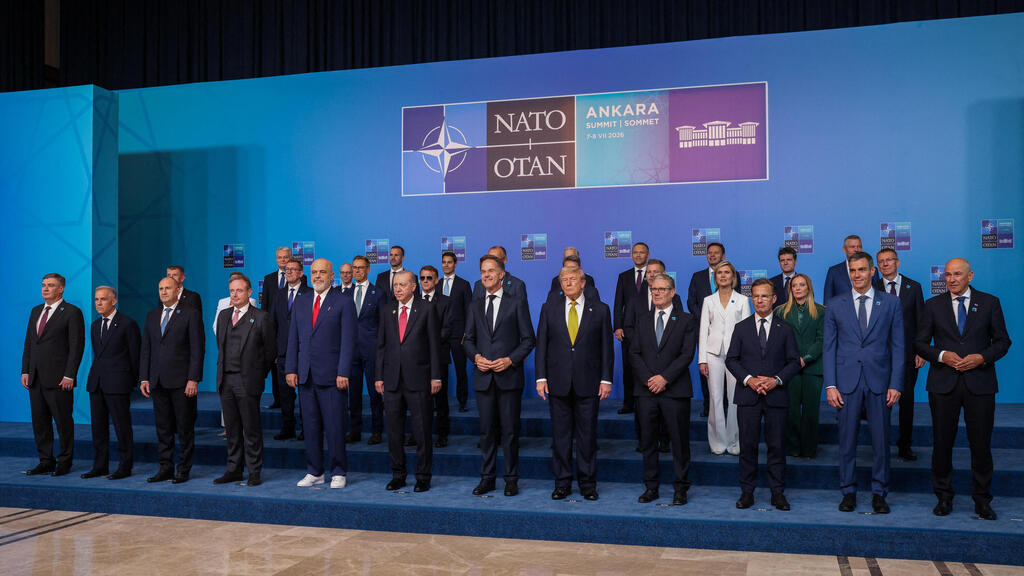
NATO Summit. 'There was a lot of love in that room, a lot of unity'
(Photo: REUTERS/Stoyan Nenov)
A source familiar with the discussions told Reuters that Trump did not repeat during the private talks the criticism he frequently voices publicly against the alliance, including his anger that member states did not come to his aid during the war with Iran and are neglecting defense spending while the United States carries the main burden of defending Europe. Trump even threatened this year to withdraw from NATO, but according to the source he said he now wants the United States to remain part of the security alliance: “We want to stay with you,” he said, according to the source, during the closed-door meeting.
Other NATO leaders who attended the summit also issued conciliatory statements after their talks with Trump. French President Emmanuel Macron said he had not heard any complaints from him. German Chancellor Friedrich Merz added that Trump listened carefully to the other leaders who spoke during the meeting, and that Trump said — similar to his later public remarks — that “there was “tremendous unity in the room.”
Merz, who recently clashed with Trump, as did other European leaders over their criticism of the war in Iran and their refusal to assist the United States during it, praised Trump after the summit and said he had successfully pushed Europe toward greater investment in its own security. According to Merz, previous U.S. presidents had also sought this goal, but Trump achieved it “in a different way” and succeeded. “The result speaks for itself. And perhaps, if I put it a little bluntly, the era of Europeans getting a free ride from Trump is now over.”
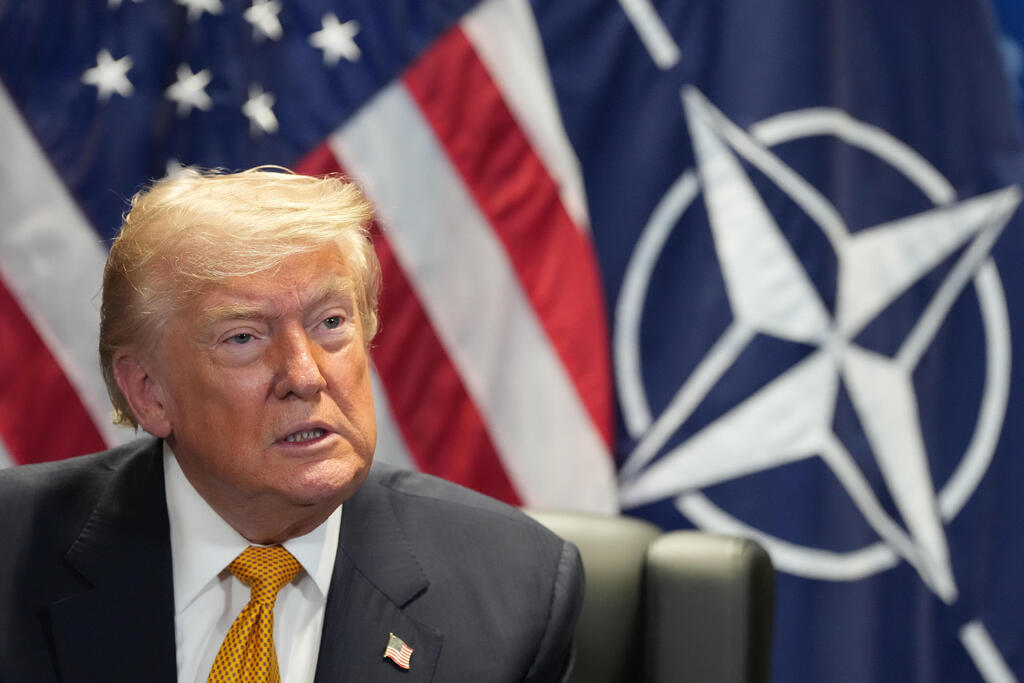
Donald Trump. 'And perhaps, if I put it a little bluntly, the era of Europeans getting a free ride from Trump is now over'
(Photo: AP Photo/Alex Brandon)
Trump has argued for years that the United States bears an unfair burden when it comes to NATO spending. Following his pressure, alliance leaders agreed at last year’s summit that each country would invest 5% of its GDP in defense — 3.5% directly in defense budgets and another 1.5% in infrastructure such as roads, bridges and ports to allow troops and equipment to move more quickly during wars.
Ahead of the current summit, NATO Secretary-General Mark Rutte demanded that alliance members present “clear, concrete and credible” plans for meeting the targets. During the summit, security initiatives worth a total of $50 billion were announced in an effort to convince Trump that European countries and Canada are indeed working to meet the new target.
But significant tensions remained at the summit, and Trump sharply attacked Spain after its prime minister, Pedro Sánchez, who has been critical of Israel, declared that his country did not intend to meet the new defense spending target. During a meeting with NATO Secretary-General Mark Rutte that was broadcast live, Trump turned to his Treasury Secretary Scott Bessent, who was sitting nearby, and ordered him to cut all trade ties with Spain.
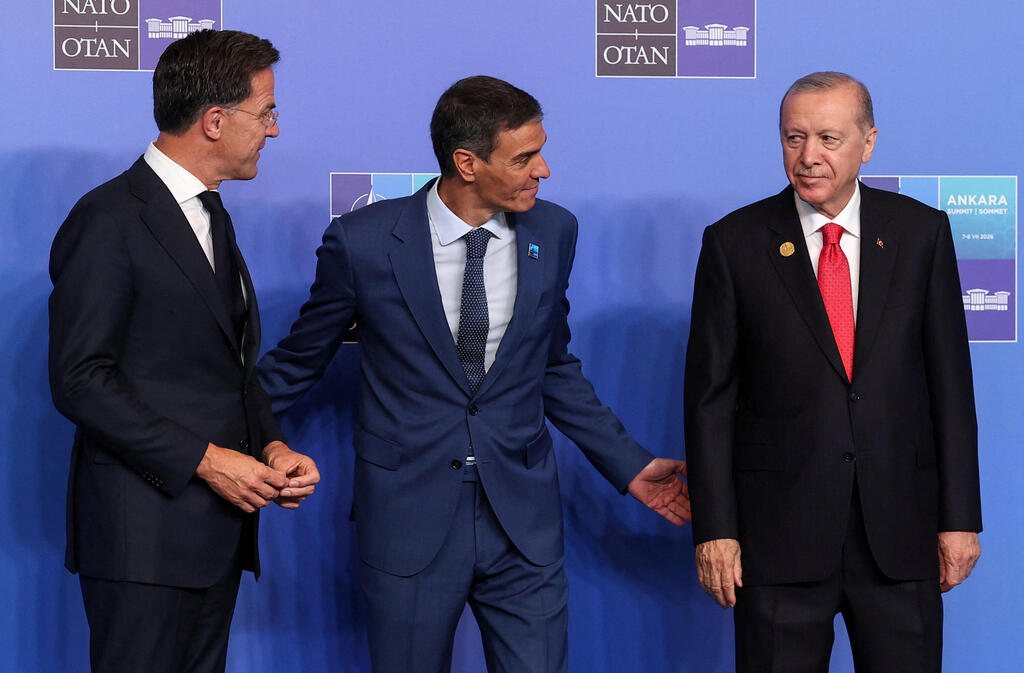
Spanish Prime Minister Sánchez alongside summit host Erdogan and NATO Secretary General Rutte
(Photo: REUTERS/Umit Bektas)
“Do it now. Don't even talk to them. They're hopeless. They're bad people," he added. "They make so much money off us, and we're going to make sure they make a lot less. I don't want any business with them,” Trump said.
Sánchez himself said Wednesday that he had a “very friendly” conversation with Trump during the summit, but that it focused on the World Cup and golf rather than the dispute over Spain’s defense spending. Sánchez’s Health Minister Mónica García was more blunt, writing on X: “We are a sovereign and democratic country that defends multilateralism and peace. What is terrible is confusing diplomacy with bullying.”
Tensions also emerged over Greenland, the enormous strategic island belonging to NATO member Denmark that Trump has demanded since returning to the White House be transferred to U.S. control. The dispute peaked earlier this year amid Trump’s veiled threats to seize Greenland by force, but he stopped raising the issue amid the war in Iran — until Wednesday, when he renewed his demand at the start of the NATO summit.
Danish Prime Minister Mette Frederiksen responded with one of her strongest statements yet against Trump, declaring that Denmark was prepared to defend every inch of NATO territory, including the Kingdom of Denmark.
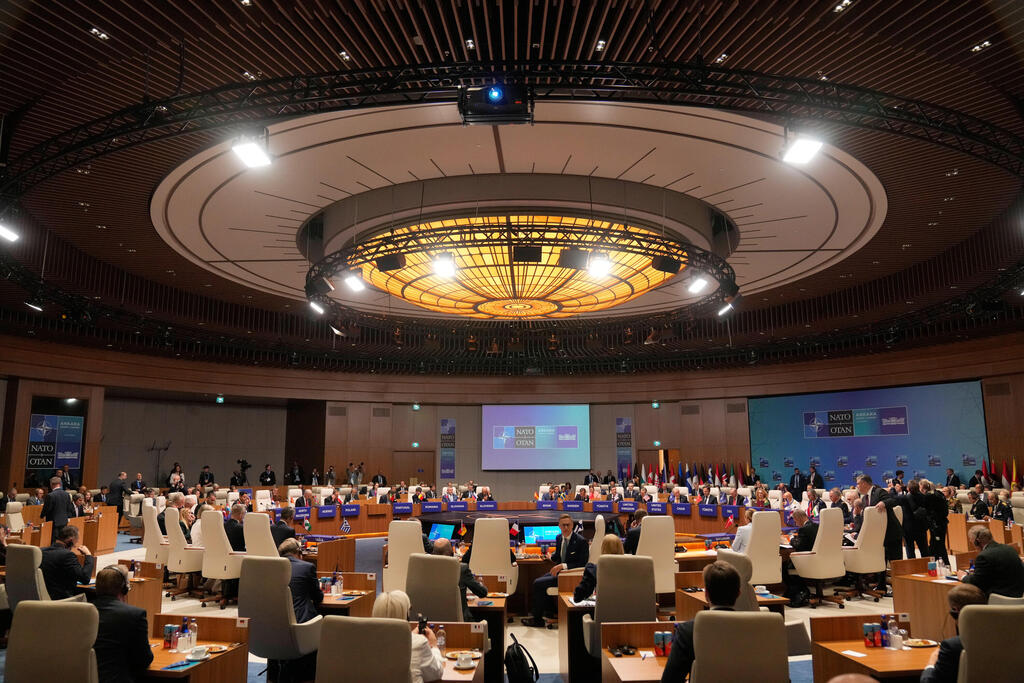
Meeting of 32 NATO leaders in Ankara
(Photo: AP Photo/Hussein Malla)
Another sign of tensions was the fact that despite a celebratory joint declaration on unity — in which all alliance members also reaffirmed their “ironclad commitment” to Article 5 of the NATO treaty, which states that an attack on one member is considered an attack on all — no date was set for the next summit. The summit is expected to take place in Albania, but reports said it could be delayed by a year and held only in 2028 amid tensions with Trump.
In any case, the unity displayed by Western leaders alongside Trump at the summit is seen as an important message against the main threat facing the North Atlantic alliance — Russia.
In the final declaration signed by all 32 countries, members committed, among other things, to provide Ukraine this year with $70 billion in military assistance. Trump himself, who met on the sidelines of the summit with Ukrainian President Volodymyr Zelenskyy, whose country is not a NATO member, praised him.
“We’ve actually developed a good relationship. It’s hard to believe,” Trump told reporters, adding that the United States “work on some kind of security package” for Kyiv. In a significant achievement for Zelenskyy, Trump also announced that the United States would allow Ukraine to produce Patriot interceptors on its own soil — the air defense system Kyiv has repeatedly urged the West to provide so it can protect its citizens from Russia’s relentless and deadly drone and missile attacks.
“We’ll give them the right to make Patriots. We’ll show them how to do it. I think they can produce them pretty quickly.”
A humorous moment during the meeting with Zelenskyy came when Trump suggested that the Ukrainian president accept Putin’s invitation to meet him in Moscow — an invitation widely viewed as especially cynical, given that Putin has refused to meet Zelenskyy in a neutral location.
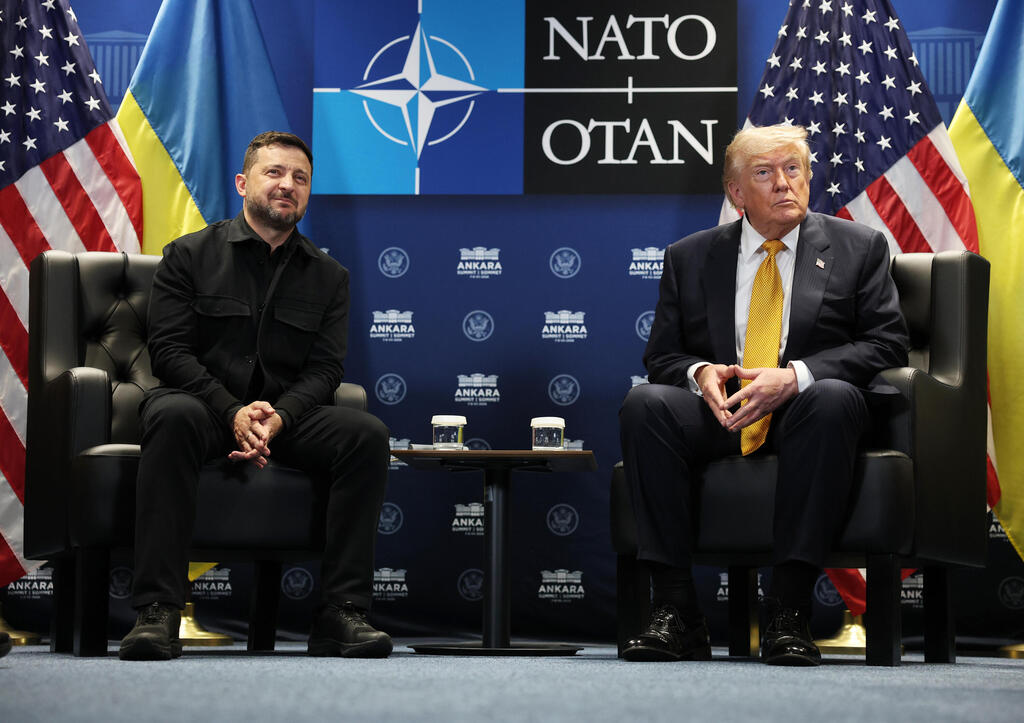
Volodymyr Zelenskyy and Donald Trump
(Photo: Win McNamee/Getty Images)
Zelenskyy replied that such a trip to the Russian capital would be “complicated” because of the large number of Ukrainian drones in the air — a reference to the many attacks Kyiv has launched against oil facilities, including refineries deep inside Russia, strikes that are now causing significant fuel shortages there.
“It’s dangerous for me,” Zelenskyy said, prompting laughter in the room.
Trump was asked during the meeting about Ukrainian strikes against Russian energy infrastructure — attacks that Zelenskyy says are intended to pressure Moscow to compromise on its maximalist demands and return to negotiations — and appeared to echo Kyiv’s argument.
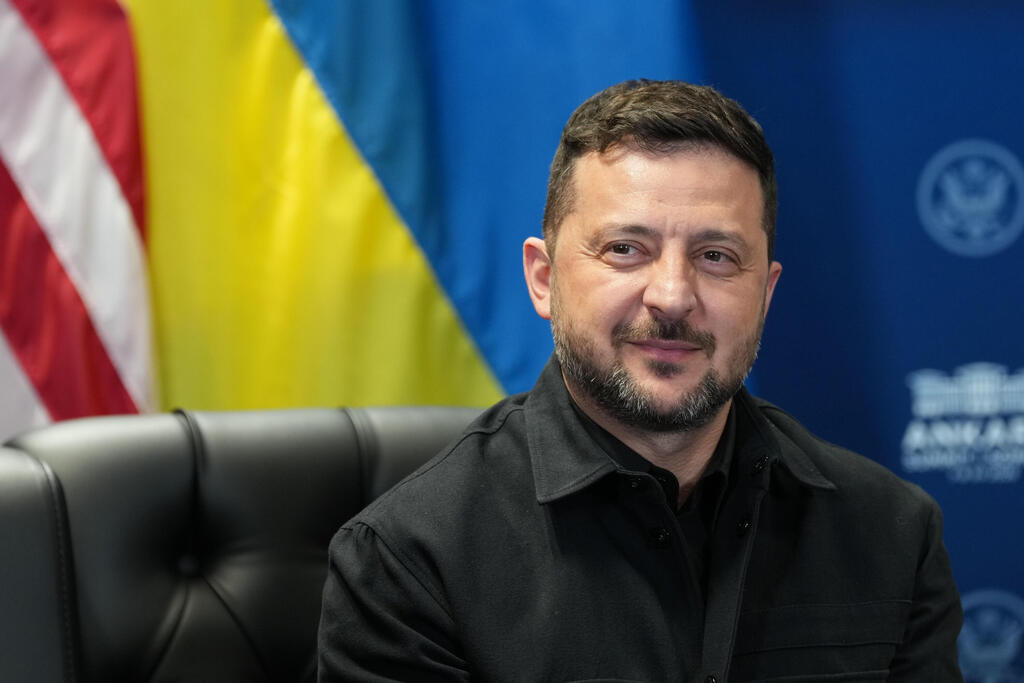
'It’s dangerous for me,' Zelenskyy said, prompting laughter in the room
(Photo: AP Photo/Alex Brandon)
“It's an escalation, but it's also an escalation that can help lead to an end,” Trump said. He added that he believes Putin is "losing initiative" and that his conditions to end the war are changing.
Meanwhile, in Russia itself, Putin’s government continues to struggle with fuel shortages. In a sign of the severity of the crisis, Moscow officially announced a ban on diesel exports as part of measures it said were necessary to stabilize the domestic market.
For Russia, a major exporter of oil products and energy, the move amounts to a humiliating admission of the depth of the crisis. Reports say Russia is already being forced to import refined fuel from India, which itself receives Russian crude oil that it refines. In recent months, there have also been reports of a sharp decline in Russian diesel exports to other countries, particularly Turkey and Brazil, but the ban has now been formally announced.
The ban, which will remain in effect at least until the end of July and includes exemptions for existing agreements involving Russian state-owned companies, was announced by Russian Deputy Prime Minister Alexander Novak during a televised government meeting led by Putin himself.
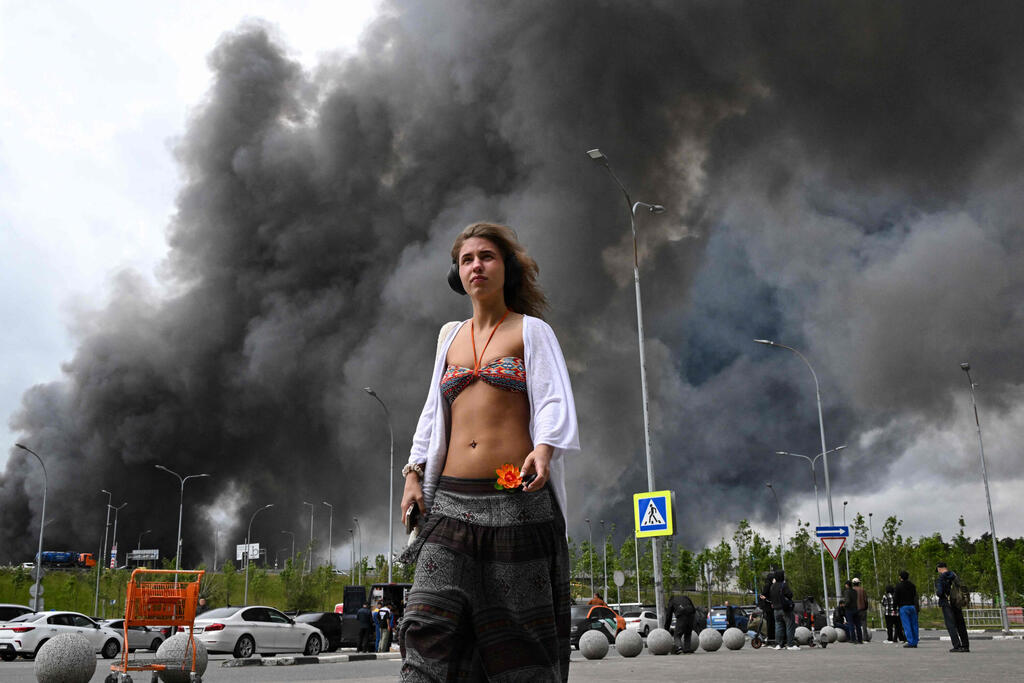
Smoke rises in the sky over Moscow from a Ukrainian attack on an oil facility
(Photo: AFP)
Novak said during the meeting that Russia’s oil situation remains complicated and that “it is clear that the current situation at gas stations is causing concern among the public.”
Putin said Ukraine was attempting to damage the Russian economy through its refinery attacks. “But even more than that, it is trying to create a sense of anxiety in society. We all understand that this is a goal that cannot be achieved. The resilience of the Russian energy system is very high — among the highest in the world,” he claimed.
But more and more reports from Russia describe long lines outside gas stations due to shortages in both remote and urban areas, along with growing frustration among residents.
The BBC reported Wednesday that lines outside gas stations are appearing even in Moscow. BBC correspondent James Landale described what he saw:
1,500 km from the Ukrainian border: Attack on refineries in Ufa, Russia, last month


“If you want to get a sense of the fuel crisis gripping Russia, all you need to do is spend a day driving around Moscow. At almost every petrol station we passed there was a queue of cars and lorries. Some lines were long, some short; some static, others moving steadily. If there was no queue, that meant the garage had run out of fuel entirely and was closed. Remember: this is Moscow, the wealthy, populated capital that draws in so much of Russia’s vast resources. Even here the authorities cannot ensure there is enough petrol and diesel to keep Muscovites on the road.”
The BBC interviewed several residents waiting in line. One woman, Yekaterina, said she was “not happy” with the situation and that “there is panic because everyone thinks there will be no fuel.” At the same time, she said she believes the crisis will eventually be resolved.
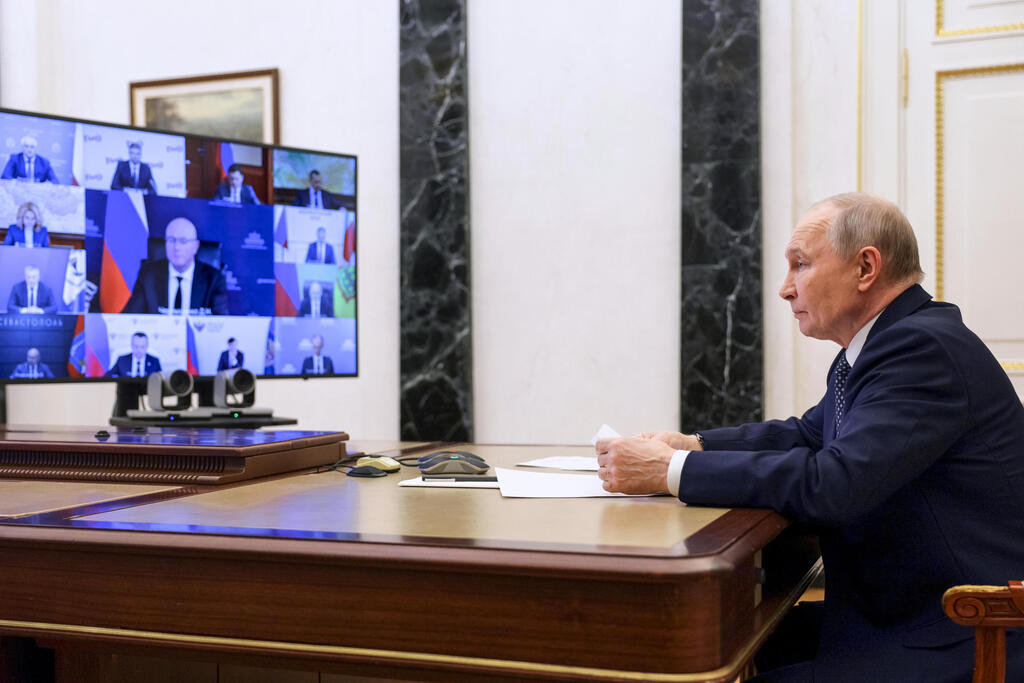
Putin said Ukraine was attempting to damage the Russian economy
(Photo: Gavriil Grigorov/Sputnik, Kremlin Pool Photo via AP)
“We just need to reorganize the way fuel is distributed,” she said.
Another resident, Elmer, said the situation was “very bad” and complained about high prices.
“You waste hours just to fill a tank. I am planning to travel to Dagestan but I don’t know whether I should go there or not because of all the problems with fuel.”
When Landale asked him who he believed was responsible for the shortage, he replied with a smile: “In our country, you can’t say what is to blame and who is to blame.”
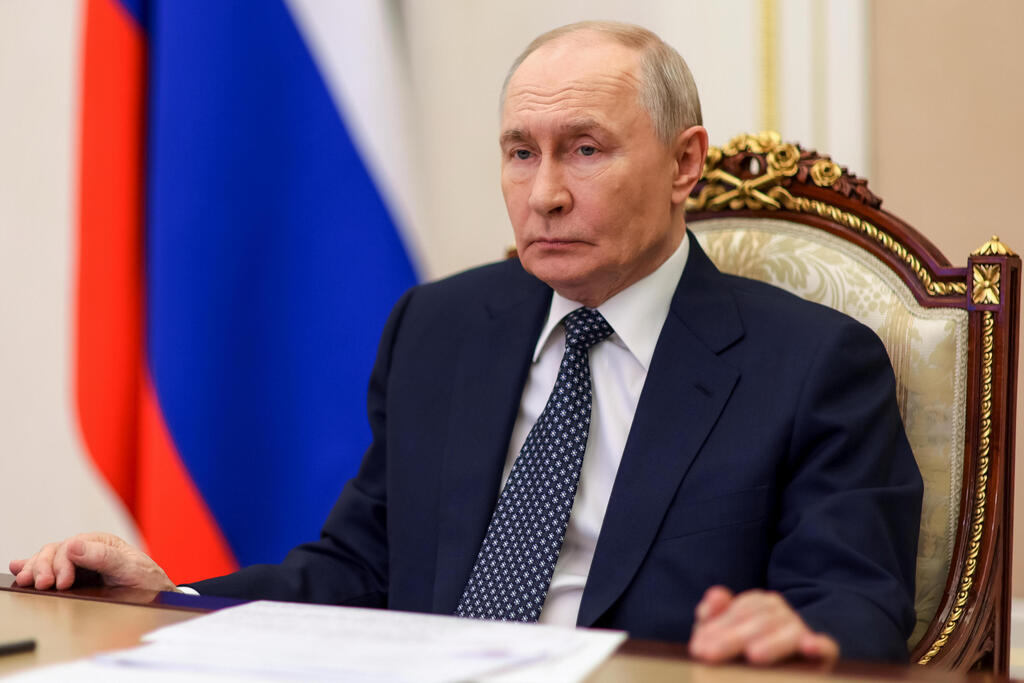
'You should have some more discussions yourself, out in the open'
(Photo: Gavriil Grigorov/Sputnik, Kremlin Pool Photo via AP)
But polls in Russia already show some decline in Putin’s popularity, and NATO Secretary-General Mark Rutte sent him a message Wednesday against the backdrop of the fuel crisis, which appears to be somewhat weakening his very firm grip on power.
Following NATO leaders’ show of unity in Ankara, Rutte told Reuters: “I would say to Putin: You should have some more discussions yourself, out in the open. What he has seen now is sometimes allies disagreeing a bit, having a bit of a quarrel, and then coming together and reuniting.”
Rutte added that the ability to argue publicly and then unite around a common goal is “what distinguishes democracies” from countries such as Russia, China and Iran.
First published: 01:28, 07.09.26