

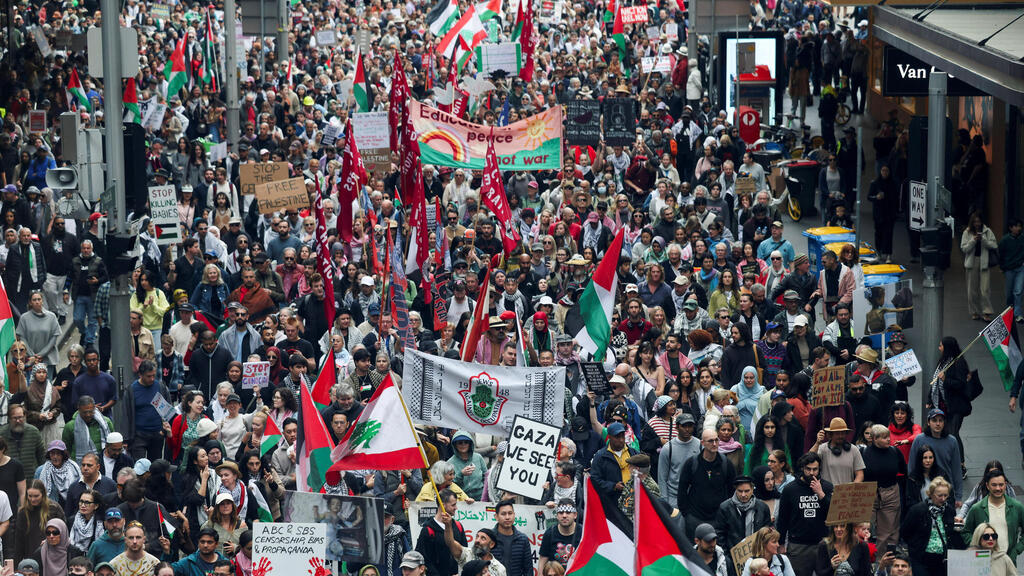
Thousands of people marched across dozens of Australian cities on Sunday in what organizers hope will become the country’s largest pro-Palestinian demonstration, with turnout expected to reach 500,000.
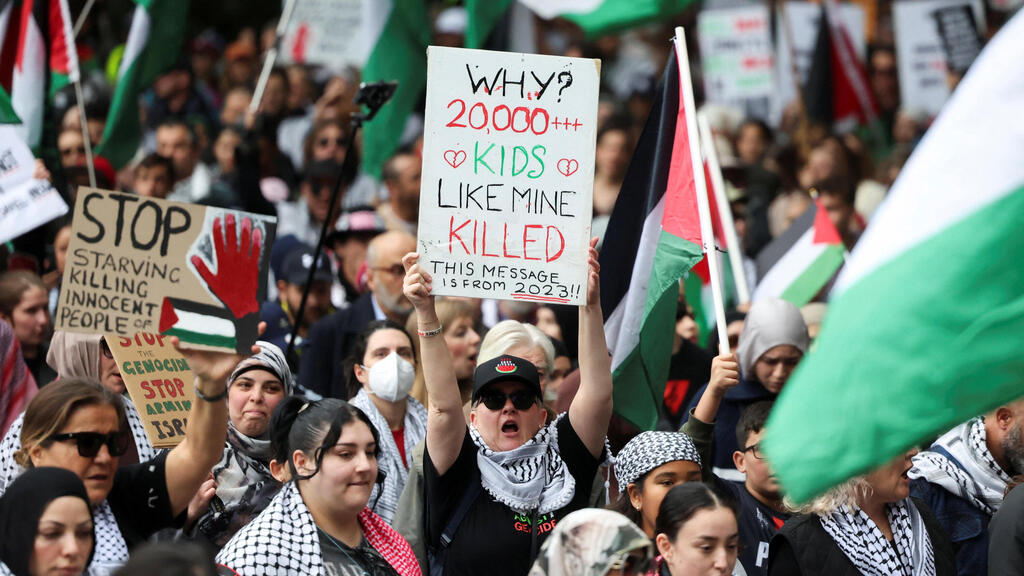
The rallies come amid a diplomatic low point in Australia-Israel relations. This month, Australian Prime Minister Anthony Albanese announced that Australia would recognize a Palestinian state, prompting Prime Minister Benjamin Netanyahu to call him a “weak leader” who “betrayed Israel” and abandoned Australian Jews.
(Photo: Reuters/ Hollie Adams)
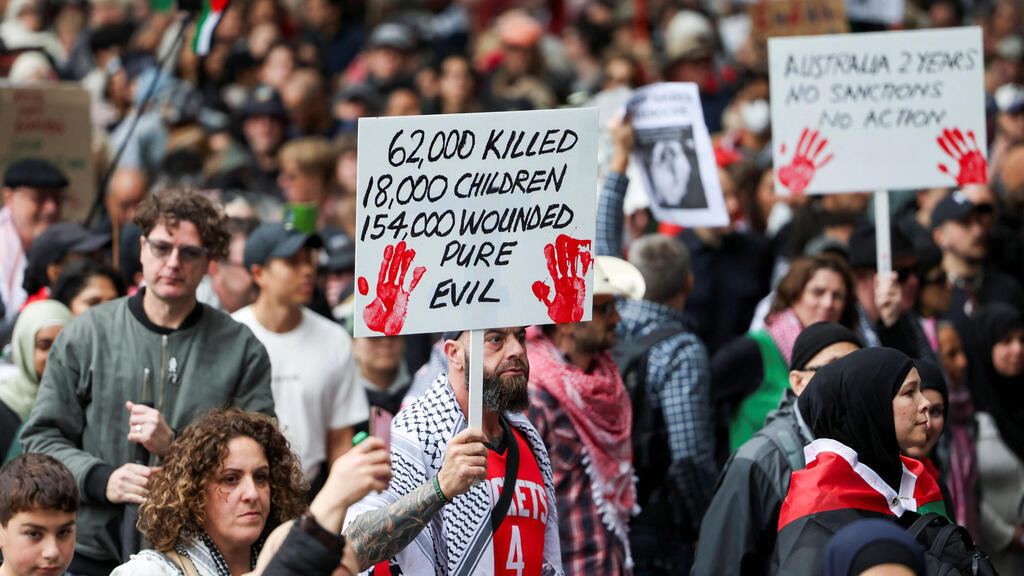
Israel has accused Albanese of emboldening Hamas and fueling antisemitism in Australia, which has contributed to a string of violent incidents against Jews and Israelis since the Oct. 7, 2023, attacks. Last week, Australia’s interior minister told Netanyahu that Israel is isolating itself, adding, “A leader’s strength is not measured by how many people you can bomb or how many children you can leave hungry.”
(Photo: Reuters/ Hollie Adams)
Sunday’s demonstrations follow a protest on Aug. 3, which drew tens of thousands of participants nationwide. Many attendees today wore Palestinian keffiyehs or carried watermelon-themed signs—a symbol chosen after Oct. 7 because the fruit shares the colors of the Palestinian flag. In Sydney, signs read: “Australia must cut ties with Israel now!”

(Photo: Asanka Ratnayake/Getty Images)
Organizers said demonstrations were planned in 40 cities and towns, with Brisbane alone drawing an estimated 50,000 participants, though police put the number closer to 10,000. Other rallies were held in Sydney, where organizers hope to break attendance records, and in Adelaide, where activists, including Robert Martin—recently detained by Israel for attempting to breach the Gaza blockade—joined the protest. Overall, organizers anticipate up to 500,000 protesters nationwide.

(Photo: Reuters/ Hollie Adams)
The events are backed by more than 250 community organizations and unions, with the central demand for the Australian government to impose sanctions on Israel and halt arms trade. Josh Lyz, a spokesperson for the Sydney branch of the Palestine Action Group, expressed confidence in turnout, saying the early-August protests created momentum. “The dam has broken regarding support for Palestine and opposition to genocide,” he said.

(Photo: Asanka Ratnayake/Getty Images)
Some counter-protests also took place on Sunday. In Brisbane, clashes erupted between pro-Palestinian demonstrators and opponents, with police removing one man after he grabbed a Palestinian flag from a protester. Alex Rivkin, head of the umbrella organization for Australian Jews, told Sky News the anti-Israel rallies created an unsafe environment for Jewish residents and should not be allowed to continue.