

The political merger between Naftali Bennett and Yair Lapid could lead to another realignment in the anti-Netanyahu bloc, with Gadi Eisenkot and Avigdor Liberman holding preliminary contacts about a possible joint run in the next election.
Sources close to Eisenkot, chairman of the Yashar party, and Liberman, chairman of Yisrael Beytenu, said the Bennett-Lapid merger opened new possibilities for additional unions within the so-called change bloc, a term used in Israel for parties seeking to replace Prime Minister Benjamin Netanyahu’s government.
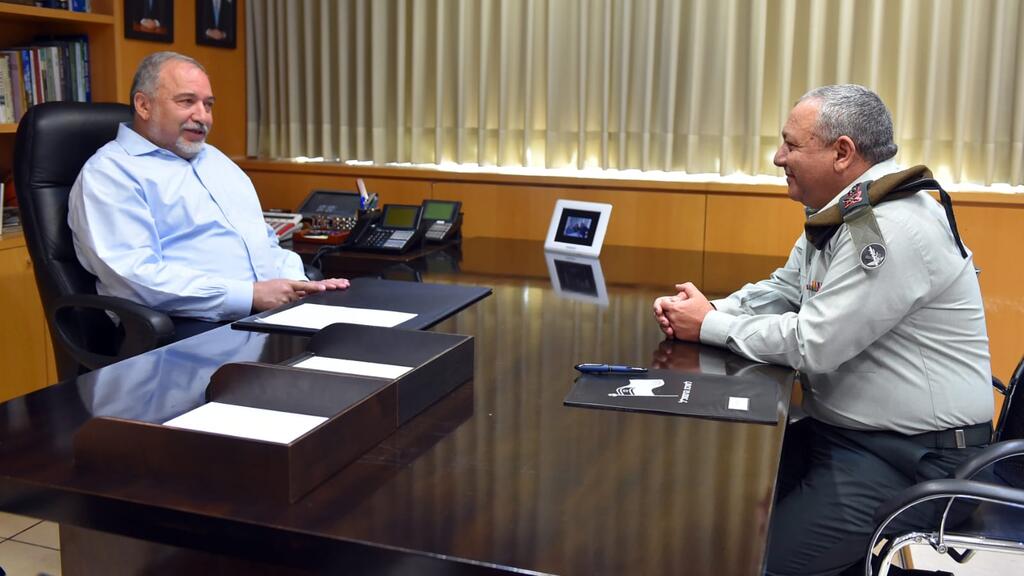
The sources said neither Eisenkot nor Liberman is ruling out merging their two parties into one list. The contacts remain preliminary, and the question of who would lead the slate has not yet been discussed. Messages have already passed between the two men to examine the possibility, and they are expected to meet this week.
A senior source close to Eisenkot told ynet and Yedioth Ahronoth that “the Lapid-Bennett merger opened additional possibilities for Eisenkot that were not previously on the table, such as a merger with Liberman. Bennett and Lapid thought they would unite and Gadi would immediately join them. That is not where things stand.”
A source close to Liberman said he is not ruling out such a merger, provided it would add at least two seats to the change bloc and not cost it seats.
“The goal is to replace Netanyahu and this government. Therefore, any cooperation or merger that advances that goal is desirable,” the source said. “If such a merger can bring another two seats to the bloc in order to replace Netanyahu, then it is definitely on the agenda.”
The source said Liberman would not rush into a merger as Bennett and Lapid did, and would do so only if it were shown that such a move would expand the bloc and add the seats needed to form a Zionist coalition of at least 61 seats, the minimum required to replace Netanyahu’s government.
Several factors could drive a merger between Eisenkot and Liberman. On a personal level, both are disappointed by the move Bennett and Lapid conducted secretly without informing them. Liberman is not convinced the move will necessarily increase the number of seats for the change bloc. Eisenkot feels Lapid and Bennett want to “force” him into a merger on their terms.
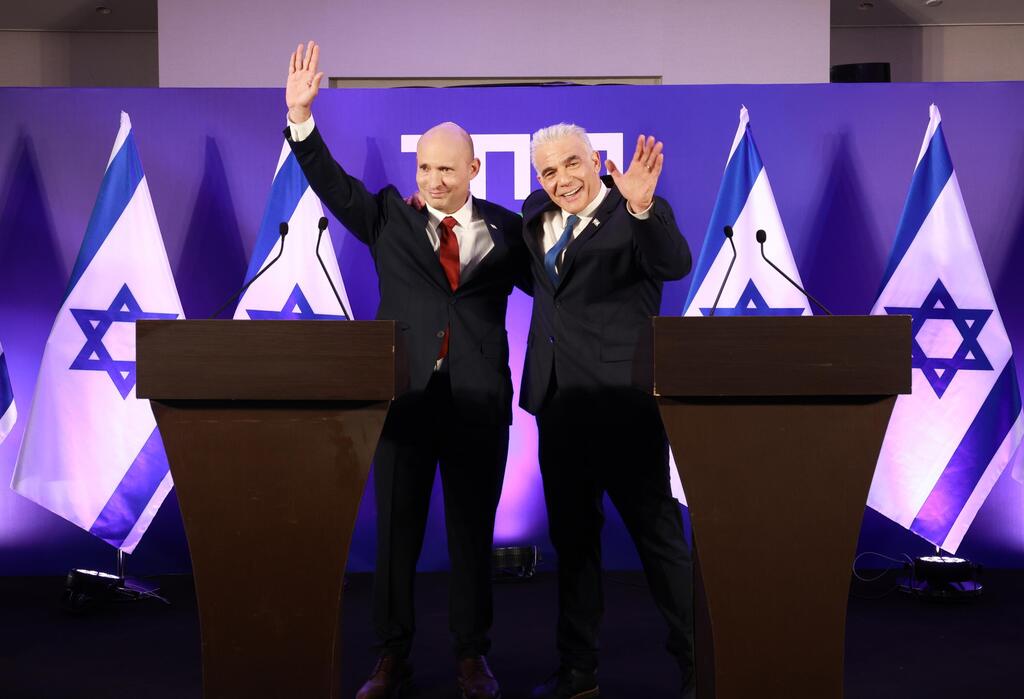
(Photo: Dana Kopel)
A source in Eisenkot’s party said Bennett and Lapid’s conduct was personally disappointing.
“They held secret negotiations between themselves for a joint run and thought that a minute after it was published, Gadi would join them,” the source said. “That is not the conduct Eisenkot expects from partners on the same path.”
Eisenkot has still not decided whether to run alone or join another party. The decision requires time, in part to examine polling trends. The Bennett-Lapid merger has not hurt him and perhaps has helped him. In polls, he is maintaining his electoral strength and has even increased it. The question is whether that will hold over time.
When the possibility of a merger becomes serious, it will be either with Bennett or with Liberman. In that case, the central question will be who heads the list. Liberman has declared that he sees himself as a candidate for prime minister. Eisenkot has said he did not leave Benny Gantz in order to become the No. 2 to another candidate.
Those questions are expected to be resolved in the coming weeks.
First published: 07:36, 05.04.26