

“I’m a fan of beautiful places,” U.S. President Donald Trump said Tuesday when asked about his decision to accept French President Emmanuel Macron’s invitation to the Palace of Versailles. “Versailles is not gold leaf, Versailles is the real deal.”
That was the setting overnight between Wednesday and Thursday for Trump’s signing of a memorandum of understanding with Iran, in the same palace where the Treaty of Versailles was signed in 1919 at the end of World War I. That treaty, meant to settle the conflict with Germany, was later undermined as Germany rearmed, first secretly and then openly after the Nazis came to power in 1933.
Trump signs memorandum of understanding with Iran during G7 summit in France


The new memorandum, signed during Trump’s visit to Versailles alongside Macron, is intended to end the war with Iran and open a 60-day phase of negotiations over the harder questions left unresolved, including the future of Iran’s nuclear program. The New York Post reported that Trump formally signed the U.S.-Iran MOU at the palace after an earlier endorsement process involving senior American and Iranian officials.
In Tehran, officials quickly presented the memorandum as a victory. Iranian officials said the U.S. naval blockade had already begun to be lifted ahead of the formal signing, and Iran’s longstanding position remains that its missile program is defensive and not open to negotiation.
Iranian officials also signaled that talks on implementation would move forward. The Swiss Foreign Ministry previously confirmed that a U.S.-Iran signing ceremony was planned at the Burgenstock resort in Switzerland, with Pakistan and Qatar among the mediators involved.
‘Stop blowing up buildings’: Trump’s tense calls with Netanyahu
The signing came amid growing tension between Trump and Prime Minister Benjamin Netanyahu, according to a Wall Street Journal report describing a relationship that has become increasingly strained over Iran, Lebanon and the future of Israel’s military campaigns.
According to the Journal, the frequent conversations between the two leaders no longer sound as they once did. Trump has been seeking to end the war with Iran, which has weighed on the American economy and kept gasoline prices high, while Netanyahu has pressed for continued military pressure on Tehran.
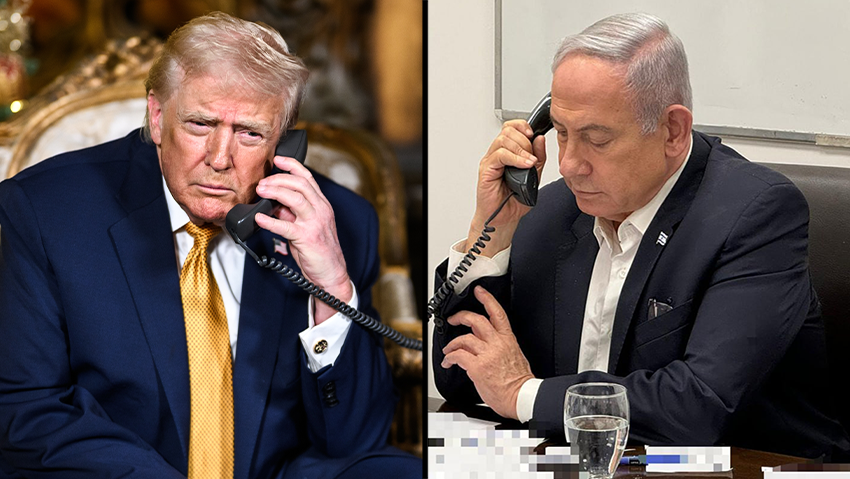
The report said Netanyahu was among those who had encouraged Trump toward military action in the first place, and later urged him not to rush into an agreement. At one point, in a call focused on Lebanon, Trump became frustrated with continued Israeli strikes and demanded to know why Netanyahu was continuing to hit buildings, according to people familiar with the call cited by the Journal.
The tension had also surfaced earlier in a separate report on a call over Israeli strikes connected to Hezbollah. Axios, as cited by the New York Post, reported that Trump snapped at Netanyahu, asking, “What the f--k are you doing?” and accused him of escalating at a moment when Washington was trying to preserve talks with Tehran.
The Wall Street Journal also reported that Trump worried a broader economic slowdown caused by the war could historically associate him with Herbert Hoover, the U.S. president in office at the start of the Great Depression.
Netanyahu warned Trump: Iran cannot be trusted
The core disagreement was the U.S.-Iran memorandum itself. Under the framework described in reports, Tehran would reopen the Strait of Hormuz, while Washington would end the blockade and allow Iran to sell oil on global markets. The more explosive issue, the dismantling or restriction of Iran’s nuclear project, was deferred to the next stage of talks.
Israeli officials were reportedly surprised by the ceasefire announcement. Until then, some in Jerusalem believed Trump was leaning toward additional military strikes rather than an agreement. Netanyahu warned Trump in private conversations that any deal with Iran would have to be verifiable and argued that Tehran could not be trusted to comply.
Trump, however, increasingly viewed Netanyahu as pushing for more military action when the White House wanted a diplomatic exit. In an interview cited by the Journal, Trump described Netanyahu in softer terms, saying: “Bibi is a difficult person, but so am I.”
According to the Journal, one senior administration official familiar with the calls said the pattern had become familiar: Netanyahu would present the case for more military action, explain what Israeli intelligence could do and when, and Trump would listen.
When Trump moved toward reopening Hormuz through a deal, Netanyahu reportedly urged him to wait, maintain pressure on Iran and force Tehran to pay a higher price. After learning that Trump was moving toward an agreement without fully coordinating with Israel, Netanyahu sought an urgent meeting with the president. Israeli officials were shown a draft only days later, according to the report.
On Sunday, Trump said Israelis would like the agreement, even as officials in Jerusalem were signaling otherwise. He also said the relationship had limits and that Netanyahu asked permission, a remark viewed as humiliating in Netanyahu’s circle. “He calls us the big one, and he’s the little one,” Trump said, according to the Journal.
A relationship built on admiration, suspicion and calculation
The relationship between Trump and Netanyahu has long mixed political utility with personal friction. Trump was angered in 2020 when Netanyahu congratulated Joe Biden on his election victory, but after returning to office he revived the relationship. In early 2025, Trump asked an Israeli visitor: “How is my friend Bibi?”
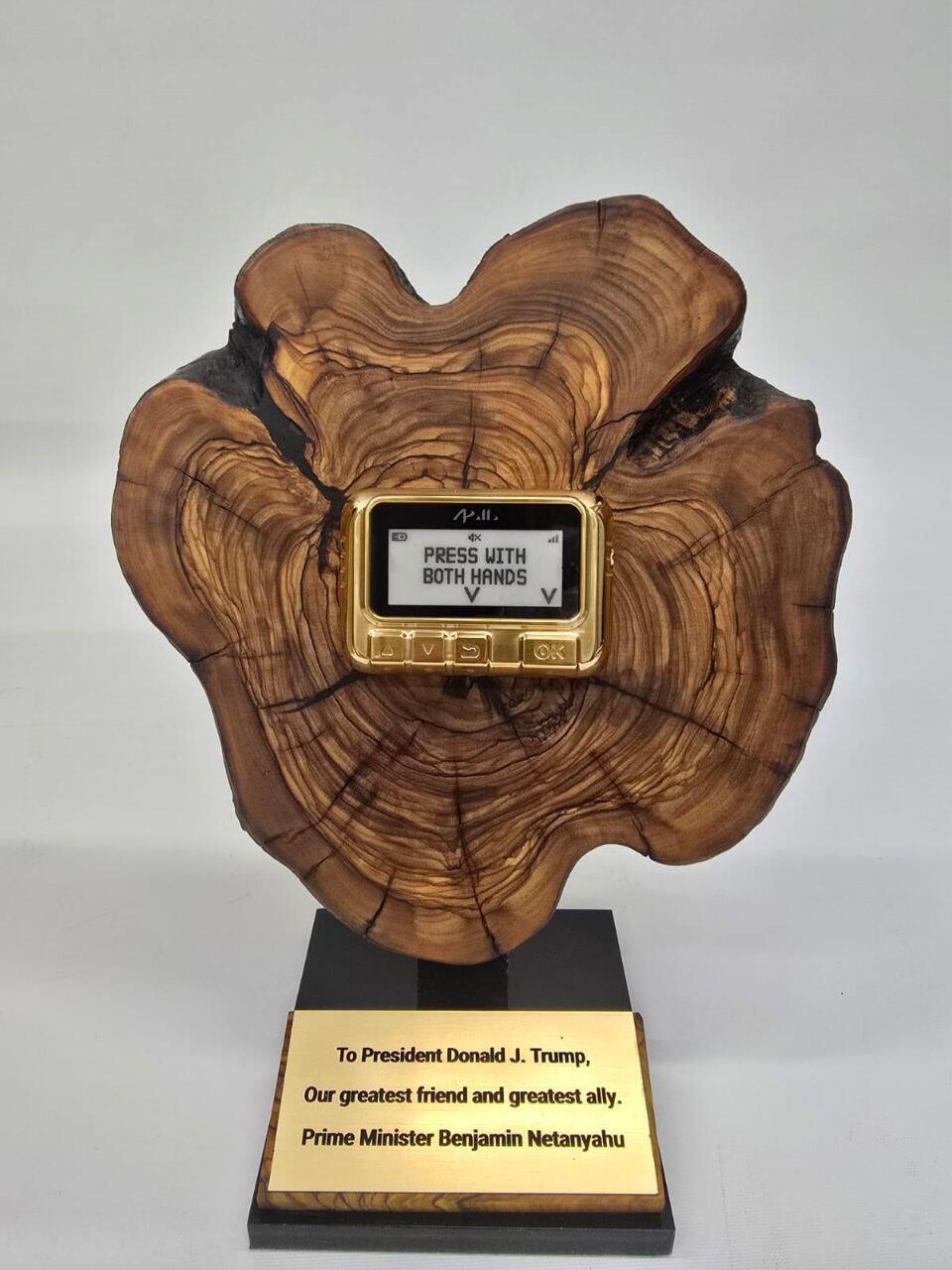
A golden pager presented to US President Donald Trump by Prime Minister Benjamin Netanyahu
The two were never especially close personally, but their partnership often served both sides. Netanyahu met Trump at least seven times during his current term, in addition to frequent phone calls, and his team emphasized the leaders’ closeness in public messaging and social media, according to the Journal.
Netanyahu also worked to appeal to Trump personally. The Journal reported that he gave Trump a golden pager, a symbolic replica linked to Israel’s 2024 pager operation against Hezbollah in Lebanon. Afterward, Israeli officials brought other versions of the pagers to senior U.S. officials as well.
Sen. Lindsey Graham, a Trump ally, told the Journal that Trump was struck by the gesture and later called him about it. Graham said the gift gave Trump a renewed appreciation for Israel.
Military cooperation, then doubt
During 2025, Netanyahu repeatedly pressed Trump to support strikes in Iran. According to the Journal, Netanyahu showed Trump detailed plans, while Graham said the prime minister reassured Trump that the U.S. had significant military capability.
At the same time, U.S.-Israel military cooperation reached exceptional levels. Israeli generals worked inside American operations rooms, U.S. refueling aircraft were stationed in Israel and Israeli pilots became familiar with the voices of American crews refueling them in the air.
Still, Trump was not convinced that ground troops would be needed in Iran. He believed air power could pressure Tehran into concessions and dismissed concerns that Iran would close the Strait of Hormuz or respond in a way that would fundamentally change the war.
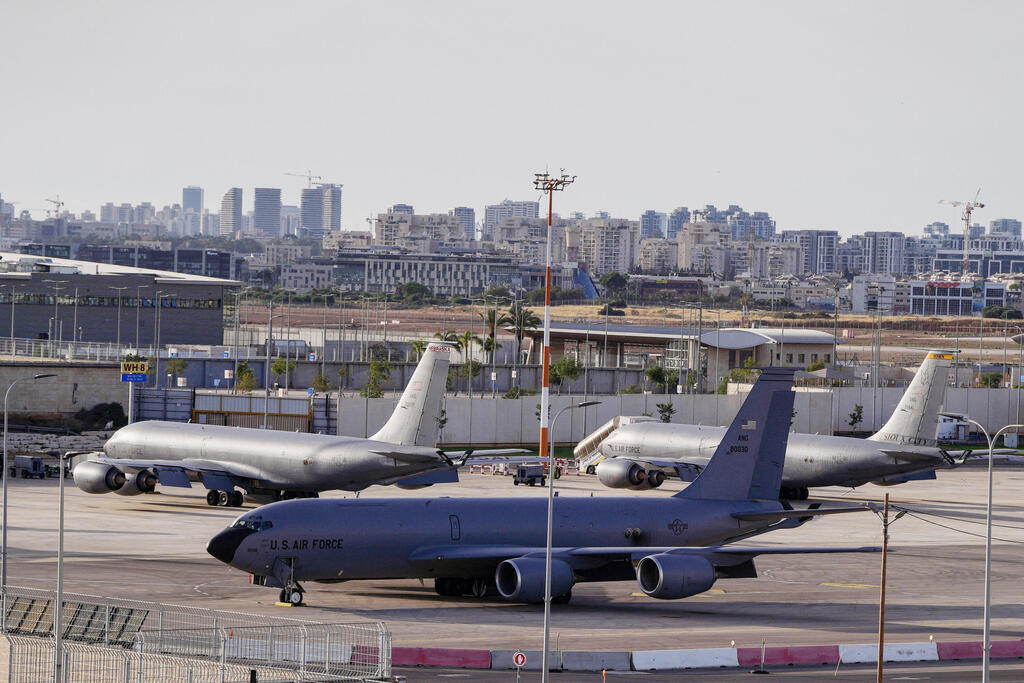
US refueling aircraft at Ben-Gurion Airport
(Photo: REUTERS/ Dedi Hayun)
At first, according to the Journal, Trump and Netanyahu spoke enthusiastically about the precision of strikes, senior Iranian figures hit and possible future targets. But as the war dragged on, Trump grew more skeptical of some of Netanyahu’s claims. Israeli officials said he also rejected a Netanyahu-backed plan involving a Kurdish incursion into Iran aimed at destabilizing the regime.
Netanyahu continued to oppose a nuclear deal with Tehran, arguing that Iran would try to advance secretly toward a bomb. Trump, by contrast, told Israelis and advisers that he wanted to solve the problem diplomatically as well as militarily.
The Journal reported that Trump has increasingly asked other officials after conversations with Netanyahu whether the prime minister’s claims were accurate, something he had not done as often in the past.
Lebanon became the flashpoint
What frustrated Trump most, according to reports, was the continuation of Israeli strikes in Lebanon despite a ceasefire. At one stage, he brought Israeli and Lebanese officials into the Oval Office and tried to mediate between them himself.
The first major confrontation over Lebanon followed reports that Trump had been shown images of Christians being bombed there. In a later call reported by Axios and cited by the New York Post, Trump sharply rebuked Netanyahu and accused him of endangering U.S. diplomacy with Iran. The same report quoted a U.S. official summarizing Trump’s anger in unusually harsh terms, including the claim that Trump told Netanyahu he was “f--king crazy” and that he would be in prison without Trump’s help.
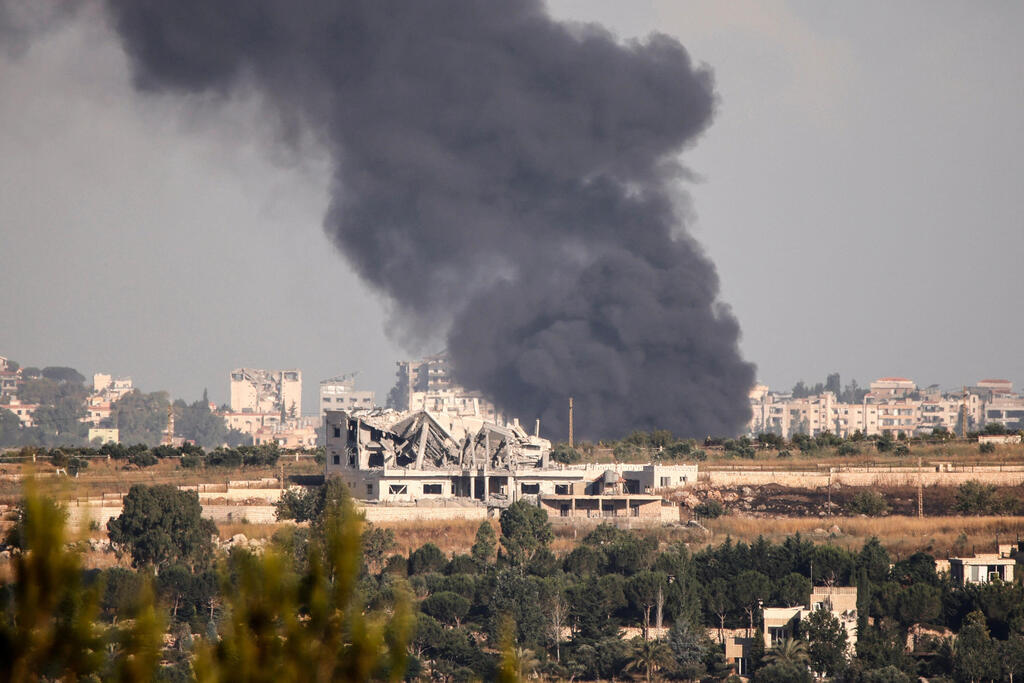
IDF strike in southern Lebanon
(Photo: AFP)
Trump later wrote that he had a “very productive call” with Netanyahu and said no U.S. troops would be sent to Beirut. Netanyahu, for his part, said after the call that Israel’s position on Hezbollah had not changed and that Israel would continue to strike if Hezbollah kept attacking.
Officials across the Trump administration have grown frustrated with Netanyahu, the Journal reported. Some have questioned whether he has sought to prolong the Iran war to strengthen his own political position ahead of difficult elections. Israeli officials, in turn, have accused some Trump advisers of feeding the president negative information.
Trump has previously helped Netanyahu politically, including by calling for him to be pardoned in his corruption trial. But according to the Journal, those close to Netanyahu now see less chance that Trump will help him in the coming election campaign. “I wonder if Bibi even wants to continue,” Trump told ABC News earlier this month, forcing Netanyahu to clarify that he still intends to run.
Netanyahu’s office did not respond to the Journal’s request for comment. A White House official told the paper that Trump has a “great partnership” with Netanyahu and Israel, while adding: “No country or leader pressures President Trump to do anything.”