

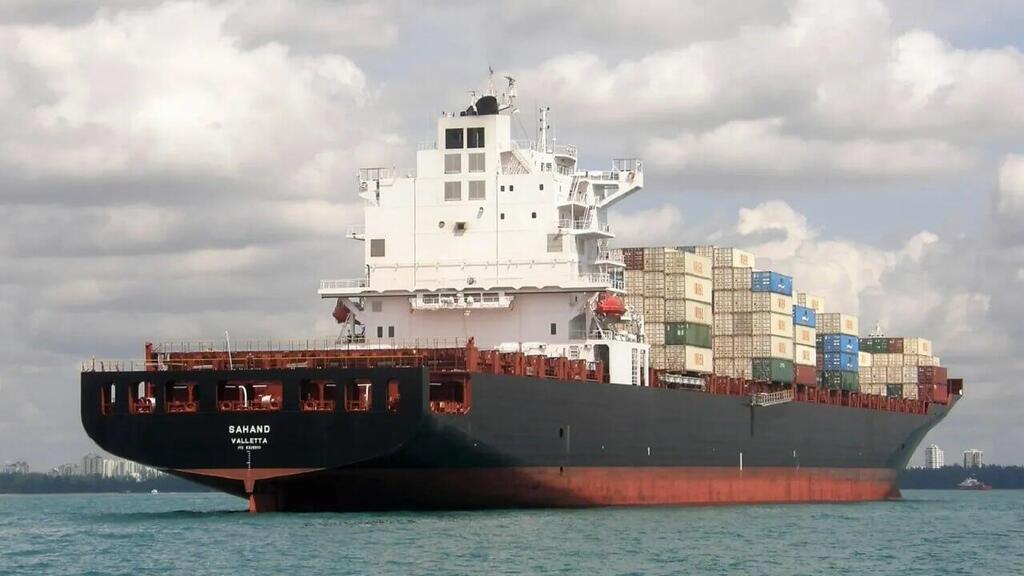
U.S. President Donald Trump announced Sunday evening that the American military had seized an Iranian vessel that attempted to violate the blockade imposed on ships departing from or heading to Iran. Trump said the ship was a large cargo vessel, nearly the size of "an aircraft carrier.” According to him, “it did not go well for them,” and a U.S. Navy ship caused “a hole in the engine room” of the vessel.
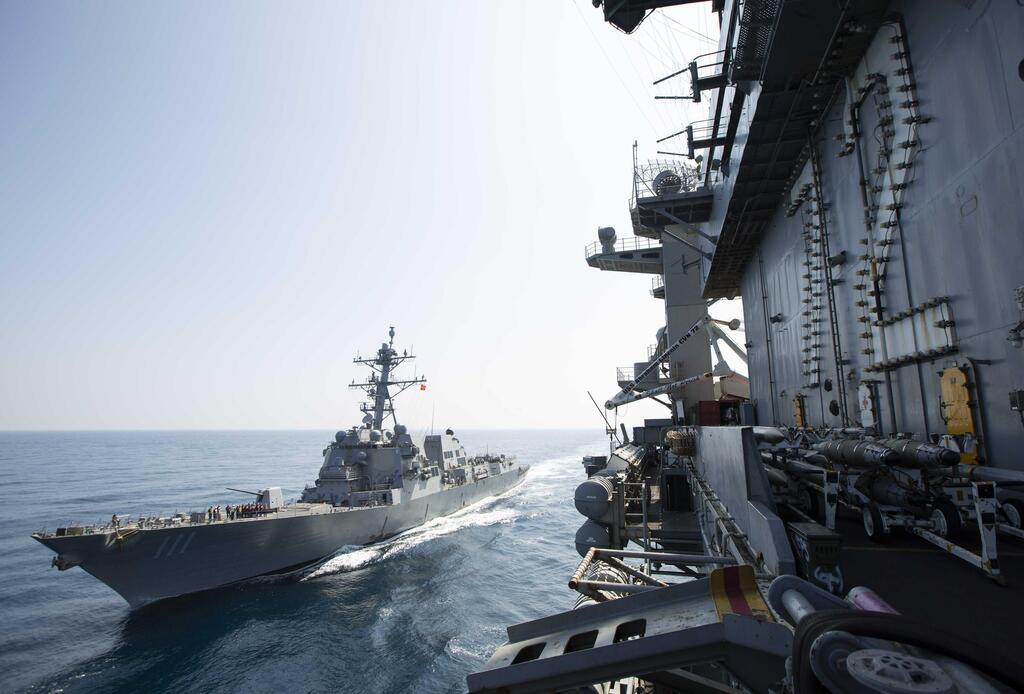
The destroyer USS Spruance, which stopped the Iranian ship
(Photo: U.S. Navy)
U.S. President Donald Trump announced Sunday evening that the American military had seized an Iranian vessel that attempted to violate the blockade imposed on ships departing from or heading to Iran. Trump said the ship was a large cargo vessel, nearly the size of "an aircraft carrier.” According to him, “it did end well for them,” and a U.S. Navy ship "stopped them right in their tracks by blowing a hole in the engineroom."
The president added: “The TOUSKA is under U.S. Treasury sanctions because of their prior history of illegal activity. We have full custody of the ship, and are seeing what’s on board!” According to global tracking sites, the vessel departed about a week ago from Port Klang in Malaysia, and its last known location was in the Gulf of Oman, where the U.S. Navy is enforcing the blockade on Iran.
In Tehran, officials acknowledged that an Iranian merchant ship had been struck by American fire, but offered a different account. Iran’s Mehr news agency claimed that “U.S. forces stationed in the waters surrounding the Gulf of Oman opened fire on an Iranian merchant vessel in order to force it to return to Iranian territorial waters. Following a swift response by naval units of the Islamic Revolutionary Guard Corps that assisted the Iranian ship, the Americans were forced to retreat and leave the area.”
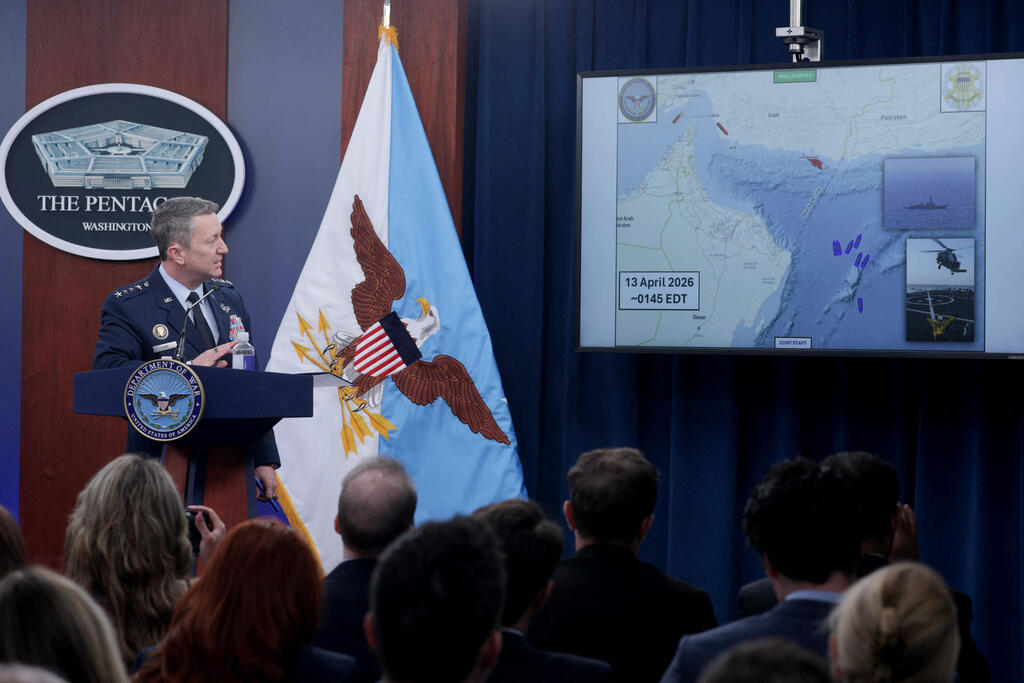
In the Gulf of Oman: The US-enforced blockade line, in a briefing by Pete Hegseth from last week
(Photo: Alex Wong / Getty Images North America / AFP)
The naval blockade of the Strait of Hormuz, ordered by Trump in an effort to pressure the ayatollah regime to compromise in negotiations, began six days ago. U.S. Central Command (CENTCOM) said at the time that the blockade would be enforced on Iranian ports on both sides of the strait. In a notice sent to ships, the U.S. military clarified that the blockade would apply to any vessel arriving at or departing from an Iranian port, regardless of the flag it carries.
Trump has refused to lift the blockade even after Iran announced it would reopen the Strait of Hormuz. According to Iranian claims, this was also the turning point that led the Revolutionary Guard to close the strait again and fire on several vessels Saturday that had already received passage approvals.
The closure of the Strait of Hormuz has further complicated efforts to reach an agreement to end the war. Iranian state-affiliated media reported Sunday that Iran’s delegation would not attend negotiations in Pakistan until the U.S. blockade is lifted. Meanwhile, Trump said a U.S. delegation would travel to Pakistan, where preparations for another round of talks are reportedly underway.