

Undersea cable cuts in the Red Sea disrupted internet access in parts of Asia and the Middle East, experts said Sunday, though it wasn’t immediately clear what caused the incident.
There has been concern about the cables being targeted in a Red Sea campaign by Yemen’s Houthi rebels, which the rebels describe as an effort to pressure Israel to end its war on Hamas in the Gaza Strip. But the Houthis have denied attacking the lines in the past.
Undersea cables are one of the backbones of the internet, along with satellite connections and land-based cables. Typically, internet service providers have multiple access points and reroute traffic if one fails, though it can slow down access for users.
Microsoft announced via a status website that the Mideast “may experience increased latency due to undersea fiber cuts in the Red Sea.” The Redmond, Washington-based firm did not immediately elaborate, though it said that internet traffic not moving through the Middle East “is not impacted.”
NetBlocks, which monitors internet access, said “a series of subsea cable outages in the Red Sea has degraded internet connectivity in multiple countries,” which it said included India and Pakistan. It blamed “failures affecting the SMW4 and IMEWE cable systems near Jeddah, Saudi Arabia.”
The South East Asia–Middle East–Western Europe 4 cable is run by Tata Communications, part of the Indian conglomerate. The India-Middle East-Western Europe cable is run by another consortium overseen by Alcatel-Lucent. Neither firm did not immediately responded to requests for comment.
Pakistan Telecommunications Co. Ltd., a telecommunication giant in that country, noted that the cuts had taken place in a statement on Saturday.

Prophet Muhammad's birthday celebrations in Sana'a
(Photo: Khaled Abdullah/Reuters)

Yahya Saree, Houthi military spokesman
(Photo: Mohammed HUWAIS / AFP)
Saudi Arabia did not immediately acknowledge the disruption and authorities there did not respond to a request for comment.
In the United Arab Emirates, home to Dubai and Abu Dhabi, internet users on the country’s state-owned Du and Etisalat networks complained of slower internet speeds. The government did not immediately acknowledge the disruption.
Subsea cables can be cut by anchors dropped from ships, but can also be targeted in attacks. It can take weeks for repairs to be made as a ship and crew must locate themselves over the damaged cable.
The lines’ cut comes as Yemen’s Houthi rebels remain locked in a series of attacks targeting Israel over the Israel-Hamas war in the Gaza Strip. Israel has responded with airstrikes, including one that killed top leaders within the rebel movement.

Young boy in Yemen celebrates the Houthi leader
(Photo: Khaled Abdullah/Reuters)
In early 2024, Yemen’s internationally recognized government in exile alleged that the Houthis planned to attack undersea cables in the Red Sea. Several were cut, but the Houthis denied being responsible. On Sunday morning, the Houthis’ al-Masirah satellite news channel acknowledged that the cuts had taken place, citing NetBlocks.
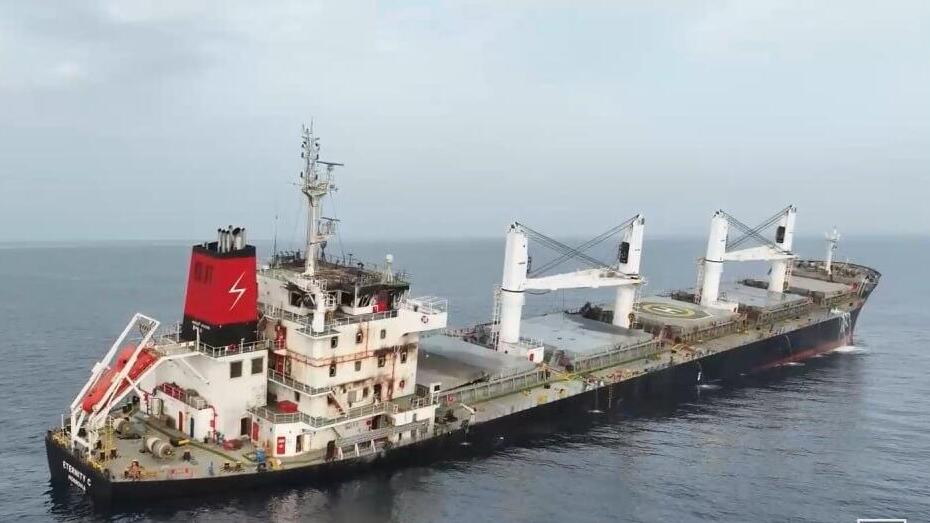
From November 2023 to December 2024, the Houthis targeted more than 100 ships with missiles and drones over the Israel-Hamas war in the Gaza Strip. In their campaign so far, the Houthis have sunk four vessels and killed at least eight mariners.
The Iranian-backed Houthis stopped their attacks during a brief ceasefire in the war. They later became the target of an intense weekslong campaign of airstrikes ordered by U.S. President Donald Trump before he declared a ceasefire had been reached with the rebels. The Houthis sank two vessels in July, killing at least four on board, with others believed to be held by the rebels.
The Houthis’ new attacks come as a new possible ceasefire in the Israel-Hamas war remains in the balance. Meanwhile, the future of talks between the U.S. and Iran over Tehran’s battered nuclear program is in question after Israel launched a 12-day war against the Islamic Republic in which the Americans bombed three Iranian atomic sites.