


The Air Force was inadequate, soldiers from the nearby base did not arrive to help - and the residents did not know in time about the infiltration of the terrorists: The IDF released to the public Wednesday morning the investigation of the battle on October 7 in Kerem Shalom - the kibbutz closest to the Gaza Strip - after first presenting it to the community and the bereaved families. According to the findings of the investigation, about 100 terrorists attacked the kibbutz in several waves, where about 180 residents live. In the fighting in the settlement and its surroundings, six security forces members were killed and nine soldiers and a civilian were wounded.
The investigation notes that, despite the fact that the kibbutz is adjacent to the border, and that many terrorists attacked it - a greater disaster was averted thanks to the professional and determined activity of the alert squad, together with the Nahal patrol force that was in the kibbutz before the attack. The inquiry, led by Col. Eilon Peretz and approved by former Southern Command chief Maj. Gen. Yaron Finkelman, also states that the army failed to protect the kibbutz and its surroundings, and it praised the valor and determination of the local emergency response team, members of the Nahal Reconnaissance Unit who were present at the time, and the medical staff who worked under fire to save lives and evacuate the wounded.
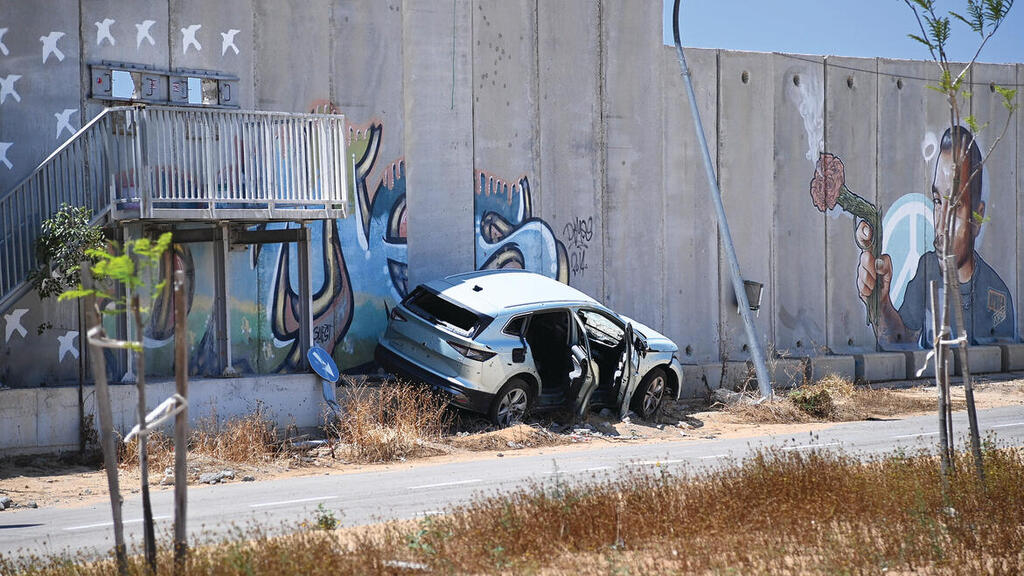
According to the investigation, a Nahal patrol force (Battalion 934) was present in the kibbutz before the attack, due to its sensitive location dozens of meters from the border, and due to a past demand by the Kibbutz Chief of Staff Eliya Ben Shimol for the presence of a permanent military force, as he recently told Ynet.
Stage 1: The Initial Attack (6:29 a.m-6:56 a.m.)
At 6:34 a.m., the kibbutz’s security coordinator (Ravshatz) Eliya Ben Shimol and a Nahal unit mobilized following multiple Red Alert sirens. Minutes later, the local emergency squad was also activated. At 6:40 a.m., three vehicles (the battalion sector commander's company, the company sector commander's company, and the company reserve company commander's company) set out toward the kibbutz. At 6:42 a.m., the first report was received of terrorists approaching the border fence near the kibbutz. As a result, an IDF tank stationed nearby fired at the infiltrators, and female observers identified roughly 20 gunmen near the kibbutz.. It was announced that there had been a definite infiltration of the kibbutz, and the reserve company's vehicles began patrolling the kibbutz and its surrounding
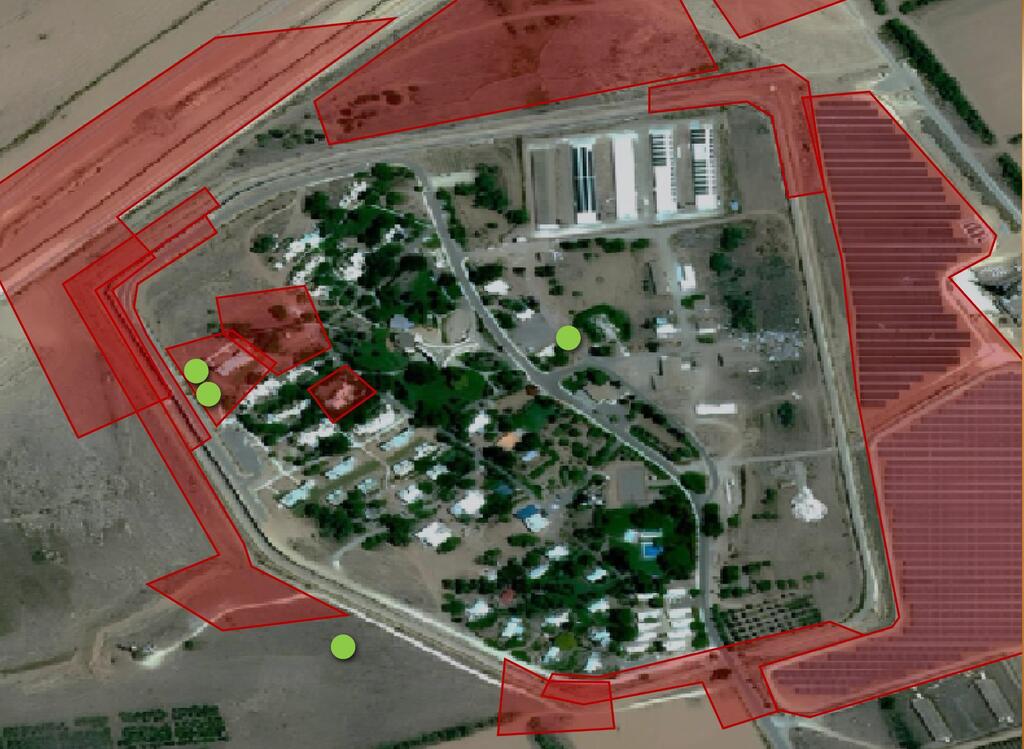
Map of the battles that took place at Kibbutz Kerem Shalom
(Photo: IDF Spokesperson's Unit)
Stage 2: First Wave of the Assault (7:00 a.m.–9:33 a.m.)
A lookout reported that "a lot of terrorists were surrounding the kibbutz," and at 7:00 a.m. the first encounter occurred to the west of it: dozens of terrorists were moving along the perimeter axis on the outer side of the community's wall, where they encountered the IDF force of Sergeant Major Kerem Shalom. this led to a 30-minute gunfight during which Sergeant Major Yaron Ori Shai, the IDF liaison officer, was killed. At the same time, a family in the kibbutz reported identifying terrorists from the southwest. The emergency squad and Nahal fighters responded quickly, killing seven terrorists and repelling the attackers in ongoing clashes that lasted nearly two hours.
At 07:15 a.m. terrorists blew up a point in the perimeter wall, penetrated the center of the kibbutz and began shooting at residents' homes. The emergency squad and Nahal fighters responded quickly, killing seven terrorists and repelling the attackers in ongoing clashes that lasted nearly two hours.
Stage 3: Second Attack Wave (9:30 a.m.–11:30 a.m.)
At 9:30 a.m., the alert squad was called to the eastern part of the kibbutz following the identification of terrorists in the eastern area, where the alert squad and the soldiers began exchanging fire through the kibbutz fences. At 10:10 a.m., a combat helicopter arrived and attacked dozens of terrorists at the scene, who retreated from the scene. At 10:25 a.m., kibbutz’s security coordinator dispatched members of the alert squad to the home of the Schindler family, who reported hearing voices in Arabic. The terrorists tried to break into the compound where the family was sheltering and used an explosive device to blow up the door. The explosion seriously injured Amichai, the father of the family. The alert squad, which arrived quickly, managed to kill the terrorists who had barricaded themselves in the house and save the family, Yedidya Moshe Raziel and Amichai Witzen—were killed in the process.
According to the investigation, the arrival of the alert squad at the Schindler family home near the explosion prevented more serious harm to the family. After the Schindler family was rescued, the exchange of fire with the terrorists who were outside the kibbutz continued. In the battle, a member of the alert squad, Yair Wiesner, was seriously wounded, apparently from an RPG that exploded near him. Until 11:30 a.m., the exchange of fire with terrorists outside the walls of the kibbutz continued, and the alert squad was engaged in rescuing the wounded who were treated by paramedics, kibbutz residents, and a doctor who was staying there.
Stage 4: Clearing the Kibbutz and Evacuating Residents (Post-11:30 a.m. to Oct. 8)
Reinforcements from Battalion 450 and an IDF tank arrived at the kibbutz, and around 1:00 p.m. the terrorists began to retreat. At approximately 2:10 p.m., a barrage of four mortar shells was fired at the kibbutz, killing Sergeant Natan Hai Liar. The evacuation of the residents took place overnight between October 7 and 8. During the fighting on the kibbutz, Captain Tomer Shoham and Sergeant Or Mizrahi also fell.
Key Findings
The investigation concluded that the IDF failed to defend Kerem Shalom. A concurrent Hamas assault on nearby Camp Amitai, half of which was captured, prevented the Kerem Shalom Company and the reserve company from going out to defend the. The investigation also noted that the decision of the 934th Infantry Division to concentrate efforts and reserve forces in defending Kerem Shalom delayed the attack and reduced the number of terrorists who infiltrated. According to the investigation, the Air Force's activities, with an emphasis on combat helicopters, hit many terrorists around the kibbutz, thereby significantly reducing the damage to it. However, the Air Force's support was insufficient in scope relative to the scale of the attack.
The local emergency response team performed courageously, aiding in both defense and evacuation efforts. However, the investigation also found that the kibbutz’s residents were not informed in real-time about the infiltration. The investigation emphasized that the actions of the members of the alert team that day are "an exemplary example" of protecting a community, as are the actions of the medics and the doctor on the kibbutz, which are worthy of praise and resulted in saving human lives. It was also noted that the soldiers acted bravely and fiercely.
The investigation praised United Hatzalah medics Ofer and Rani Kisin, medic May Caspi, and Dr. Barak Karawani, who happened to be visiting the kibbutz.
As with other IDF investigations into October 7, this report emphasized that the military was unprepared for thousands of Hamas terrorists to suddenly infiltrate dozens of locations simultaneously. According to the IDF, the investigation took more than a year and included interviews and conversations with residents of the kibbutz, the security forces operating there, and members of the emergency squad. Communication recordings and camera footage were collected as part of the investigation, and that reconstructions were conducted.