

As the scale of the devastating floods in Nepal and Tibet continues to emerge, countries in the region are offering assistance and officials in Kathmandu estimate that rebuilding could cost $4 billion to $5 billion.
Nepal’s Finance Minister Swarnim Wagle told Reuters on Saturday that the figure was only a preliminary estimate.
A building that survived the devastating floods in Nepal


“This is just an estimate. Loss and damage is being assessed,” he said.
Nepal, meanwhile, suspended search and rescue operations Saturday because of poor weather. Authorities are continuing to monitor two lakes upstream, including one formed by the flooding that began overflowing Friday.
Nepalese officials warned that the lakes pose a continuing flood risk. A Chinese government geological hazards expert said more than 100 glacial lakes are scattered across the region and could also pose a significant threat.
Reuters reported that at least 675 people have been killed in Nepal and seven in Tibet. About 3,000 people remain missing, including roughly 2,426 in Nepal.
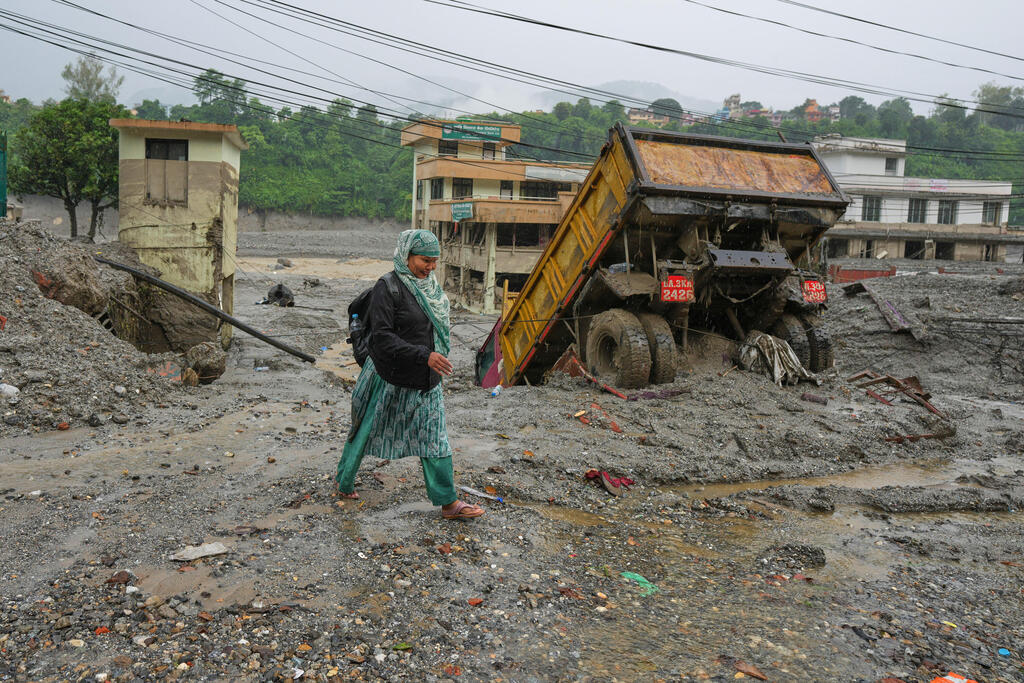
With rescue operations temporarily halted by the weather, Nepalese authorities are focusing largely on transporting survivors to the capital, Kathmandu.
Nepal’s foreign minister said the country does not need additional assistance with search and rescue operations but does need help extracting people trapped in tunnels, restoring transportation and communications where bridges have been destroyed, identifying bodies, conducting DNA testing and storing bodies for extended periods.
“We have already made requests for such specialised services and technical assistance in areas where we don't have enough expertise and technical know-how,” he told Reuters overnight.
China has called for international cooperation, while India sent three flights carrying about 60 metric tons of aid, including blankets, medicine and water purification tablets.
Rescue footage: Workers covered in mud crawl into a cave in Nepal
(Video: Reuters)
India is also planning to send a tunnel rescue team and a medical team and has offered its disaster response force and technical teams to assist with reconstruction.
‘Our world turned upside down’
Families around the world are closely following the search for people missing in the disaster, many of whom are foreign tourists who had been traveling in the region.
“We don’t know anything,” Mukti Patel, a Virginia resident whose father, sister, brother-in-law and her brother-in-law’s mother disappeared in the flash floods, told The Associated Press.
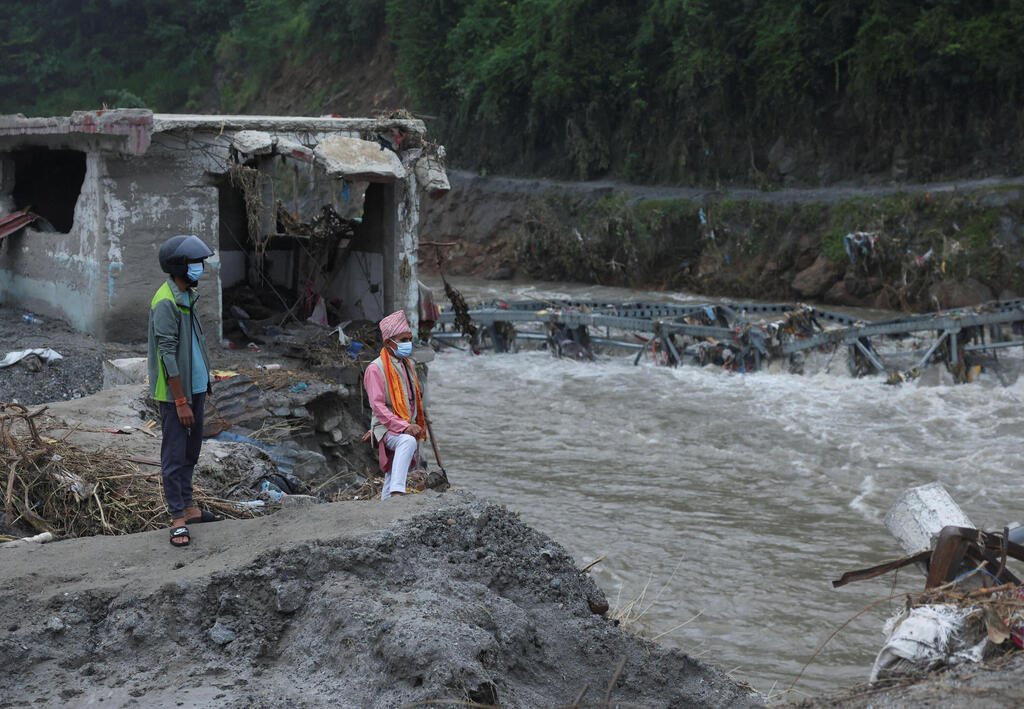
Flood damage in Nepal
(Photo: REUTERS/Francis Mascarenhas)
Patel knows the hotel where her relatives were staying was badly damaged but is holding out hope that they survived.
Sanket Pandey, the head of a company that organizes tours in the region, told the AP that 40 travelers and seven tour guides who had traveled to the area were missing. The company, which has an office in Baltimore, had organized a two-week trip to the region. Families are now trying to gather any information they can.
“It’s really difficult to have nothing,” Pandey said.
Jiwan Jyoti, a 50-year-old U.S. citizen from Massachusetts, was traveling with the group and is among those missing.
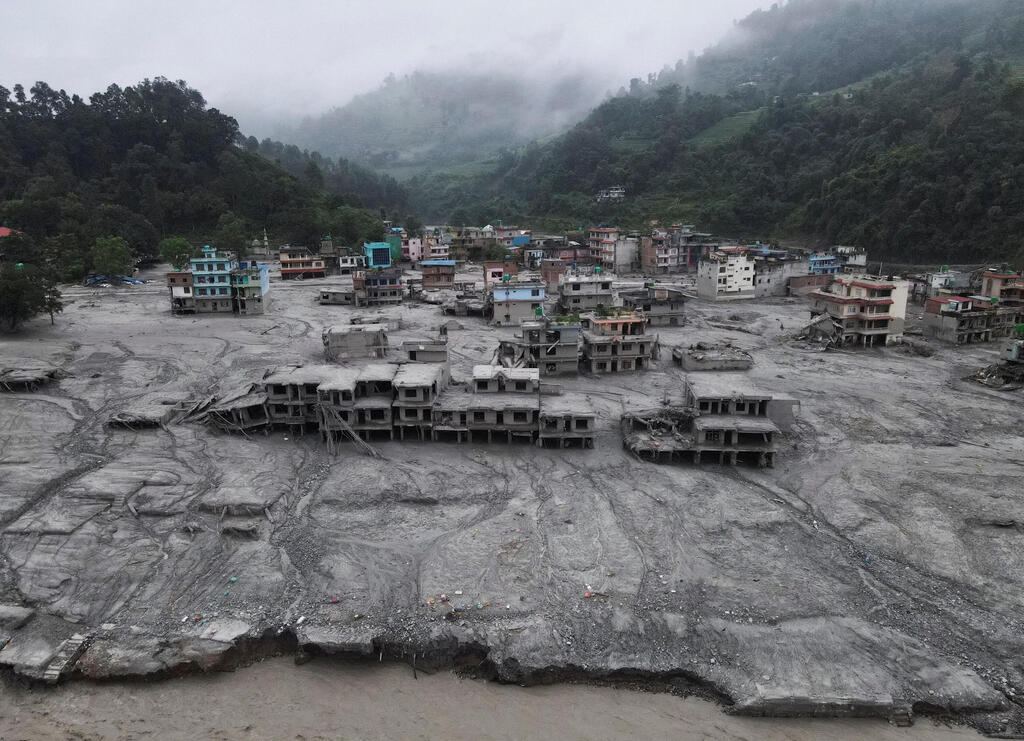
Nepal
(Photo: REUTERS/Francis Mascarenhas)
“They had stopped in Timure, Nepal, before they were set to leave for a pilgrimage to Mount Kailashin Tibet, a sacred site for Hindus, Buddhists and others,” a friend said.
Jyoti called her family while eating breakfast Wednesday and preparing to cross the border into Tibet.
Her friend said the call ended “at around 8:40 a.m. local time in Nepal, and then I think around 8:45, this flash floods came, and then our world turned upside down.”
She later learned that the hotel where Jyoti had been staying — and where Apple’s Find My app last recorded her location — had been completely destroyed.
“She was essentially almost in the epicenter over there,” the friend said.
Vaasavi Unnava believed her parents had already crossed into Tibet with the same tour group when she learned of the flooding.
“I was not really that worried, but I just sent them a text like to be sure,” she said.
The WhatsApp message was never delivered.
Her parents had set out on a retirement trip and were excited about spending two months with family in India after climbing Mount Kailash. The California couple are among dozens of U.S. citizens reported missing in the floods.
“They were so, so excited. My dad was talking about finally getting to spend time with his mother,” Unava said.
Video circulated on Chinese social media over the past day appeared to capture the collapse of part of the glacier that triggered the catastrophic flooding.
Video circulated on Chinese social media appeared to capture the collapse of part of the glacier that triggered the catastrophic flooding
The drone footage was recorded at an altitude of more than 7,200 meters (23,600 feet) above sea level. Amid clouds and snow-covered peaks, a massive cloud of dust can suddenly be seen rising as part of the glacier crashes into the valley floor roughly 1 kilometer (0.6 mile) below. An analysis by the BBC found that the location corresponded with the direction in which the floodwaters traveled down the Trishuli River.
Other dramatic footage emerged from Bidur, a town downstream along the Trishuli River, and was verified by international media outlets. The video showed several people sheltering on a balcony of a building that withstood the massive flood as waves of water and mud surged beside it.
Some of the people were later seen standing on the same balcony after the water level had fallen, surrounded by mud and debris. One woman was seen waving a red cloth from the roof in an apparent appeal for help.
Drone footage shows the Trishuli River blanketing the surrounding area in mud
(Video: Reuters)
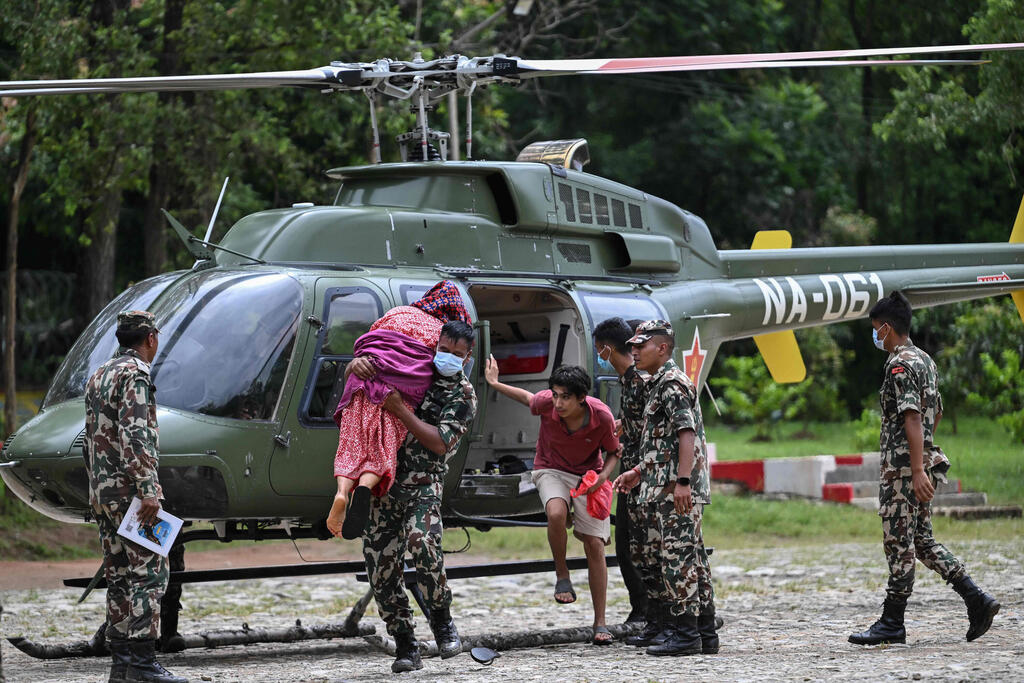
Nepal’s rescue efforts have relied heavily on helicopters because the massive torrent that struck the border region with Tibet — already difficult to traverse because of its mountainous terrain — swept away dozens of bridges and blocked more than 40 kilometers (25 miles) of roads.
In some cases, rescuers have descended from helicopters on ropes before hoisting survivors to safety.
Among those rescued was Dibga Tamang, who was evacuated from Rasuwa district Thursday.
“All of our people have gone. They are dead,” he said. “I have no one left waiting for me. Everything and everyone is gone. The end.”
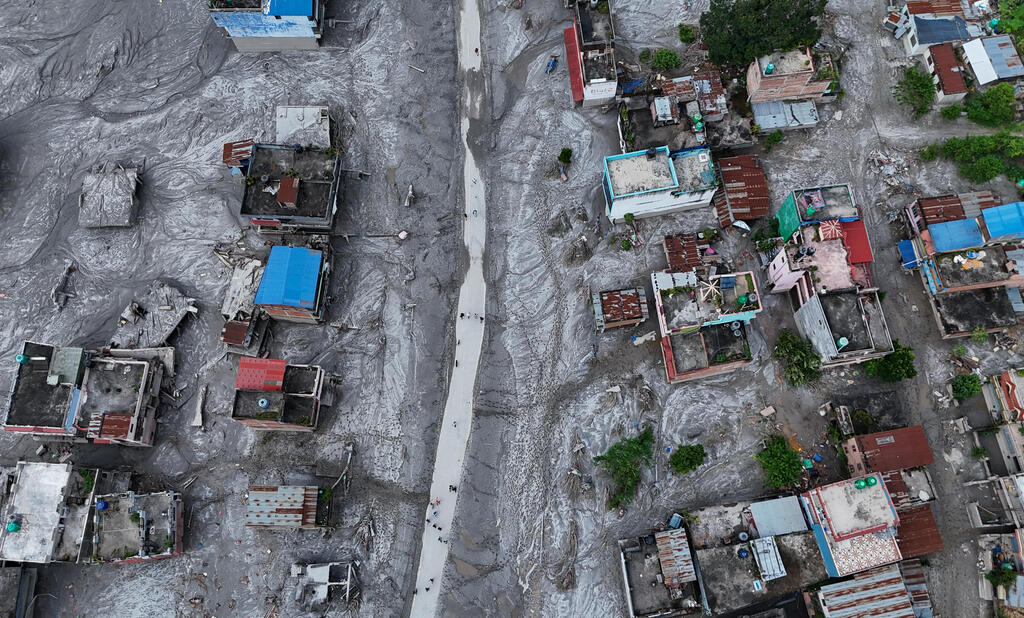
Destruction in Nepal after the floods
(Photo: Ritesh Shukla/Getty Images)
More than 3,200 people have been evacuated by helicopter from the disaster zone, mainly to Kathmandu, according to Nepal’s disaster management authority.
Customs officer Karbir Gaire, one of the survivors in Timure, a Nepalese village near the Chinese border, arrived at work at 8 a.m. Wednesday. He said he felt the ground shaking while he was working.
“Right after the shake, I noticed a black storm coming towards us. We all immediately started running out, and within a few seconds, we were climbing uphill on the opposite side of our office building,” he said. “I think those 10 or so seconds saved some of us.”
Disaster, step by step
The collapse
At an elevation of about 5,200 meters (17,100 feet), part of the glacier broke away and collapsed. It plunged roughly 1 kilometer (0.6 mile) into the valley below, initially leading to suspicions that an earthquake had struck.
It was later determined that the seismic energy, equivalent to a magnitude 5.2 earthquake, was generated directly by the avalanche of ice and rock crashing above ground rather than an earthquake triggering the collapse.
The movement
The enormous mass of ice, rock and mud crashed into the Lende Khola, a tributary of the Bhote Koshi River along the Himalayan border between Nepal and Tibet.
According to a Chinese government geologist, the avalanche traveled at about 50 meters per second, or roughly 180 kilometers per hour (112 mph), for more than 20 kilometers (12 miles), leaving people with little time to react.
Nepal
(Photo: Arun SANKAR / AFP)
A ‘wall’ surges downstream
The water and debris did not move like an ordinary flood but instead formed a massive wave of mud that grew higher as it advanced.
One account described it as resembling “liquid cement.” The Trishuli River rose by about 9 meters (30 feet) in half an hour.
Tibet hit first
The massive flow traveled downstream into Gyirong County in Tibet. The Tibet-Nepal border crossing was severely damaged and almost entirely buried under mud.
Some people described the area Thursday as a place where civilization had effectively disappeared. Buildings, roads and bridges were swept away as the torrent continued toward Nepal.
The flood enters Nepal
The torrent continued through the river system into Nepal, traveling about 100 kilometers (62 miles) downstream while dropping roughly 4,500 meters (14,800 feet) in elevation.
The floodwaters swept away infrastructure, destroyed villages and cut off entire communities.
The fear: Another flood
The disaster created two new lakes on opposite sides of the border. Authorities in both countries have warned that the lakes could breach, potentially unleashing another destructive wave of flooding.