

The scale of the disaster that struck Nepal is becoming clearer by the hour. So far, the death toll from the flooding stands at 469, while about 1,300 people remain missing — more than half of them foreign nationals. While many countries have said they will send assistance, Nepal's Foreign Ministry said there is no need for foreign teams.
"Our security forces are currently carrying out search and rescue operations. At this time, we do not need assistance," the ministry said.
The day after: Footage from the disaster zone on the Nepal-Tibet border
(Footage: Reuters)


Meanwhile, rescue teams in Nepal are trying to reach more than 100 workers trapped in a tunnel near the site of a hydroelectric dam construction project. The Nepalese army said two helicopters are operating at the scene, while rescue teams are struggling to locate the tunnel's entrance and exit because of the flooding. In the capital, Kathmandu, crowds gathered to report missing family members and try to find out what happened to them.
The flooding struck the border area with Tibet, and the Chinese government said rescue efforts had been suspended because of a threat posed by a dam overlooking the area. Chinese media explained that "water began overflowing and flowing toward the border, so rescue teams were ordered to remain in place and await further instructions." Stormy weather is expected in the area over the coming days, further complicating search operations.
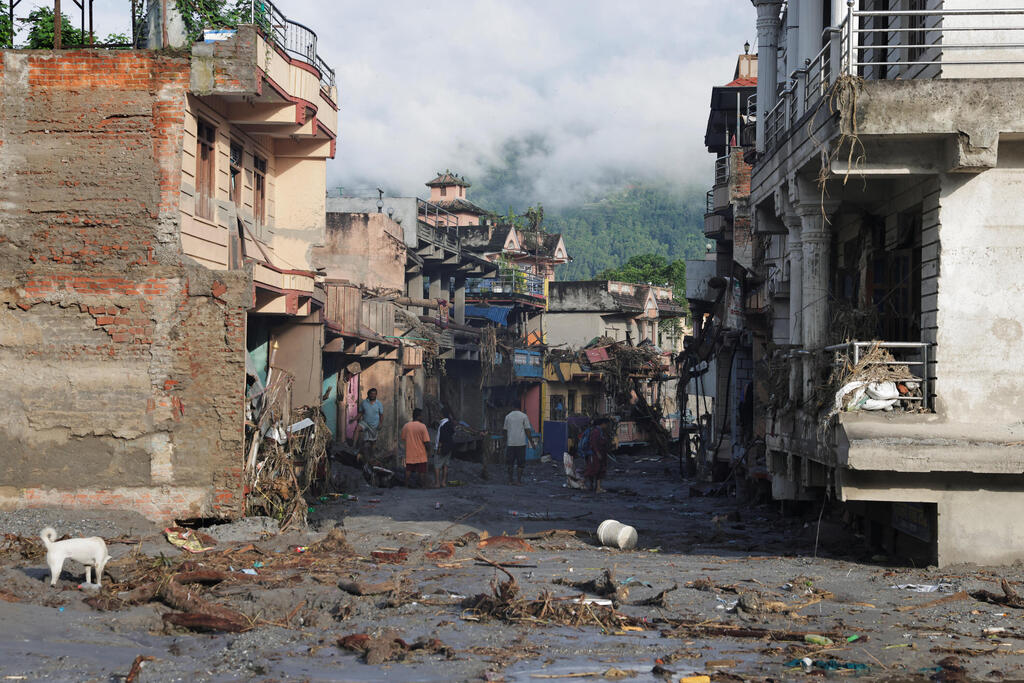
People missing from more than 30 countries
The flood hit a popular route frequented by tourists and pilgrims. In summer, many believers visit the area around Mount Kailash, which is sacred to Hindus and Buddhists. On Wednesday morning, a group of 77 tourists was in the area, including a 60-year-old Israeli man, and contact with them has since been lost. Reports said about 700 people were at a border checkpoint between the two countries when the flood struck. Among them was a group of travelers that was apparently "completely swept away by the current," according to the manager of the tourism company that organized the trip.
Aerial footage of the disaster: The Trishuli River in Nepal covered the area in mud
(Footage: Reuters)
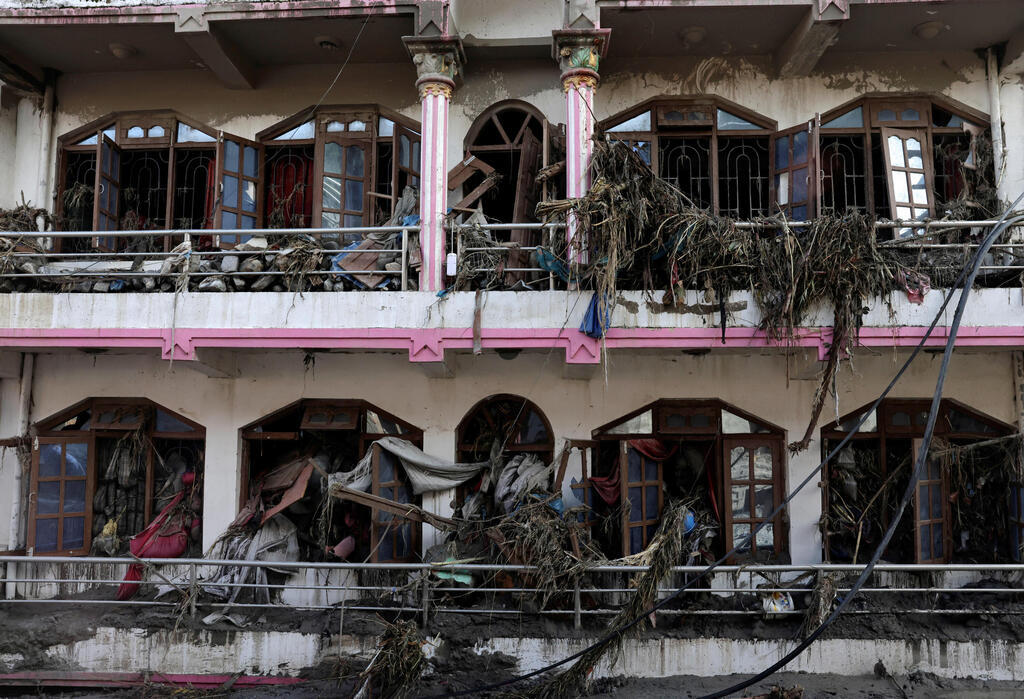
Tourist and pilgrimage area
(Photo: REUTERS/Navesh Chitrakar)
Nepal: The country's National Disaster Risk Reduction and Management Authority said the death toll had risen to 469, while 977 people remained missing. According to local reports, the missing include 113 Nepalese tourists, 85 members of the military and police forces, 161 residents of Rasuwa district and one resident of Nuwakot district.
China: Chinese media reported that at least three people were killed and 558 were missing in Gyirong County in Tibet. China's Foreign Ministry said nearly 100 Chinese citizens were missing on the Nepalese side of the border. India: India's Foreign Ministry said 288 Indian citizens had yet to make contact with authorities. Among the missing are 73 people who worked on a power plant project. Nepalese officials said many Indian tourists were in the area on their way to Mount Kailash in Tibet, a sacred site for Hindus.
United States: The U.S. State Department said 90 American citizens were missing in China and Nepal. It said there were no known American fatalities at this stage. Three American citizens have been rescued. Ukraine: Ukraine's Foreign Ministry said 55 Ukrainian citizens were missing, including two tourist groups — one consisting of 47 people and another of seven — as well as a Ukrainian woman who was traveling with an international group. Malaysia: 51 Malaysian citizens were missing. Australia: 39 Australian citizens were missing.
The disaster in Nepal: Water races down slopes and buries homes
United Kingdom: 33 of those missing were British citizens. Canada: 25 Canadian citizens were missing. South Korea: Nine South Korean citizens working on the construction of a hydroelectric power plant in Nepal were missing. Singapore: Eight Singaporean citizens were missing. Germany: Eight German tourists were missing. Russia: Eight Russian citizens were missing, according to the Russian Embassy in Nepal. South Africa: Six South African citizens were missing. Latvia: Six Latvian tourists were missing. Japan: Five Japanese tourists were missing — a couple and their children. New Zealand: Five New Zealand citizens were missing. France: Four French citizens were missing. Belgium: Three Belgian citizens were missing. Spain: Three Spanish visitors were missing.
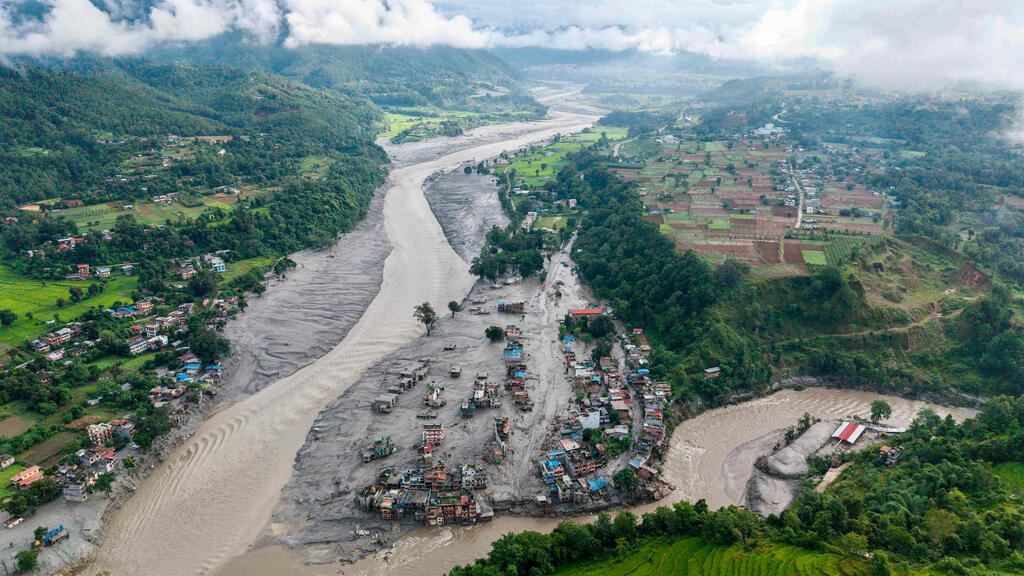
People missing from more than 30 countries
(Photo: Prabin RANABHAT / AFP)
In addition, two citizens from each of Italy, Kazakhstan, Portugal, Ireland and the Netherlands were missing. Ten additional citizens — one each from Belarus, Finland, Hungary, Israel, Lithuania, the Philippines, Bulgaria, Switzerland, Serbia and Sweden — were also listed as missing.
Like 'liquid concrete'
The powerful wall of water that swept through the mountain valleys was loaded with silt, sand, gravel and large rocks, all of which were carried along together like a single fluid. Hatem Sharif, a hydrologist at the University of Texas, San Antonio, compared the mixture to "liquid concrete."
The footage from the disaster is terrifying: A massive torrent sweeps away residents and vehicles
(Footage: Reuters)
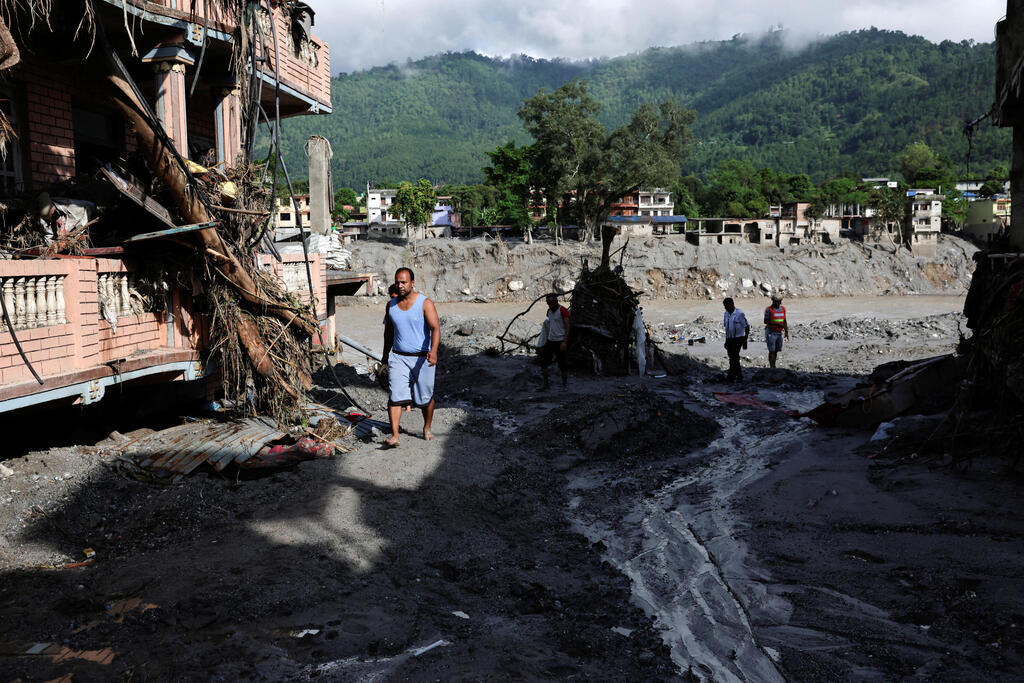
Flooding in Nepal
(Photo: REUTERS/Navesh Chitrakar)
At the same speed, “this material hits a building with roughly twice the force of water,” Sharif said. He added that the flood wave was capable of carrying "rocks the size of cars."
The sediment made rescue efforts even more dangerous. Debris can retain water for a long time, making the ground "unpredictable and dangerous," Sharif explained. While one section may support a person's weight, an adjacent area could cause them to sink up to their waist. Depth is another problem. According to Sharif, flooding in some areas may reach several meters deep, meaning searches for survivors are being conducted slowly by probing the debris by hand.
Flooding in Nepal
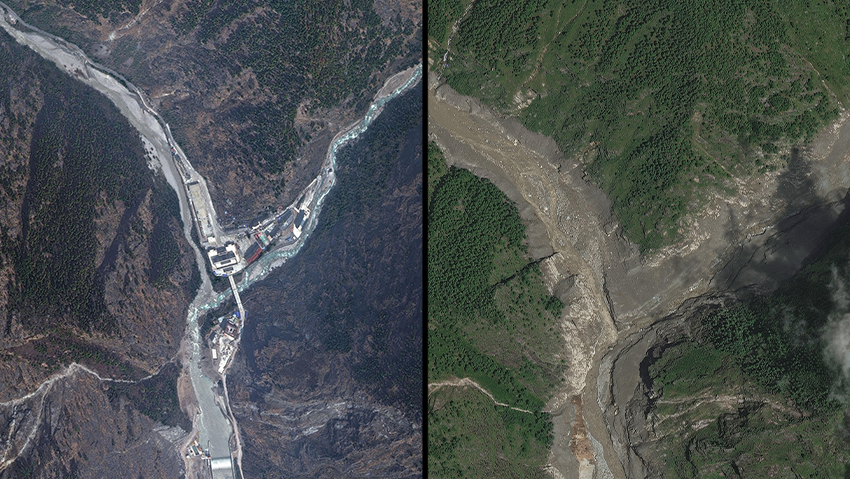
The flood wave reached 193 kph: Before-and-after images
(Photo: Vantor/Handout via REUTERS)
Satellite images taken before and after the disaster led scientists to conclude that a huge mass broke away from a glacier on a mountainside. It plunged into the river below — a nearly 2-kilometer vertical fall — while a similarly sized section of rock also collapsed. The resulting flood, a massive wave of water, shattered ice and rocks, "descended the first 22 kilometers (13.7 miles) at an average speed of 193 kilometers per hour (120 mph),” said Jeffrey Kargel, a senior scientist at the Planetary Science Institute, a non-profit institute.
The disaster on the Nepal-Tibet border occurred on Wednesday at around 9 a.m. local time, when a massive mass of ice, rocks and mud collapsed into the Lhende Khola River, a tributary of the Bhote Koshi River along the Himalayan border between the two countries. The collapse caused the river to overflow, sending a torrent of water that triggered devastating floods on both the Nepalese and Tibetan sides of the border.
Images and videos from the area show the massive surge of water racing down the slopes, ripping bridges from their foundations and destroying homes with their occupants inside. In one video that went particularly viral, filmed by a security camera on the Tibetan side of the border crossing between China and Nepal in Gyirong County, people can be seen noticing the enormous torrent rushing toward them and trying to flee.
The water then bursts through with tremendous force, surging between buildings, parking lots and access roads and burying and sweeping away everything in its path, including buses and other vehicles that are overturned, crushed and reduced to mangled wreckage.