

As security tensions surrounding a possible American strike on Iran remain at their peak, and the United States continues to build up forces across the Middle East, Tehran on Sunday sent a direct and threatening message toward Washington in an effort to deter President Donald Trump from attacking the Islamic Republic.
A massive banner was hung in Revolution Square in central Tehran depicting a bombarded American aircraft carrier, with fighter jets above it. The carrier is shown cutting through the water while leaving behind what appear to be ‘paths of blood’, blending with the sea foam to resemble a ‘bleeding’ US flag. Alongside the image appears the English proverb: ‘If you sow the wind, you will reap the whirlwind’.
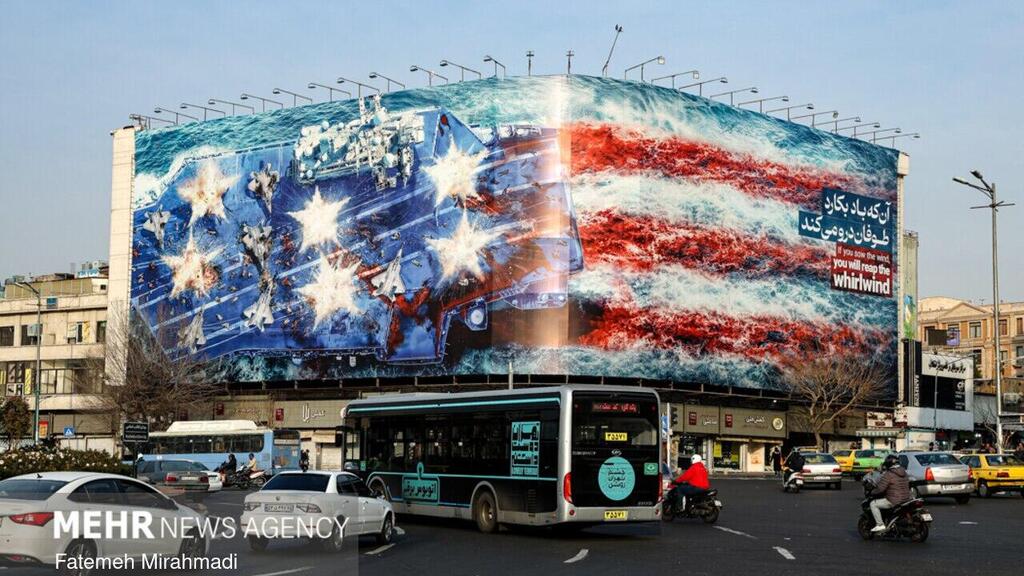
The banner was displayed against the backdrop of a significant US military buildup in the region, centered on the aircraft carrier USS Abraham Lincoln, which is making its way to the Middle East with its strike group, including Arleigh Burke-class destroyers armed with Tomahawk cruise missiles. It also comes amid Trump’s warnings over the weekend, when he said: ‘We have a big armada on the way to Iran. They know what we want, and maybe we will not have to use it.’
In recent days, Iranian officials have issued a series of deterrent messages signaling readiness for war. Iran’s Defense Ministry claimed that ‘the quantitative and qualitative capabilities of Tehran’s missile force have grown compared to the “12-day war”’, while Revolutionary Guards commander Mohammad Pakpour warned that ‘our forces are more prepared than ever, with their finger on the trigger’. Over the weekend, a senior Iranian official threatened that Tehran would ‘treat any strike as an all-out war against us’. Speaking to Reuters, he said: ‘Our military is ready for the worst-case scenario. All systems in Iran are on high alert. We will treat any attack as a total war and respond in the harshest way.’
Despite the belligerent rhetoric, some reports suggest Iran is taking unusual precautionary measures. The opposition-linked Iran International channel reported on Saturday that Supreme Leader Ali Khamenei had ‘moved to a special underground shelter in Tehran’ after senior military and security officials warned of an ‘increased risk of a possible American strike’. The London-based Persian-language outlet said the fortified site includes connected tunnels. It also reported that Khamenei’s third son, Masoud Khamenei, has ‘assumed day-to-day management of the leader’s office and serves as the main communication channel with the government’s executive bodies’.
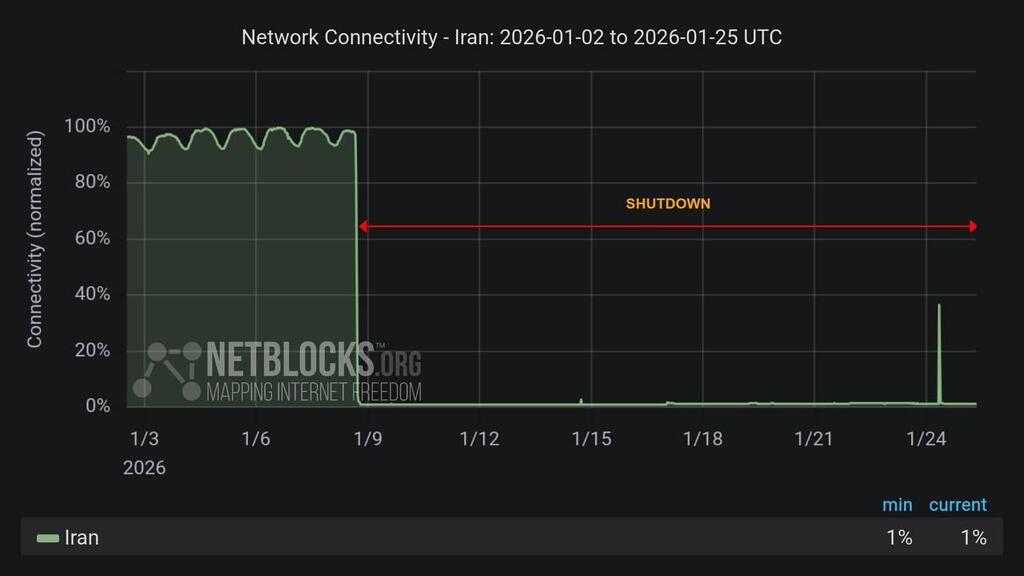
More than 400 hours offline. Internet access in Iran after 17 days of digital darkness
(Photo:NetBlocks)
Against the security tension, Sunday marked the 17th consecutive day of internet restrictions in Iran, totaling more than 400 hours since the regime shut down the network on January 8, on the eve of a major escalation in protests. According to NetBlocks, which monitors global internet access, some users have managed to send messages and access limited regime-approved services. However, despite brief spikes in availability, the country remains largely in digital darkness.
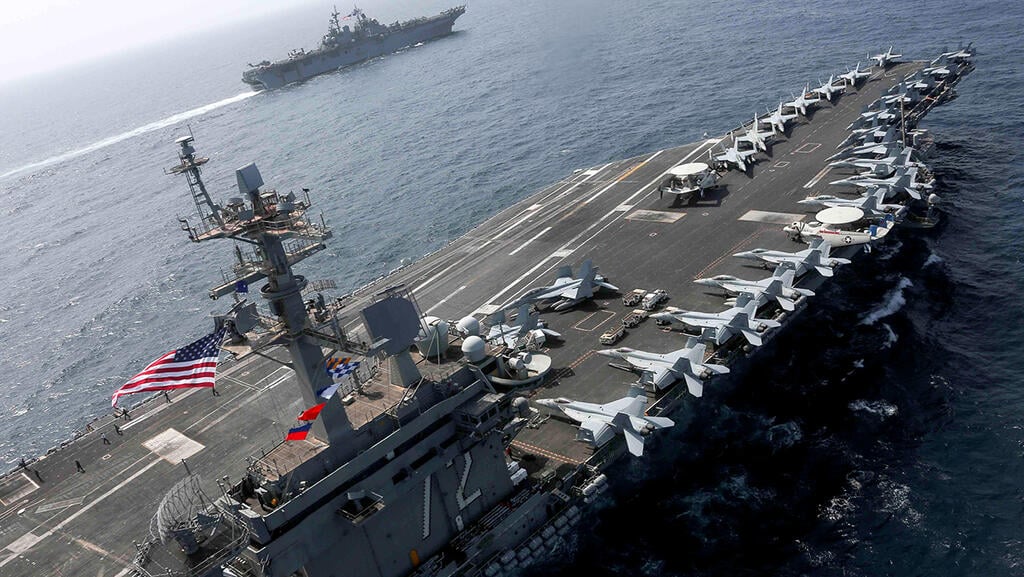
The aircraft carrier USS Abraham Lincoln
(Photo: Reuters)
The protests erupted late last month, and the regime’s brutal crackdown led Trump to issue repeated warnings to Tehran not to harm demonstrators. He also promised Iranian protesters that ‘help is on the way’, fueling further tensions and counter-threats from the regime. About a week and a half ago, Trump described Khamenei as ‘a sick man who needs to lead his country properly and stop killing people’, adding that ‘it is time to change leadership in Iran’.
Khamenei ordered to ‘crush the protests’
The scope of the atrocities stemming from the violent suppression of mass protests across the Islamic Republic continued to emerge on Sunday. TIME magazine cited two senior Iranian Health Ministry officials who said that as many as 30,000 people may have been killed over just two days, January 8 and 9. The officials said the dramatic surge far exceeded the figures acknowledged so far by Iranian authorities.
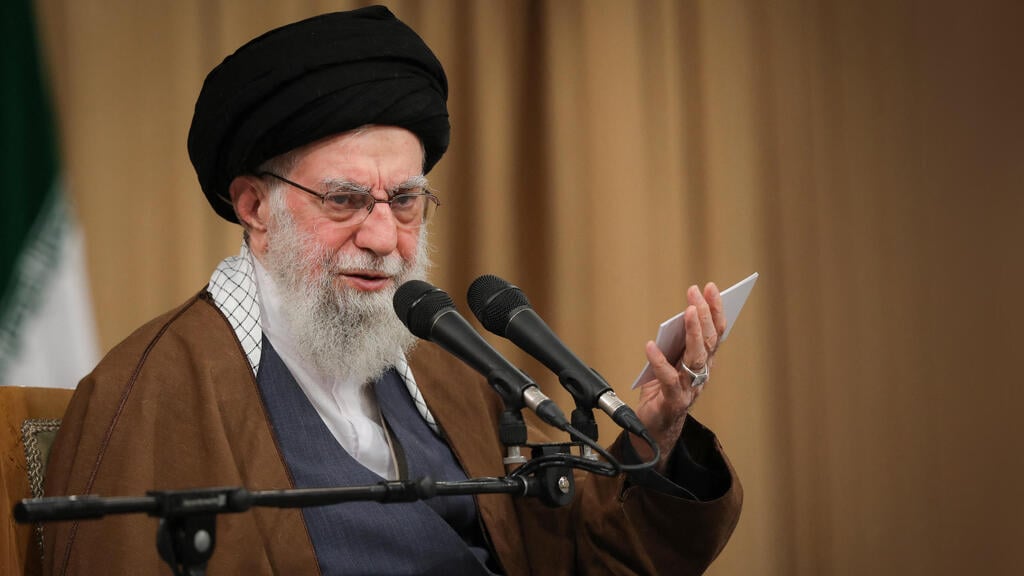
Ordered to ‘crush the protests by any means necessary’. Khamenei
(Photo: KHAMENEI.IR / AFP, West Asia News Agency)/Handout via Reuters)
‘So many people were slaughtered by Iran’s security services during those days that the state could not handle the bodies,’ they said. ‘The supply of body bags ran out, and heavy trucks replaced ambulances.’
Iran’s Foreign Ministry spokesman Esmail Baghaei predictably denied the TIME report, calling it a ‘Hitler-style lie’. On Wednesday, Iran released its first official update on protest-related deaths, claiming 3,117 people were killed. The regime said it does not bear responsibility for the deaths of demonstrators, asserting that 2,427 of the dead were civilians and security personnel who were ‘innocent victims’. According to the regime, the remaining victims were ‘terrorists’.
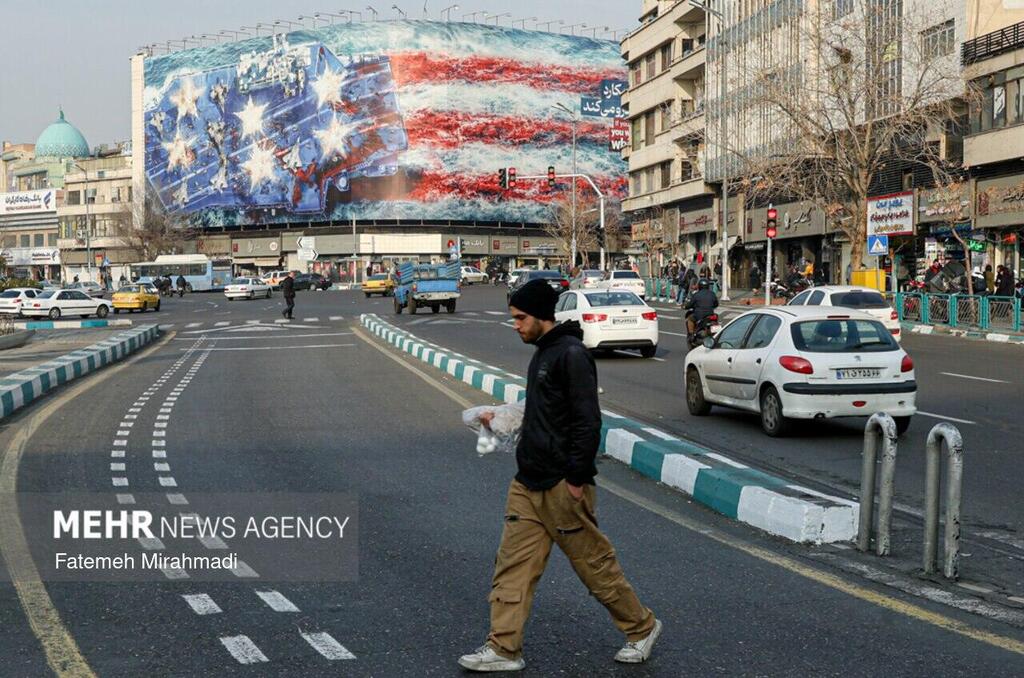
The threatening banner in Tehran
Human rights organizations say the true numbers are far higher, though still below those cited by TIME. The US-based Human Rights Activists News Agency reports at least 5,459 deaths, noting the toll is not final. It also says more than 40,000 people have been arrested. The death toll is higher than in any previous wave of protests in Iran over recent decades.
Amid the grim reports, The New York Times reported on Sunday that Khamenei ordered Iran’s Supreme National Security Council on January 9 to ‘crush the protests by any means necessary’, according to two Iranian officials briefed on the directive. Following the order, security forces were deployed with instructions ‘to shoot to kill and show no mercy’, the officials said, leading to a sharp rise in casualties.
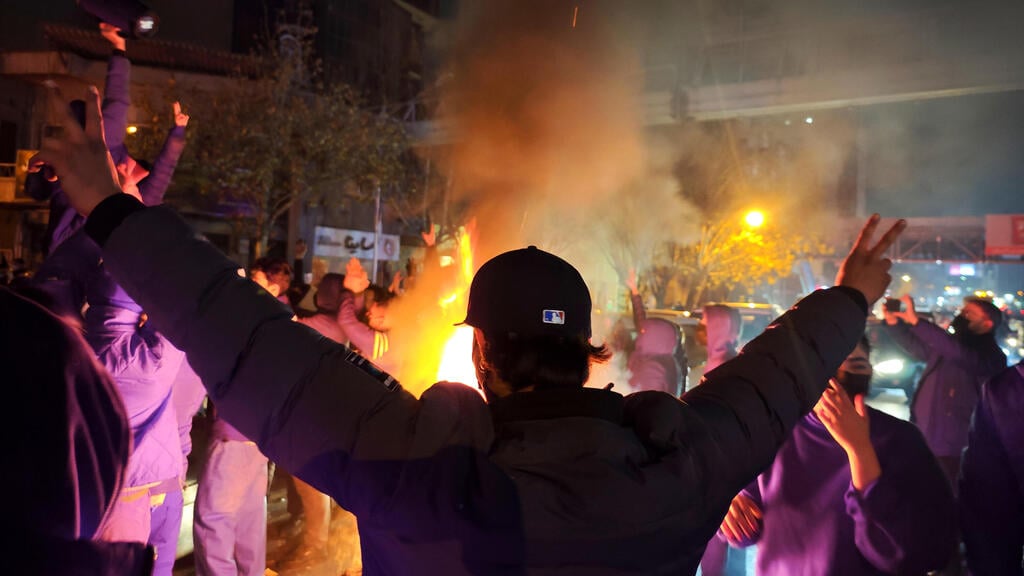
‘We saved the lives of people shot by their own government.’ January 8, Tehran
(Photo: Anonymous/Getty Images)
The Times said it verified dozens of videos, among hundreds sent out by Iranians despite the internet shutdown. The footage, dating from early January, shows Iranian security forces opening live fire on protesters in at least 19 cities and at least six neighborhoods in Tehran. In the capital, forces were filmed shooting at demonstrators from the roof of a police station. In Karaj, they fired on a protest march, striking a man in the head. In Isfahan, live gunfire and explosions were heard as young people filmed themselves barricaded in an alley.
‘It will haunt me for the rest of my life’: doctors’ testimonies from Iran
The videos, alongside testimonies from medical staff and graphic images of hundreds of bodies in morgues, point to the scale and intensity of the crackdown. The Times interviewed dozens of Iranians, including civilians, medical workers and protesters from cities such as Tehran, Isfahan and Shiraz. All spoke anonymously for fear of their lives.
Armed forces patrol the streets in Iran


Eight doctors and one nurse told the Times through interviews and messages that thousands of wounded protesters flooded hospitals during the crackdown. They said they were unprepared for the scale of gunshot injuries they encountered. They described scenes of chaos in Tehran, Mashhad and Isfahan, as medical teams struggled to save lives while the wounded lay on benches, chairs and floors in intensive care units. They also described shortages of blood supplies and surgeons, while the internet blackout prevented staff from checking patients’ identities and medical histories.
A nurse at a Tehran hospital described it as a ‘war zone’. A doctor at another hospital in the capital said teams received an average of 70 protesters with gunshot wounds per hour during the peak protest days of January 9 and 10. Many arrived dead or died shortly after. A doctor in Mashhad described ‘terrifying’ scenes and said security forces demanded access to hospitalized patients in order to arrest them. He said doctors set up an improvised triage center in a villa outside the city to treat injured protesters who were afraid to go to hospitals. An anesthesiologist at another Tehran hospital said they treated 300 protesters in a single night. In Zanjan, a doctor said most protesters were shot in the upper body, head or neck, and that about 200 deaths were recorded at his hospital.
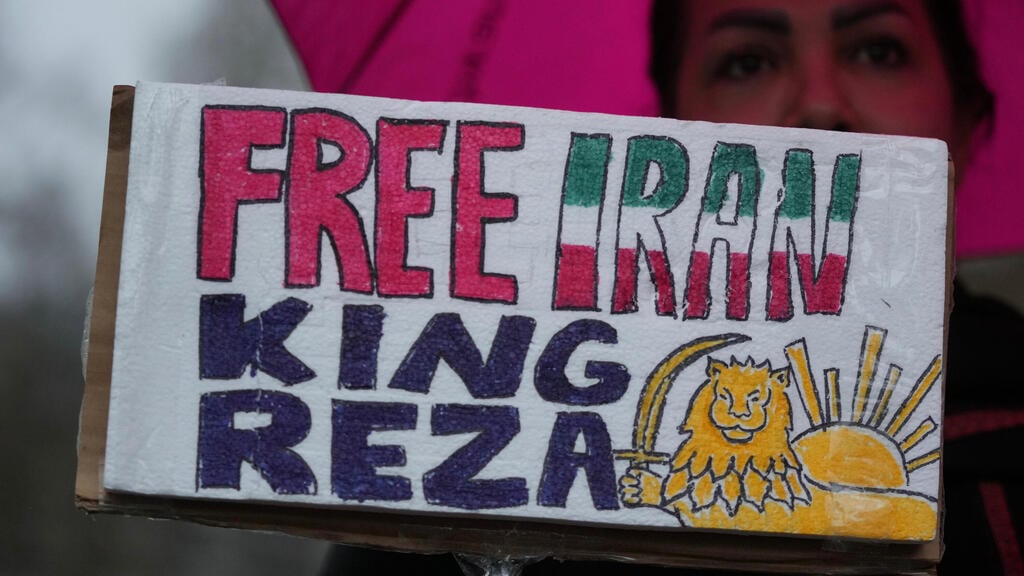
A demonstration in support of the protests in Iran in London
(Photo: Kin Cheung/ AP Photo)
At an eye hospital in Tehran, about 500 cases of injuries from air rifle pellets were recorded on January 8, followed by hundreds of live-fire injuries over the next two nights, after Khamenei’s order to crush the protests. A surgeon there said he spent three consecutive nights in the operating room and ‘wanted to die’ after being forced to remove the eyes of a 13-year-old boy due to severe injuries.
Crowds of protesters in Tehran turn on flashlights after a power outage. January 10
Another doctor in Isfahan described the horrors he witnessed: ‘Young people were brought in with bullets in their heads. A mother was shot in the neck while her two small children cried in the car. A child was shot in the bladder and waist. What I saw will haunt me for the rest of my life. I feel guilty that I am alive.’
‘I have never seen anything like this, something inside you breaks’
Another surgeon in Tehran published an anonymous account in Britain’s Guardian. He said that on the evening of January 8, around 8:10 p.m. local time, after the internet was cut and apps like WhatsApp stopped working, the nature of injuries changed dramatically. Security forces switched to live ammunition, and the wounds became life-threatening. Gunfire and explosions echoed through the streets. He was called in for an emergency shift and quickly realized ‘we were no longer dealing with the same situation’. ‘These were battlefield rounds. There were no warning shots. The bullets were meant to penetrate the body,’ he said. Doctors worked nonstop until complete exhaustion. ‘There was no pause, no moment to step back and assess. You went from patient to patient, operating room to operating room. I worked during earthquakes and mass-casualty accidents. I have never seen anything like this.’
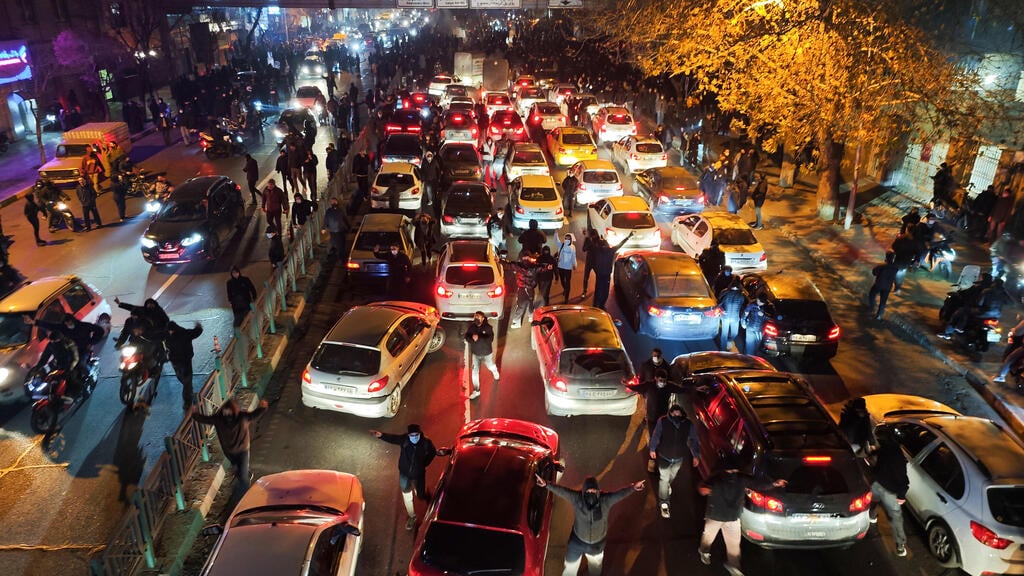
Traffic congestion following the protests in Tehran. January 8
(Photo: Anonymous/Getty Images)
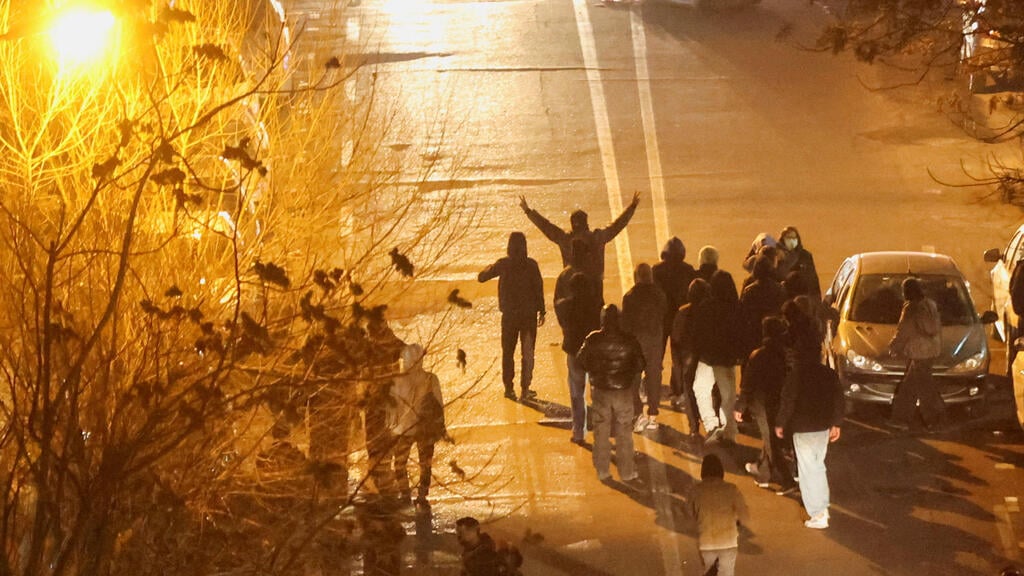
מפגינים ב טהרן 8 בינואר 2026 מחאה איראן
(Photo: Stringer/WANA (West Asia News Agency) via Reuters)
‘In disasters, you might get 20 to 30 patients over several hours. That night, and the next, there were hundreds. Gunshot wounds, severe injuries, one after another.’
Exhaustion, he said, was absolute, physical but above all mental. ‘As surgeons, our job is to save lives. That night, we were saving people shot by their own government. That contradiction stays with you. You keep operating because there is no choice, because patients keep arriving, but something inside you breaks.’ He said he heard weapons outside the hospital ‘that have no place on city streets’. ‘I heard machine guns, and later saw them mounted on pickup trucks driving through the city. As the night went on, it became impossible even to think about counting the dead. We had no way to collect accurate data. The number of casualties exceeded the capacity of hospitals, staff and infrastructure.’