

President Donald Trump said the situation with Iran is “in flux” and confirmed he has sent a “big armada” to the Middle East, hours after the aircraft carrier USS Abraham Lincoln arrived in the region, according to an interview published Monday night by the news site Axios.
Trump’s comments came amid growing concern in the region, reported by The New York Times, that the United States could launch a military strike against Iran in the coming days. Regional officials cited by the newspaper warned that such an attack could prompt retaliation against U.S. bases by Iran and its allies.
Gallery
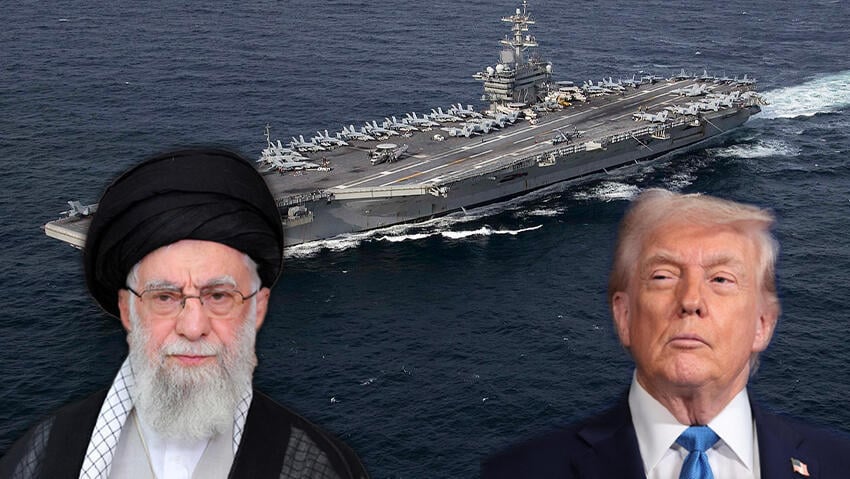
(Photo: REUTERS/Jonathan Ernst, Office of the Iranian Supreme Leader/WANA (West Asia News Agency)/Handout via REUTERS)
A U.S. official told The New York Times that the Abraham Lincoln is currently operating in the Indian Ocean and could, in theory, carry out military action within a day or two if ordered. The official noted that the United States also has other strike options, including fighter jets already deployed at bases across the Middle East. The aircraft carrier arrived in the region on Sunday accompanied by three destroyers. According to reports, the warships are equipped with Tomahawk cruise missiles with a range of about 1,500 to 2,500 kilometers, allowing strikes on strategic targets deep inside Iran from distant maritime positions.
“We have a big armada near Iran, bigger than Venezuela,” Trump told Axios, referring to the naval force he recently assembled in the Caribbean ahead of the capture of Venezuelan leader Nicolás Maduro earlier this month. That force included the aircraft carrier USS Gerald R. Ford, which had been redeployed from the Middle East, leaving the region with limited U.S. naval presence at the height of mass protests in Iran, when Trump publicly told demonstrators that “help is on the way.”
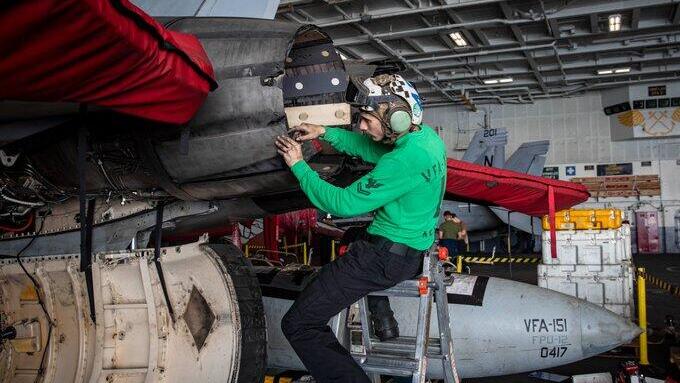
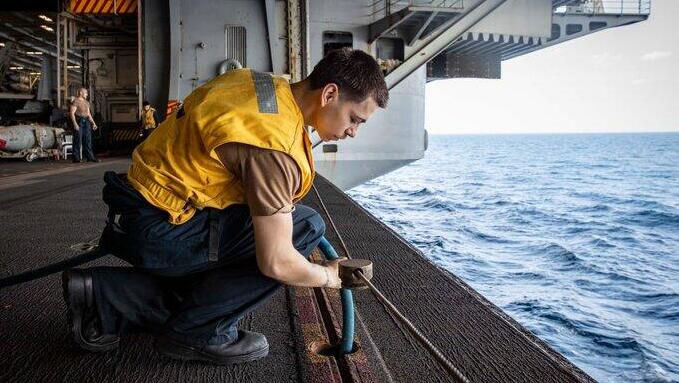
Photos released Monday by the US military showed troops operating aboard the aircraft carrier USS Lincoln
(Photo: US Central Command)
(Photo: US Central Command)
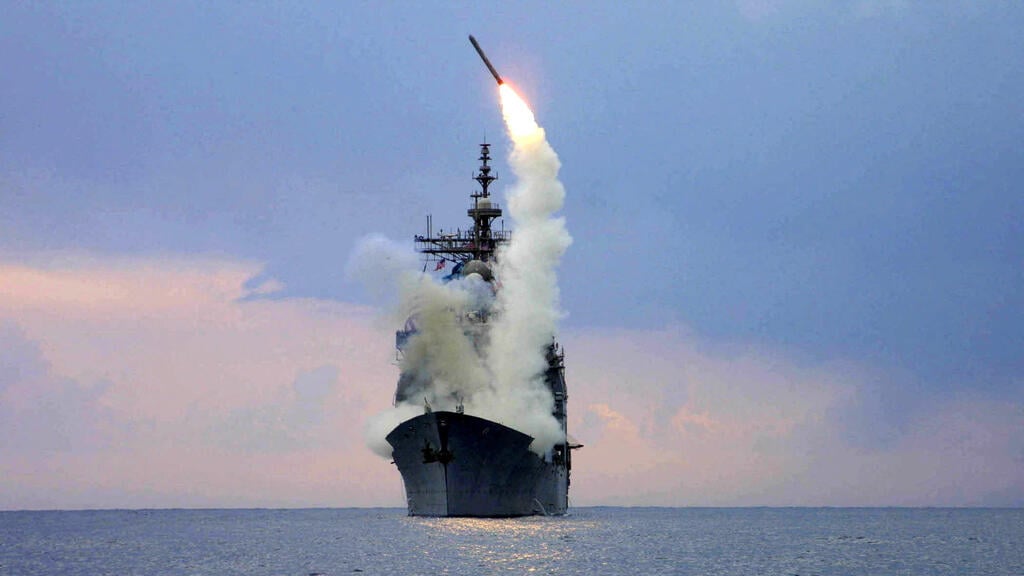
A Tomahawk missile is launched from the guided-missile destroyer USS Cape St. George, archive
(Photo: REUTERS/U.S. Navy/Intelligence Specialist 1st Class Kenneth Moll/File Photo/File Photo)
Trump declined to discuss specific operational plans presented by his national security team but emphasized that diplomacy remains an option. “They want to talk. I know they want to. They’ve called many times. They want to talk,” he said.
Shortly after the interview, a senior U.S. official said Washington remains willing to engage in dialogue with Tehran if Iran is prepared to do so. “We’re open for business, as they say,” the official said. “If they want to reach out and they know the conditions, we’ll have talks. The Iranians know the conditions very well.”
The U.S. warships now in the region began moving from the Asia-Pacific earlier this month as tensions escalated between Washington and Tehran following a violent crackdown on protesters opposing Iran’s clerical leadership. Trump repeatedly threatened intervention if Iran continued killing demonstrators and, at the peak of the unrest, vowed that U.S. assistance was imminent. The protests have since subsided, reportedly after the deaths of thousands. Trump said he had been told the killings had stopped and praised Iran’s leaders for what he claimed was a decision to cancel the execution of 800 detained protesters.
The U.S. military has previously bolstered its regional presence during periods of heightened tension, often citing defensive needs. However, last year saw a massive buildup ahead of U.S. strikes alongside Israel on Iran’s nuclear program during Operation Rising Lion. The B-2 bombers used in those attacks ultimately flew directly from bases in the United States, crossing the Atlantic en route to Iran. In addition to the carrier strike group now deployed, the Pentagon is also transferring fighter jets and air defense systems to the Middle East.
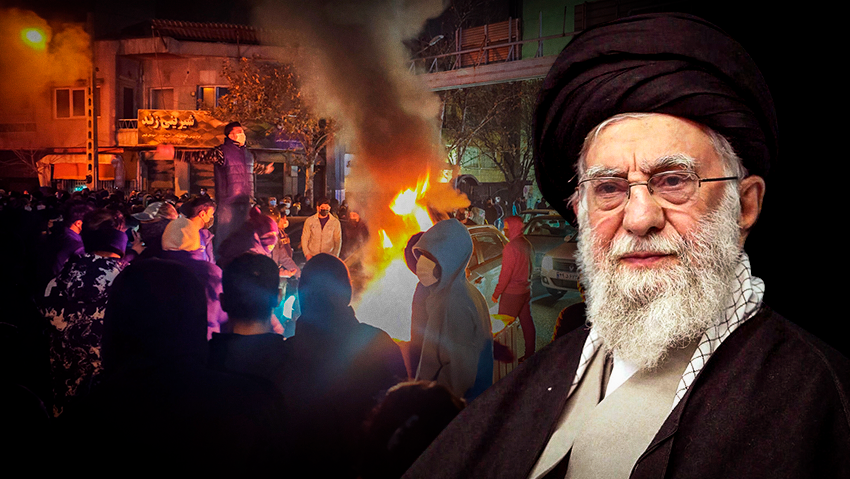
(Photo: Anonymous/Getty Images, AP)
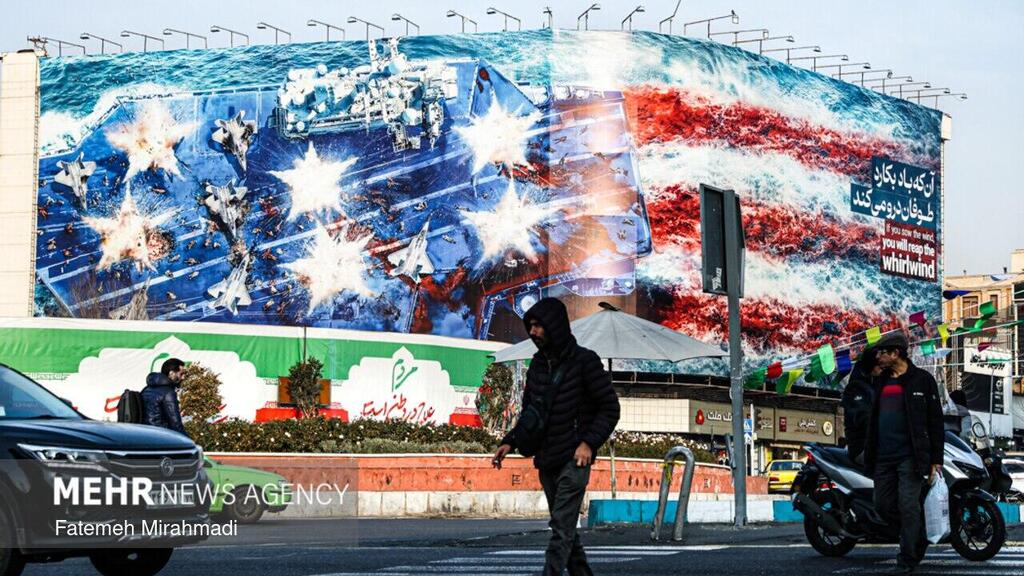
A threatening sign directed at the United States displayed in Tehran’s Revolution Square
Iranian media on Monday quoted a senior official in Iran’s general staff reiterating threats of a harsh response to any attack. “American aircraft carriers are not a deterrent. They will become targets,” the official said. “Iran will not start any war, but it will not allow any threat, even an initial one. Any scenario based on surprise is a miscalculation of our defensive and offensive capabilities.”
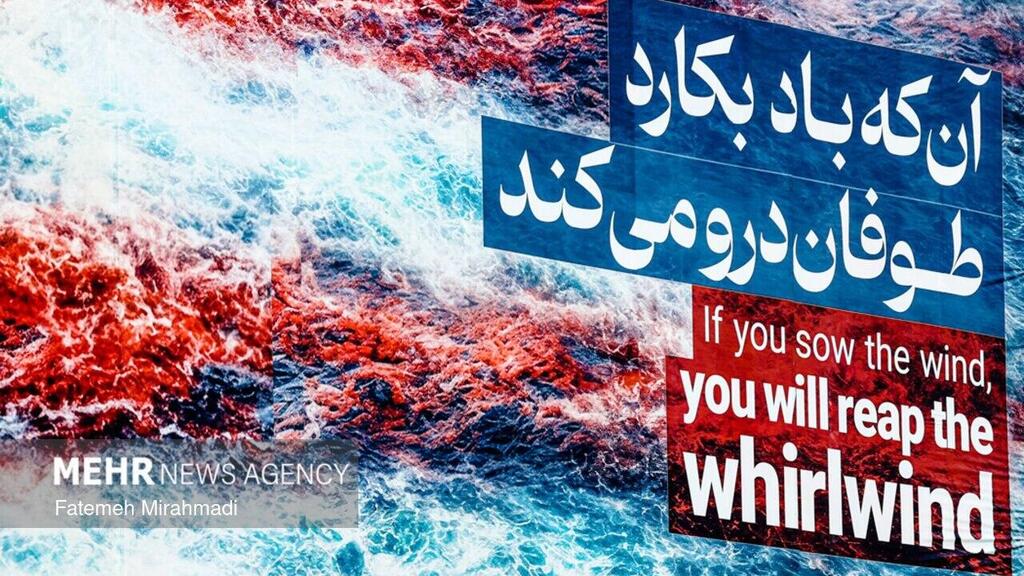
A senior Iranian official said last week that Tehran would treat any U.S. strike as an “all-out war.” On Sunday, a large billboard was erected in Tehran’s Revolution Square depicting a U.S. aircraft carrier under attack, leaving behind what appeared as bloody wake trails forming a “bleeding” American flag. Alongside the image was the English-language phrase: “If you sow the wind, you will reap the whirlwind.”
Prime Minister Benjamin Netanyahu also issued a warning to Iran amid fears it could retaliate against Israel if Trump follows through on his threats. “Our heroic soldiers are defending the State of Israel with extraordinary courage,” Netanyahu said. “The capabilities of the axis of evil are far from what they were on the eve of the war. Hamas in Gaza will be disarmed. Gaza will be demilitarized. This will happen, as our friend Trump said, the easy way or the hard way, but it will happen.” He added, “We will continue to stand guard against any threat from Iran. Any attempt by Iran to harm us will be met with a decisive response. It would be a very big mistake, one mistake too many.”
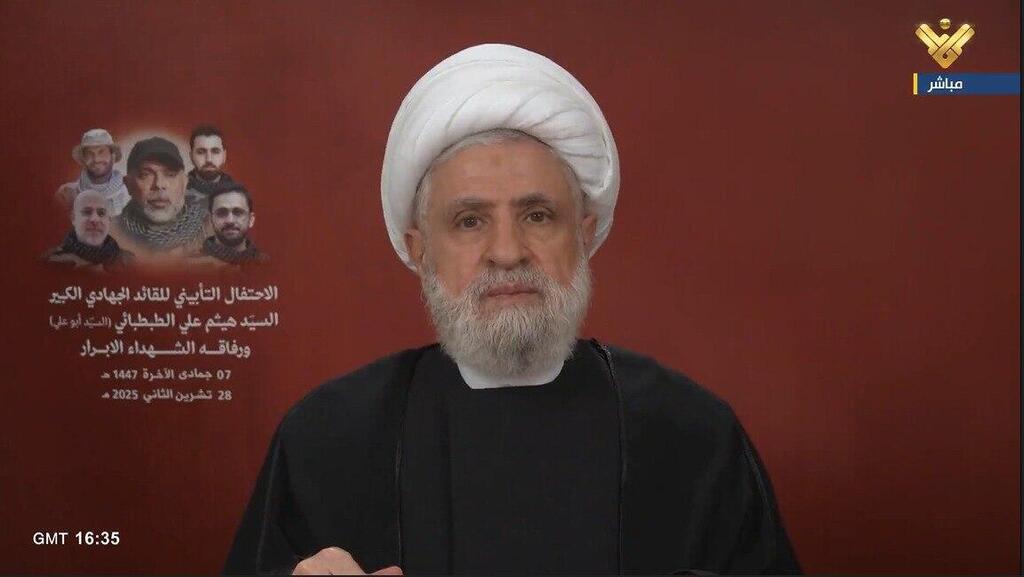
Hezbollah Secretary-General Naim Qassem: threatening, but noncommittal
A similar warning came from Hezbollah leader Naim Qassem, who said the group could respond if the United States attacks Iran, though he stopped short of a firm commitment. Qassem voiced support for Iran’s supreme leader, Ayatollah Ali Khamenei, whom some analysts believe the United States might seek to target. Iranian reports say Khamenei is currently sheltering in a bunker. “When Trump threatens him, he threatens millions, because he threatens their leader,” Qassem said. “This is a responsibility on all of us to confront this threat.” He added that assassinating Khamenei would amount to “an assassination of stability in the region,” warning that “this time, a war on Iran could ignite the entire region.”
Threats were also issued by Iranian-backed militias in Iraq. Kataib Hezbollah, the country’s most powerful Shiite militia, called on its fighters to prepare for possible war and warned that if the conflict escalates, its leadership could authorize “martyrdom operations.” A war against Iran, the group said, “will not be easy. You will taste every form of deadly suffering.” In response, Joe Kent, head of the U.S. National Counterterrorism Center, warned Iraqi officials in comments to The New York Times that any attacks by pro-Iranian militias on U.S. forces would be met with American strikes against those groups. Yemen’s Iran-aligned Houthi rebels have also issued threats in recent days, warning of renewed confrontation tied to a potential U.S.-Iran conflict.