

Amid historic voter turnout in Israel's 26th Knesset election, large numbers of Arab citizens turned out to cast their ballots Tuesday. According to television exit polls, the Joint List and Ra'am are projected to win a combined 16 to 18 seats, up from just 10 in the outgoing Knesset.
As of 8 p.m., nationwide voter turnout stood at 74.3%, with particularly high participation recorded in many Arab communities, including Bedouin towns and villages. In the village of al-Aryan in Wadi Ara, turnout reached 90.7%, followed by Sakhnin at 83.5%, Kafr Qasim at 81.3%, Rahat at 79.8%, Kuseife at 78.6%, Bir al-Maksur at 77.6%, Tira at 77.5% and Hura at 76.3%.
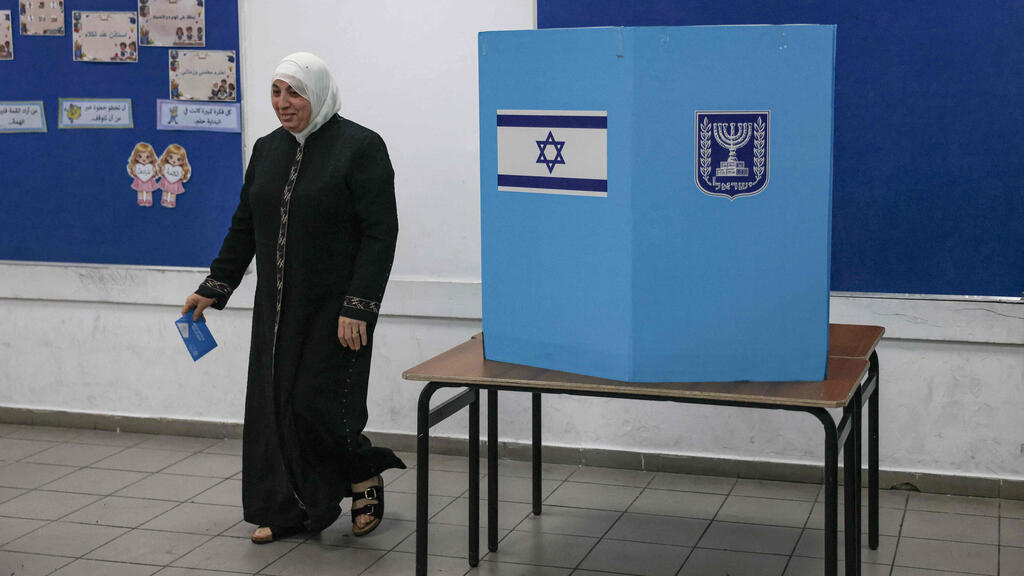
However, turnout in several Arab communities remained below the national average. In Shefa-Amr, 72.5% of eligible voters had cast ballots, compared with 70.1% in Umm al-Fahm, 70% in Nazareth and 73% in Tel Sheva. In Tayibe, turnout stood at 74.3%, matching the national average.
Among Bedouin communities, turnout reached 87.3% in Bir Hadaj, 85.2% in the Abu Qrenat tribal community, 84.2% in Kabu'a and 71.3% in Ar'ara in the Negev. In the Galilee, the Bedouin village of Dmeideh recorded 87.9% turnout, while Shibli-Umm al-Ghanam, at the foot of Mount Tabor, recorded 74.3%.
By comparison, turnout in Arab communities was considerably lower during the previous Knesset election in 2022. In Sakhnin, 68.4% of eligible voters participated, compared with 66.88% in Kafr Qasim, 60.6% in Rahat, 57.7% in Tayibe, 51.5% in Shefa-Amr, 49% in Hura and 48.3% in Nazareth.
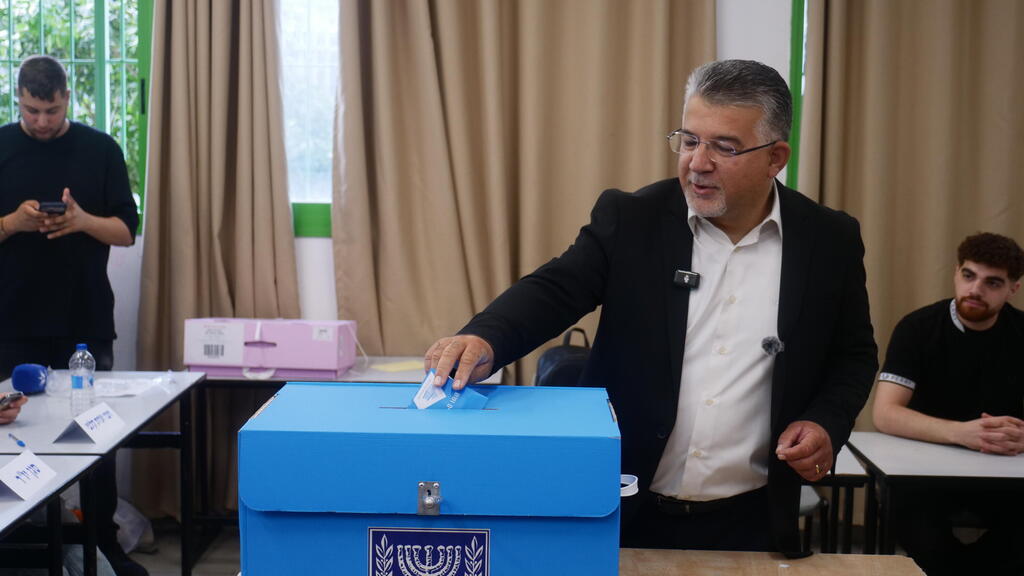
Hadash party head Yousef Jabareen casts his ballot on Tuesday morning
(Photo: Yaron Sharon)
The most dramatic increase was recorded in Umm al-Fahm, where turnout reached 70.1% by 8 p.m. Tuesday, compared with just 38.3% in 2022, nearly doubling. One possible factor behind the sharp increase is that Joint List chairman Professor Yousef Jabareen is a resident of the city.
Most Arab voters support the Arab parties, the Joint List and Ra'am, which could play a significant role in determining the composition of the next government.
According to the exit polls, the opposition bloc may need the support of these parties to advance measures against Prime Minister Benjamin Netanyahu's bloc, including legislation that would bar a politician under criminal indictment from serving as prime minister, replacing Knesset Speaker Amir Ohana and potentially establishing a government dependent on their support.
However, Gadi Eisenkot, chairman of the Yashar! party, who appears positioned to receive the first mandate to form the next government, has already declared that he would establish a coalition only on the basis of a Zionist majority.
The Joint List and Ra'am: From 10 seats to a possible 18
The Joint List is an alliance of three Arab parties: Hadash, Ta'al and Balad. Hadash is headed by Yousef Jabareen, who succeeded Ayman Odeh. Ta'al has been led since 1995 by Ahmad Tibi, who has served continuously in the Knesset since 1999. Balad is led by Sami Abu Shehadeh, although he will not enter the Knesset after the Central Elections Committee disqualified his candidacy.
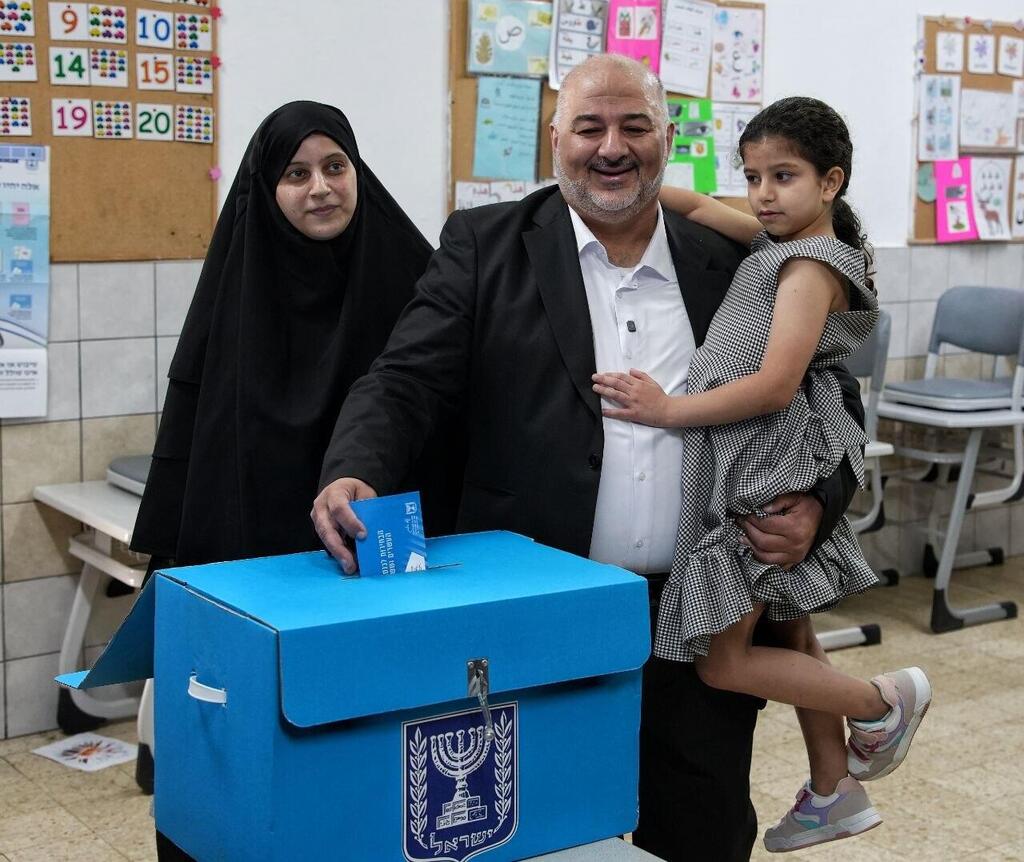
Ra'am party head Mansour Abbas votes
(Photo: Effie Sharir)
During a hearing on an appeal against the disqualification, the Supreme Court recommended that Abu Shehadeh consider withdrawing his candidacy to avoid the need for a ruling. The Balad chairman subsequently withdrew.
At its peak in 2020, the Joint List won 15 Knesset seats, although all the major Arab parties, including Ra'am, were running together at the time. A year later, when the Joint List ran with the same three-party composition as today, it secured just six seats.
Ra'am has been headed by Mansour Abbas since 2019. The party is considered the political arm of the southern branch of the Islamic Movement in Israel. In the two previous elections, Ra'am ran independently, winning four seats in 2021 and five in 2022.
Following the election to the 24th Knesset, and after also holding coalition negotiations with Likud, Abbas and Ra'am backed the so-called change government, the coalition that replaced Netanyahu. That decision prompted fierce attacks from Netanyahu and Likud, which continued throughout the current election campaign. Netanyahu's central campaign slogan was "Right or Palestine."
This time, for the first time, Abbas placed a Jewish candidate on Ra'am's electoral list: former deputy public security minister and retired police major general Yoav Segalovitz, who was ranked second.