


With no new directives from Israel’s political leadership and ahead of negotiations on the second phase of the hostage deal with Hamas, the Israel Defense Forces is gradually defining a new front line, which may evolve from a temporary to a permanent withdrawal zone.
The IDF has begun constructing new defensive positions closer to the border, pulling back from areas deeper in Gaza as part of the cease-fire and initial hostage-release agreement. These positions are expected to become semi-permanent outposts, similar to previous forward bases built along the buffer zone near the border fence.
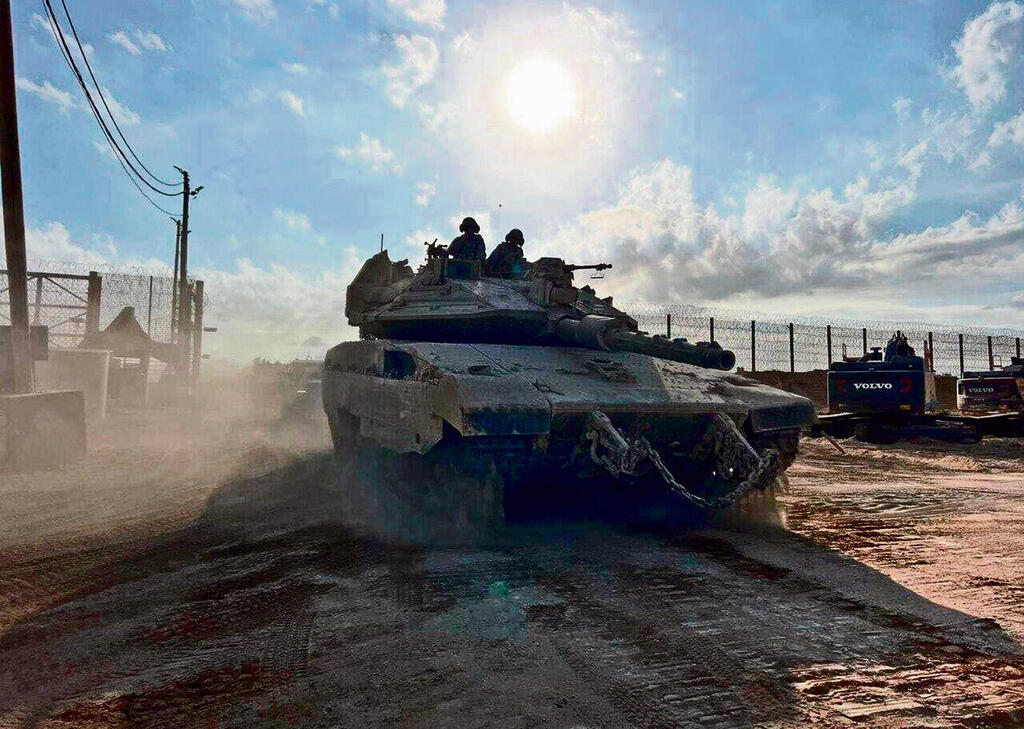
Soldiers in the Gaza Strip
(Photo: Barak Brigade 188 Association)
The new posts include fortified shelters to protect against mortar fire, perimeter defense positions, elevated earth barriers, observation equipment, housing for soldiers and barbed wire fencing. Each new position will also be equipped with reconnaissance drones on a permanent basis.
Since the first weekend of the cease-fire, a new sense of quiet has settled over former combat zones, but new operational rules are also taking shape. While the IDF has largely halted daily air and ground strikes, there have been multiple incidents of warning fire aimed at Palestinians approaching the “yellow line” — a tentative boundary shown to the public by the IDF spokesperson last Friday but not yet officially defined.
In one such incident, dozens of Palestinians arrived at a recently abandoned IDF post near Khan Younis, apparently to loot equipment left behind. Though the IDF had dismantled and even set fire to temporary installations the day before to prevent their use by Hamas, locals still came to scavenge. In response, an Israeli Air Force drone fired warning shots in their direction.
Since the cease-fire began, IDF troops along this buffer zone are operating under strict rules of engagement. Live fire is permitted only to repel immediate threats near the positions, or when an armed terrorist poses a direct danger. Soldiers are prohibited from engaging even clearly armed Hamas operatives seen at a distance — whether visually, through binoculars, drones or other aerial surveillance.
Despite these constraints, Hamas has redeployed some 7,000 fighters across the Gaza Strip to reassert control over the local population, which has begun returning to towns and neighborhoods vacated by the IDF.
Unless negotiations for the next stage of the deal progress in the coming months, or unless the cease-fire collapses, the IDF may find itself locked into a defensive posture that could allow Hamas to rebuild its strength. The new outposts are equipped with machine guns, tanks and constant air support, but are intended solely for defensive use.