



High voter turnout in Israel's 2026 election left little room for smaller parties, all of which fell below the electoral threshold, according to television exit polls. Three parties stood out in recent weeks: Amcha Yisrael, the Reservists-Economic Party and the Haredi Public Party. The first two had hovered around the electoral threshold in the latest polls, while the third generated momentum on social media that, according to the exit polls, failed to translate into votes.
Amcha Yisrael
Among the smaller parties, the collapse of former IDF brigadier general Ofer Winter's Amcha Yisrael party was particularly striking. The party initially polled in the single digits in Knesset seats following its launch, but slipped toward the electoral threshold in recent surveys as Prime Minister Benjamin Netanyahu intensified his attacks against it. According to all television exit polls, it has now failed to cross the threshold.

Winter, who commanded the Givati Brigade during Operation Protective Edge in 2014, retired from the IDF in December 2024 with the rank of brigadier general. About a year and a half after leaving the military, he announced the establishment of Amcha Yisrael, naming pro-Israel advocacy activist Yoseph Haddad as his No. 2 candidate.
Netanyahu waged an aggressive campaign against Winter in an effort to pressure him to withdraw from the race, amid polls suggesting he was at risk of failing to cross the electoral threshold. But Winter, who had announced at the beginning of his campaign that he would recommend Netanyahu for prime minister, refused to drop out. His decision appears to have cost Netanyahu's bloc tens of thousands of votes.
Sources close to Winter told ynet Tuesday evening that he had spent recent days crisscrossing the country, persuading voters, making phone calls, joining family WhatsApp groups and fighting for every vote against the odds while facing what they described as an "insane campaign" against him.

Ofer Winter prepares to cast his ballot
(Photo: Avihu Shapira)
They argued that had Winter not entered the race, Yoaz Hendel and Yaron Zelekha would certainly have crossed the electoral threshold, giving the anti-Netanyahu bloc another four seats.
"We fought until the very end despite Netanyahu and his allies' violent, disgraceful and ugly campaign," a party source said. "We have a solid base of voters," the source added, claiming that more than 100,000 people had voted for the party.
Amcha Yisrael officials insisted that Netanyahu had made the strategic mistake, arguing that his effort to draw votes away from their party had cost his own bloc valuable Knesset seats.
"We could have won today," a party source claimed. "But the unhinged campaign by Netanyahu and Smotrich, who talked about Judaizing the Galilee and the Bedouins in the Negev, drove Arab voters to the polls in huge numbers instead of keeping them at home."
Looking ahead, party officials maintain that Amcha Yisrael has established a solid voter base. They suggest that, much like Itamar Ben-Gvir, who ran unsuccessfully several times before gaining substantial electoral support, the party could return in the next election and attract more votes.
The Reservists-Economic Party
Yoaz Hendel and Yaron Zelekha, who joined forces on a single electoral list under the Reservists-Economic Party banner, also failed to cross the electoral threshold, according to the exit polls.
Hendel and Zelekha explored several possible political alliances before ultimately joining forces. In some of the final preelection polls, their list appeared to gain momentum, reaching the equivalent of four Knesset seats. But when voters went to the polls, the exit surveys indicated that Israelis had opted for larger parties.

Yoaz Hendel before the exit poll results were released
(Photo: Dana Kopel)
Hendel, who served as communications minister in the previous change government and, about 15 years ago, headed Netanyahu's National Information Directorate, established the Reservists Party last year. In July, he announced a joint run with Hili Tropper's party, but after Tropper joined Gadi Eisenkot, Hendel aligned himself with Zelekha's Economic Party.
During the Swords of Iron war, Hendel was called up for reserve duty, participated in combat operations in Gaza and established a new battalion made up of former special forces soldiers who had passed the age of mandatory reserve service.
Hendel previously belonged to Moshe "Bogie" Ya'alon's Telem party, which later joined Benny Gantz's Blue and White alliance. He was also a member of Derech Eretz alongside Zvi Hauser and New Hope under Gideon Sa'ar, and signed a merger agreement to establish the Zionist Spirit alliance headed by Ayelet Shaked.
Economist Yaron Zelekha, ranked second on the list, served as the Finance Ministry's accountant general from 2003 to 2007. He ran independently in the previous two elections, receiving less than 1% of the vote each time and failing to cross the electoral threshold.
Third on the list was Einat Wilf, who served in the Knesset from 2010 to 2013 as a member of the Labor Party and later Ehud Barak's Independence faction.
Hendel said Tuesday evening that he was counting on the double-envelope ballots, which include votes cast by soldiers.
"By the end of the week, we'll know the results from IDF polling stations," he said. "We experienced incredible momentum. Let's see the actual results. In any case, we fought very, very hard. We're fighters, we work hard, and we'll fulfill our ambitions for the State of Israel and the Jewish people. Nobody here is giving up. That's the first thing."
Hendel also thanked Winter for what he described as the "difficult road" he had traveled.
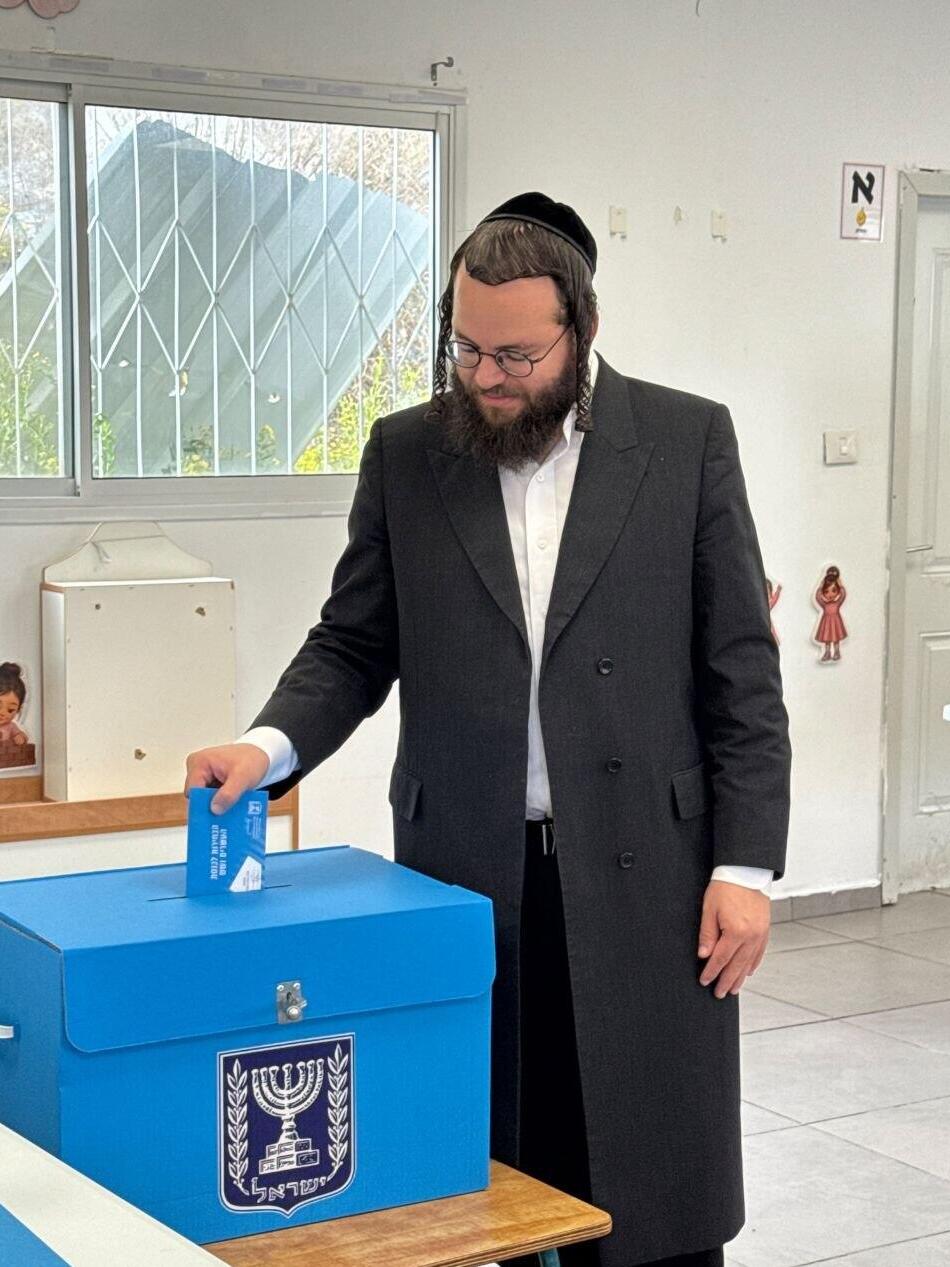
Moti Leitner, founder of the Haredi Public Party, casts his ballot
The Haredi Public Party
The third party that appears to have attracted some support but failed to cross the electoral threshold is the Haredi Public Party, led by Moti Leitner. Netanyahu also campaigned against the party in an effort to pressure it to withdraw from the race.
Leitner sought to offer ultra-Orthodox voters an alternative to parties that support sweeping exemptions from military service and oppose the inclusion of core curriculum subjects in religious schools.
While Israel's established ultra-Orthodox parties, Shas and United Torah Judaism, have pushed for military service exemptions, restrictions on core curriculum studies and the allocation of welfare funding, Leitner presented a more pragmatic ideological approach.
Throughout the campaign, he claimed that support for his party was growing among younger members of the ultra-Orthodox community. According to the exit polls, however, that support ultimately proved insufficient to carry the party across the electoral threshold.