

The three parties of the “Third Bloc”, the group of small right-leaning and centrist political factions in Israel trying to push for a broad unity government which launched with great fanfare at the start of the election campaign, are reaching the final stretch before candidate lists are submitted with a resounding political failure. It sounded promising, looked intriguing, and familiar, experienced politicians took the reins, recruited high-profile names and promised to offer the public exactly what it was supposedly looking for: an alternative that did not clearly belong to either political camp. But when the moment of truth arrived, it became clear there were almost no buyers for that product.
Ayelet Shaked, whose name was mentioned throughout the campaign as one of the figures who might fit into that political space, ultimately announced that she would stay out. In a Facebook post Sunday evening, she effectively also offered an explanation for the broader failure of the “third bloc.”
Gallery
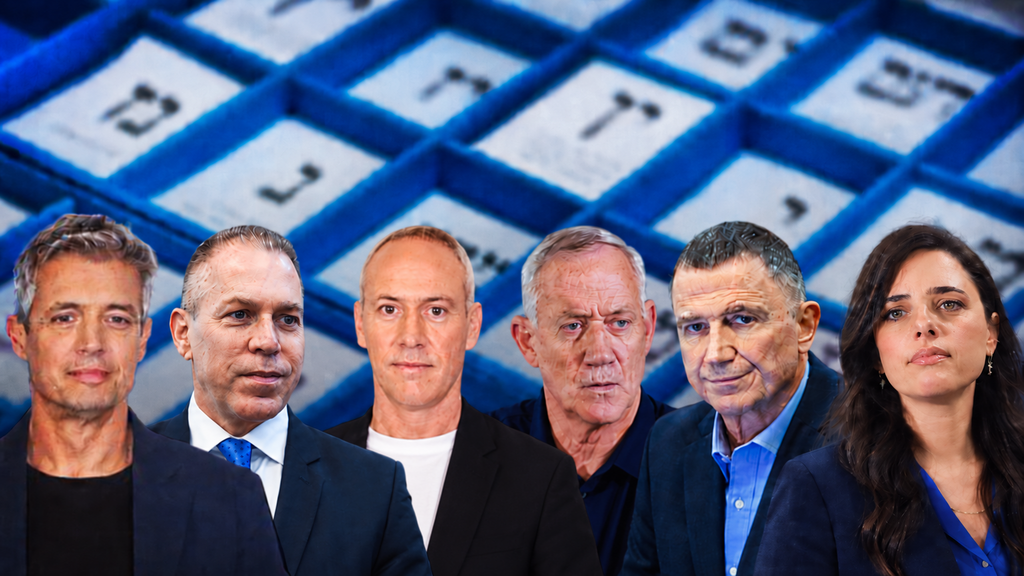
From right, Ayelet Shaked, Yuli Edelstein, Benny Gantz, Hili Trooper, Gilad Erdan, Yoaz Hendel
(Photos: Amit Shaavi, Rafi Kutz, Alex Kolomoisky, shutterstock, Mark Israel Salem, Moti Kimchi, Dana Kopel)
“I had hoped that after October 7, the political reality in Israel would change,” she wrote. But, according to her, this time too “the political system is converging around the same patterns of camps and boycotts, two blocs that in my view are tearing the country apart.”
Shaked explained that she still believes in a “broad cross-bloc government,” but acknowledged that she does not see a realistic way to establish such a government under the current political circumstances.
“I did not see a realistic way to represent you properly. If there had been one, I would have said: Here I am,” she wrote to supporters who had urged her to return to politics.
In that sense, her decision to remain outside may be the sharpest expression of the state of that political niche: It seemed there was demand for a party that would refuse to choose absolutely between the two camps, but as the deadline for submitting candidate lists approached, it became clear that the desire for “unity” was very difficult to translate into seats. Shaked, at least, chose not to take the gamble and join one of the parties now fighting for its political survival.
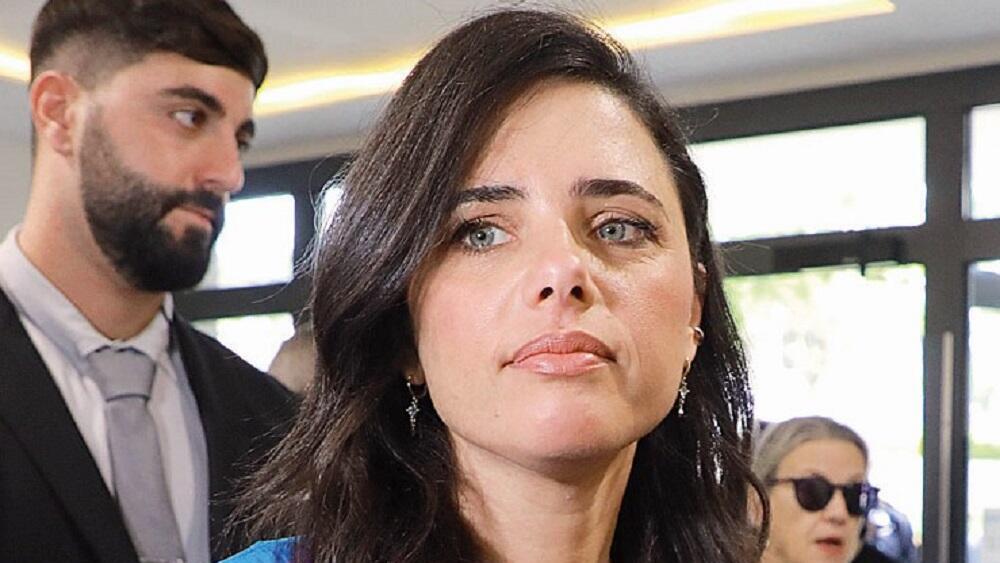
Ayeklet Shaked: 'I did not see a realistic way to represent you properly'
(Photo: Dana Kopel)
It began with Gilad Erdan and Yuli Edelstein’s Unity party, continued with Hili Tropper and Yoaz Hendel’s Zionist Home-Reservists party, and may now end with Benny Gantz’s Blue and White. Gantz, who removed himself from the anti-Netanyahu bloc and sought to create an independent political space, was in many ways one of the founders of that “third bloc.” But the other two parties have already collapsed and disappeared from the map, while Blue and White itself is now fighting for survival.
After Shaked’s decision to stay out, Gantz’s options narrowed further. There is currently no natural partner with whom he could merge or join forces, and discomfort is growing even among the few remaining lawmakers in his faction. They do not want to be dragged into a race that could end below the electoral threshold and cost the entire camp votes. Knesset lawmaker Michael Biton, one of Gantz’s closest associates for years, is expected to announce his retirement. Despite everything, Gantz is insisting for now on going all the way.
Erdan discovered how hard it is to build a party
Gilad Erdan entered the race with the ambition of leading a new political line, one that would try to leave behind the division of recent election campaigns into “only Bibi” and “anything but Bibi.” He presented the idea of “unity” as a particularly sought-after product after the October 7 massacre and the wars that followed, but failed to translate the slogan into real political power.
The way the party was managed also raised quite a few questions. Precisely during the critical days before the candidate lists closed, Erdan was abroad, and even before that the campaign seemed to be operating at limited intensity. On August 29, ynet obtained information that Erdan had decided to dismantle his campaign headquarters and that, without a significant merger, he would not continue in the race.

Yuli Edelstein and Gilad Erdan in a statement to the media about the establishment of a new right-wing party
(Photo: Ido Erez)
“That is a total and unparalleled lie,” one of his associates responded at the time. “Everything is working as usual. Not one person has moved.”
But as the days passed, it became clear that the information had been correct. In a sense, Erdan himself had already anticipated the difficulty before setting out.
“Building a party is much more complicated and difficult than I thought,” he said before deciding to run independently.
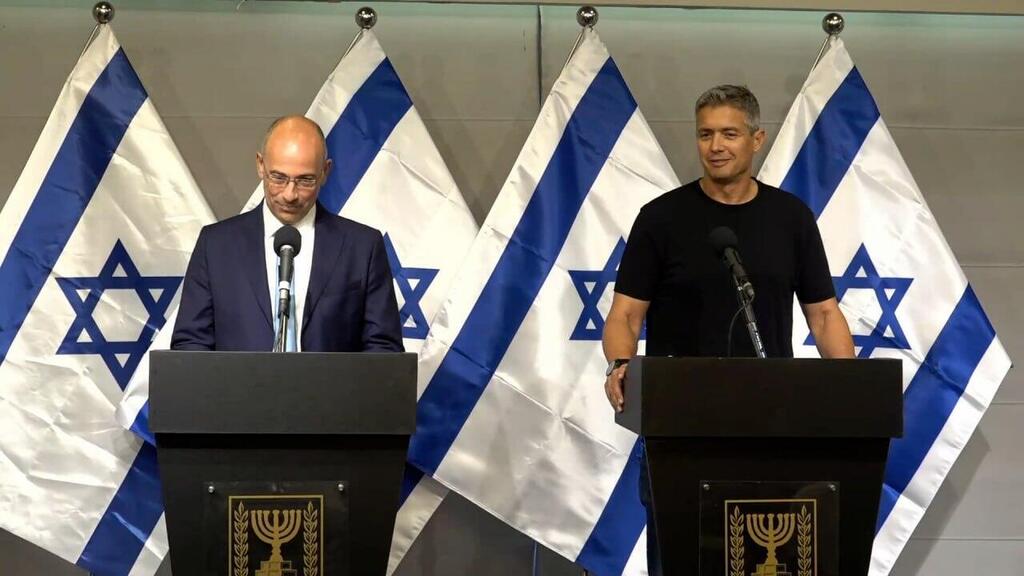
Yoaz Hendel and Yaron Zelekha : 'We will run to the end'
Yoaz Hendel’s reservists party also sought to position itself as part of that same politically unaffiliated space. To Hendel’s credit, he was among the few politicians who actually served hundreds of reserve-duty days since October 7. He seemingly had a clear political story to tell, but after three years of ongoing war even that sentiment was no longer enough on its own to sweep voters along.
The main problem was the message. Hendel, Tropper and their people struggled to provide a simple answer to the voter’s most basic question: What exactly will you do the day after the election? Will they join a government led by Netanyahu? Will they give Gadi Eisenkot the 61 seats he needs? Or will they try to force a unity government — and if so, how exactly?
As the questions multiplied, the message became blurred. In the end, the public was not convinced.
The person who may have benefited most from the collapse of the “third bloc” is Gadi Eisenkot. Not necessarily because he actively worked to dismantle it, but because developments worked in his favor. Erdan’s party evaporated, and he managed to draw Hili Tropper into his own slate. In doing so, he reduced the risks.
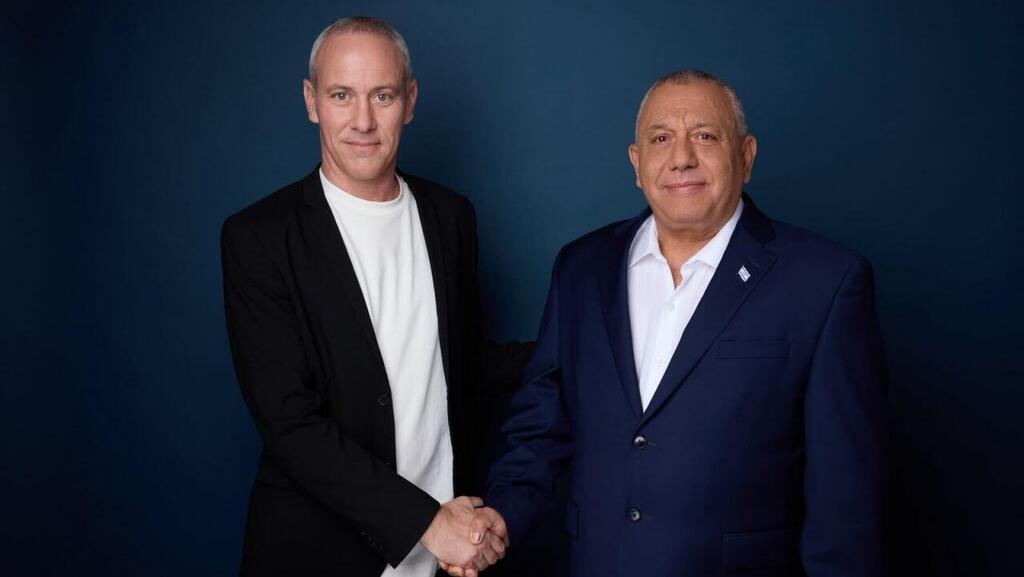
Gadi benefits: Eizenkot and Hiki Trooper
(Photo: Yahav Troodler)
Now one major task remains for him: move Gantz out of the way. But here, the story is no longer only political. The relationship between the two is burdened by accumulated grievances, personal tensions and considerable frustration built up over the years.
After they parted ways, and after Eisenkot built himself a new political home, the possibility that Gantz will insist on running to the end could turn the battle between them from an electoral threat into a personal and public confrontation.
Thus, within just a few weeks, the promise of a meaningful “third bloc” has almost completely evaporated. What initially looked like a political space that could reshape the balance of power has, as candidate lists are about to be submitted, turned into a graveyard of new parties — and another reminder that in Israeli politics, there is often a vast distance between an idea that sounds good and actually crossing the electoral threshold.